Room ideas · 5 min read
Tiles for Pooja Room: Floor, Wall and Backdrop Ideas
How to choose pooja room tiles, from white marble-look floors to carved backdrops and highlighter walls, plus tips on oil, diya soot and cleaning.
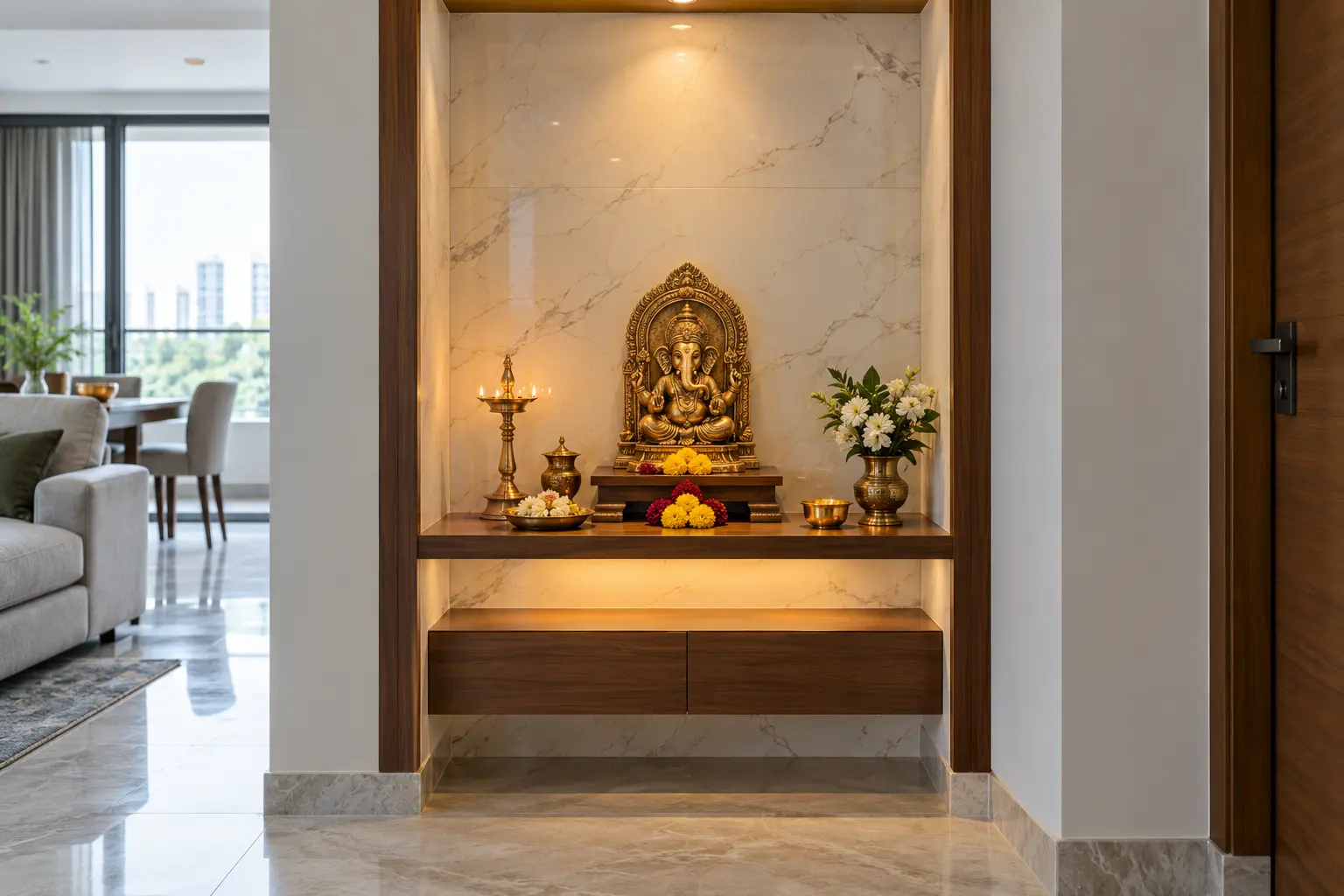
The pooja room, or pooja corner in many Bengaluru apartments, is a small space but an important one. Tiles here need to look clean and peaceful, handle oil and diya soot, and be easy to wipe every day. This guide covers floor, wall and backdrop options, with practical tips for daily use.
Start with the space you have
Pooja spaces come in many forms:
- A separate pooja room in independent houses and larger apartments
- A pooja niche or alcove built into a wall
- A wooden mandir unit placed in a corner, with tiles only on the wall behind
- A corner in the kitchen or living room
The size and type decides how much tiling you need and where. Our pooja room page has more layout ideas.
Floor tiles
The floor sees people sitting, kneeling, flowers, kumkum, oil and water spills.
- Colour. White, ivory and light cream marble looks are the most common choice. They feel calm and make small rooms bright.
- Finish. A satin or matt finish is safer than high gloss, since oil and water on a glossy tile can be slippery.
- Size. In a small pooja room, 600x600 mm or 600x1200 mm tiles keep grout lines few and the floor looks clean. For tiny niches, cut pieces from the same tile as the wall work well.
- Material. Vitrified tiles resist oil stains better than real marble, which can absorb oil and turn yellow over time. See marble-finish tiles.
Wall and backdrop tiles
The wall behind the deity is the focal point. Popular options:
| Option | Look | Things to note |
|---|---|---|
| White marble-look glossy tiles | Clean, bright, traditional | Easy to wipe, reflects diya light |
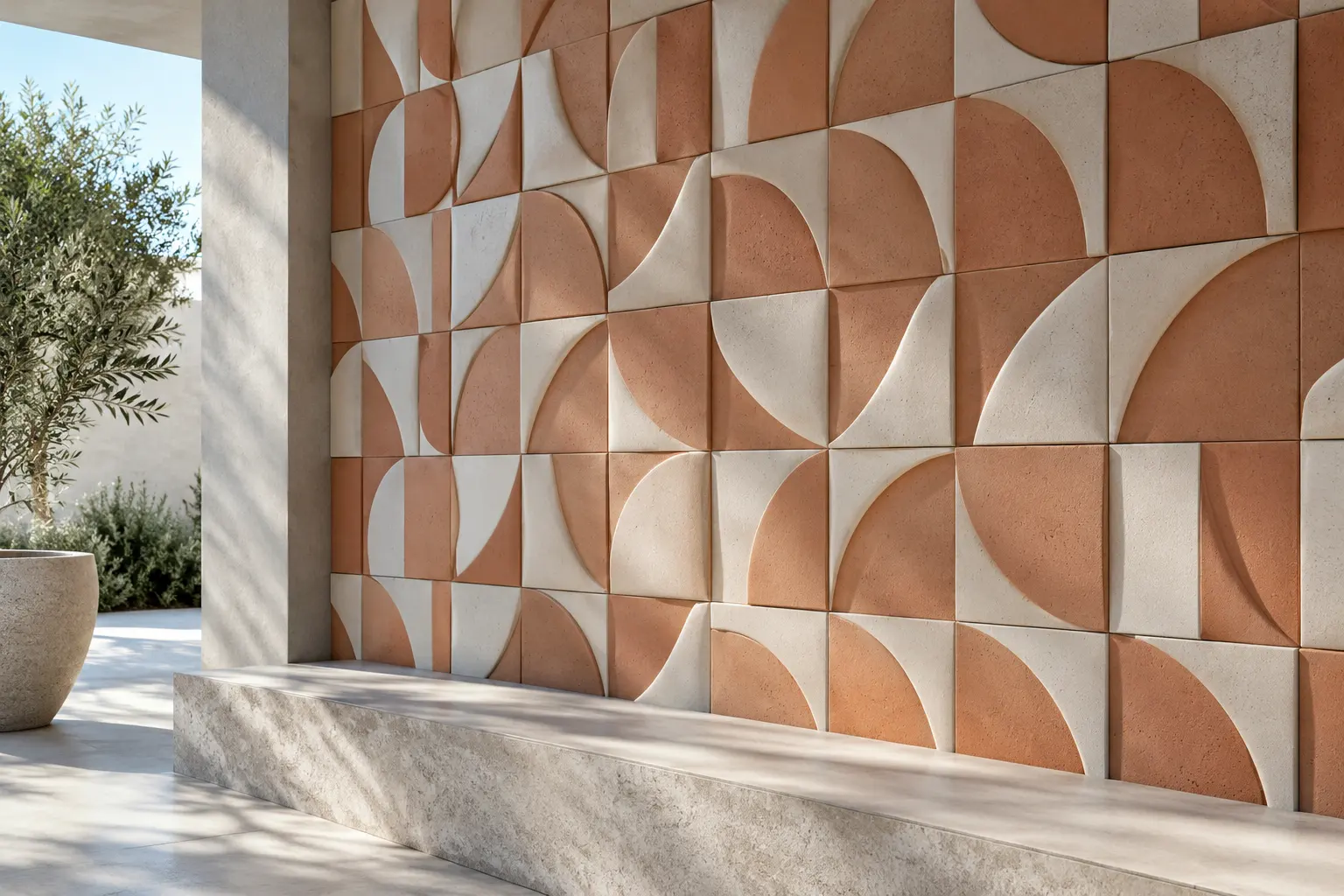
| Carving finish tiles | Raised patterns, temple-like feel | Grooves collect soot, clean gently |
| Highlighter tiles with motifs | Om, lotus, bells, kalash, mandala designs | Keep surrounding tiles plain |
| Gold or beige-toned designs | Warm, festive | Pair with brass and wood fittings |
| Large marble slab tile | Continuous veining, premium | Fewer joints, very easy cleaning |
Carving finish tiles add depth with raised textures. Designer highlighter tiles are made specifically as feature panels, and pooja motifs are common in this category. What is in stock changes, so ask at the shop to see current designs.
The platform and steps
Many pooja rooms have a raised platform or steps for the idols. You can tile these with:
- The same marble-look tile as the floor, with a matching nosing edge
- Step tiles with a rounded front edge for a neat finish
- A contrasting border tile to frame the platform
Make sure edges are finished neatly, as people touch and lean on them often.
Tips for daily use
- Keep a tray under the diya. Oil drips are the biggest maintenance issue. A brass or steel tray saves a lot of scrubbing.
- Wipe oil spills quickly. Fresh oil comes off easily, old oil can leave a film that collects dust.
- Choose epoxy or stain-resistant grout. Cement grout absorbs oil and kumkum. Epoxy grout stays clean much longer.
- Think about soot. Light coloured tiles directly above a diya may show soot marks. A glossy surface is easier to wipe than a deeply carved one in that exact spot.
- Ventilation. If you light agarbatti and diyas daily in a small closed room, a small vent helps keep walls cleaner.
Our guide on how to clean and maintain tiles has more cleaning tips.
Colour and mood
- All white. Peaceful and bright, suits small rooms.
- White with gold accents. Festive and traditional.
- Cream floor with a carved backdrop. Gives a temple-like feel.
- Wood-look floor with marble walls. Warm and modern, good for pooja corners in living rooms.
Lighting matters too. Warm white lights bring out cream and gold tones and make the space feel welcoming.
Planning and quantity
A pooja room is small, so the amount of tile is modest, but cutting is high. Niches, platforms, steps and arches all need cut pieces, and highlighter panels must be centred behind the deity. Before you buy:
- Measure the floor, each wall up to the height you want to tile, and the platform top, front and sides.
- Decide the exact position and size of the backdrop panel, so the motif is centred and not cut off.
- Add extra for cuts, since small spaces often waste more as a percentage. Our tile calculator gives a starting figure.
- Buy all tiles from one batch, so the floor and walls match in shade.
Bring these measurements and a photo of the space when you come, and the choice becomes much easier.
Visit the shop
Pooja backdrop tiles are best chosen in person, since carving depth and gold detailing do not show well in photos. Bring the size of your pooja space and visit the shop to see what designs are in stock right now.
Common questions
Which colour tile is best for a pooja room?
White, ivory and light cream marble looks are the most popular because they feel clean and calm. Light gold or warm beige tones also suit traditional brass and wooden fittings.
Is glossy tile suitable for a pooja room floor?
It looks bright but can become slippery if oil or water spills. A satin or matt floor is safer, while glossy or high gloss tiles work well on the walls and backdrop.
How do I clean oil and soot from pooja tiles?
Wipe oil spills quickly with a cloth and warm soapy water. Soot from diyas usually comes off glazed tiles with a mild cleaner. Avoid harsh scrubbers on glossy or carved surfaces.
Can I use tiles instead of marble in the pooja room?
Yes. Marble-finish vitrified tiles give a similar look, resist oil stains better and need no polishing. Many homes use them for the floor, walls and even the platform.
Keep reading
Pooja room
Pooja room tile ideas for Bengaluru homes: marble-look floors and walls, backdrops for the mandir, finishes that handle oil lamps, and practical tips.
Marble finish tiles
Marble finish tiles copy Statuario, Carrara and onyx on a vitrified body. Compare them with real marble and learn how to choose and lay them.
Carving finish
Carving finish tiles have raised, sculpted patterns that catch light. Learn how they look, how to clean them and where they work best in a home.
See the tiles in person before you decide
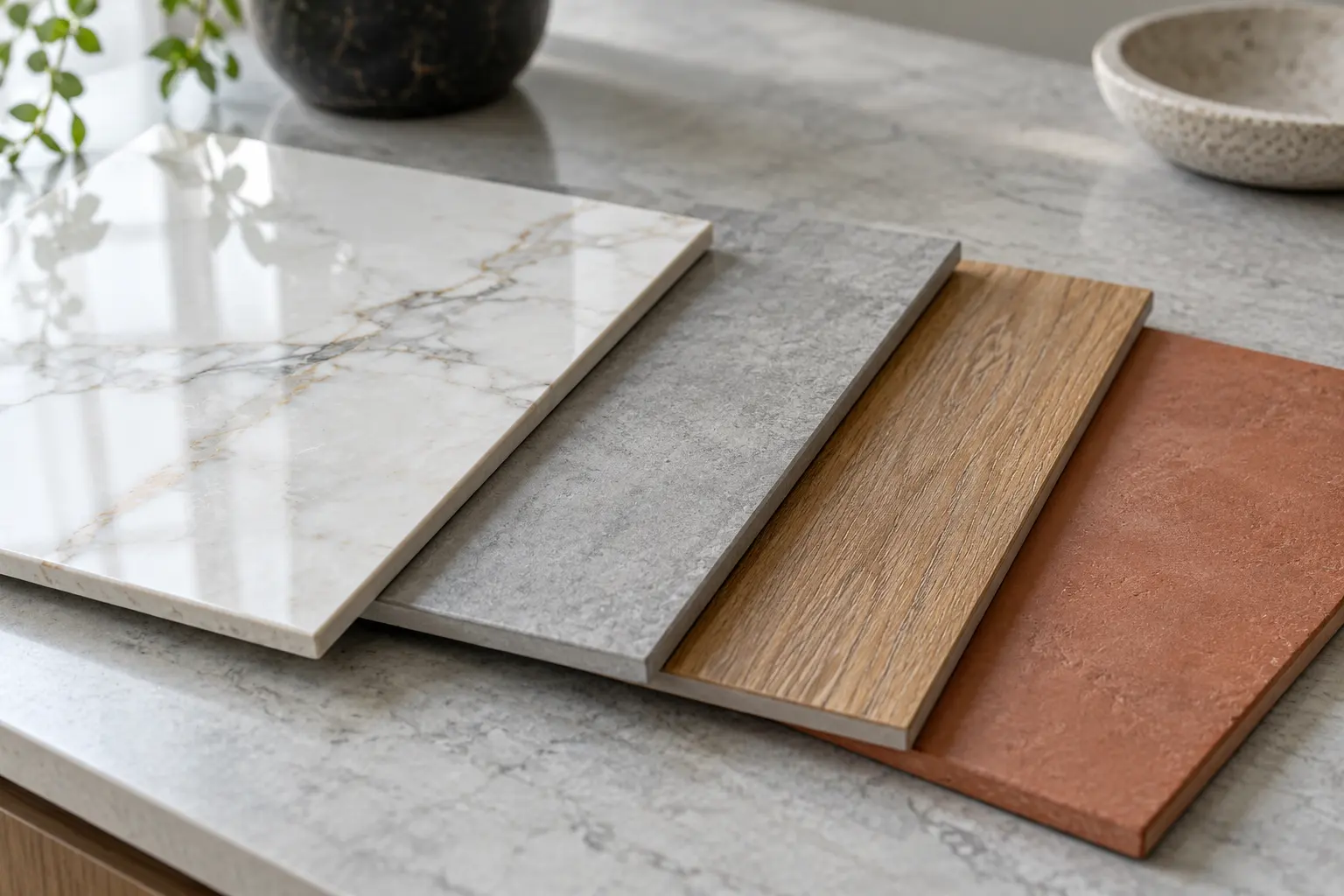
Photos never show a tile's true shade or texture. Get in touch to check what is in stock, then walk in and compare.