Marble Finish Tiles in Bengaluru: The Marble Look, Easier Care
Marble finish tiles copy Statuario, Carrara and onyx on a vitrified body. Compare them with real marble and learn how to choose and lay them.
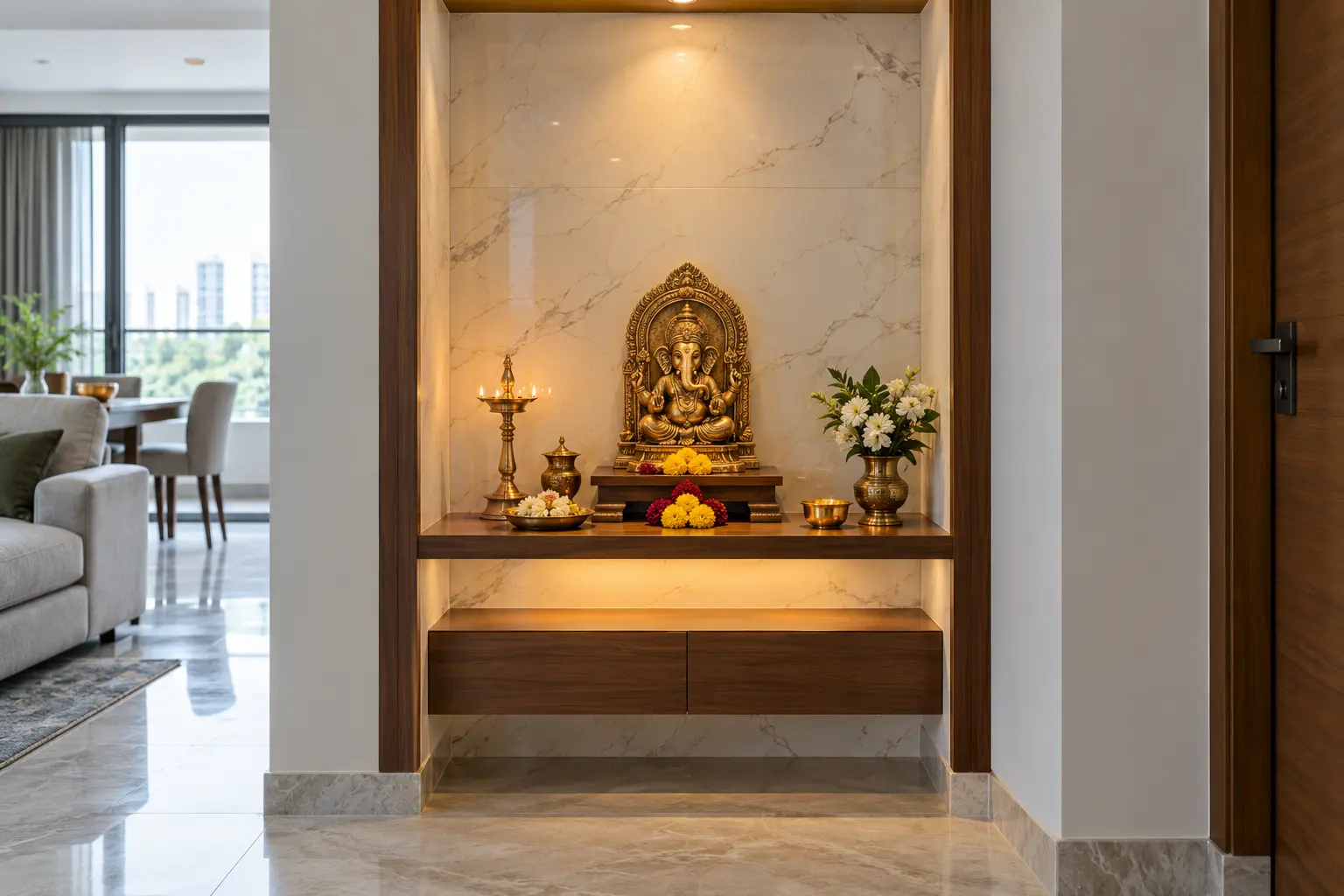
Marble has always been a favourite in Indian homes, but natural marble stains, etches and needs polishing. Marble finish tiles give you the veined, luminous look of marble on a dense vitrified body that you can simply mop. They are one of the most asked-for tile styles in Bengaluru apartments today.
What marble finish tiles are
Marble finish tiles are usually PGVT or GVT: vitrified tiles with a digitally printed glaze that copies a marble design. Popular looks include white Statuario with bold grey veins, Carrara with soft veining, warm Botticino and beige marbles, onyx, and dark Nero Marquina-style black marbles.
Because the body is vitrified, water absorption is usually under 0.5%. Unlike real marble, they do not etch when lemon juice or vinegar spills, and turmeric or tea stains wipe off the glazed surface.
Marble tile vs real marble
| Marble finish tile | Natural marble | |
|---|---|---|
| Stain resistance | High, glazed surface | Low, porous, needs sealing |
| Acid etching (lemon, vinegar) | No | Yes |
| Polishing needed | No | Periodic re-polishing |
| Pattern | Printed, repeats across faces | Every slab unique |
| Weight | Lighter | Heavier |
Where they work, and where they don't
Strong fit:
- Living and dining rooms, especially in high gloss
- Pooja rooms and niches, where white marble looks traditional
- Feature walls behind a TV or bed, often in book-matched slabs
- Lobbies and reception areas
- Bathroom walls in glossy or satin
Use care:
- High gloss marble tiles on wet floors are slippery. For bathroom floors choose a matt or satin marble design
- Bright white high gloss floors show dust and footprints. A soft beige or grey-veined marble hides more
- On a busy shop floor, the polished glaze can scratch over time
Sizes and finishes commonly available
Marble finish tiles typically come in 600x600 mm, 800x800 mm, 600x1200 mm and 800x1600 mm, with large slabs like 1200x2400 mm in some ranges. Finishes include high gloss, glossy, satin and matt, and sometimes lappato.
How to choose
- Bigger is more convincing. Large tiles show more of the vein pattern and have fewer joints, which reads more like real marble.
- Ask about face count. More faces means fewer repeats.
- Plan vein direction. On a floor, run the main veins along the longest wall. On walls, consider book-matched sets.
- Keep joints thin. Rectified tiles with 2 mm joints and a close-matching grout look closest to stone.
- Check the shade under your lighting. Warm LED lights make white marble look creamier.
For pooja room ideas, read tiles for pooja room.
See them under real light
Marble prints are best seen as a group under normal room light. Call to ask which marble designs are in stock, or visit the shop and we will lay out a few for you to compare.
Common questions
Are marble finish tiles better than real marble?
For most homes they are easier to live with. They do not need sealing, resist stains from turmeric, oil and lemon, and are more uniform. Real marble has unique natural depth but needs more care.
Do marble tiles look fake?
Good ones look very convincing, especially in large sizes with many face designs and vein matching. Cheaper ranges with few faces can look repetitive.
Can marble finish tiles be used in a pooja room?
Yes, white and ivory marble-look tiles are a popular choice for pooja rooms and niches. They are easy to clean after lamps and kumkum.
What is book-matched marble tile?
Two or four tiles printed as mirror images, so the veins meet to form a symmetrical pattern. It is mostly used on feature walls behind a TV or in a pooja area.
Keep reading
GVT and PGVT tiles
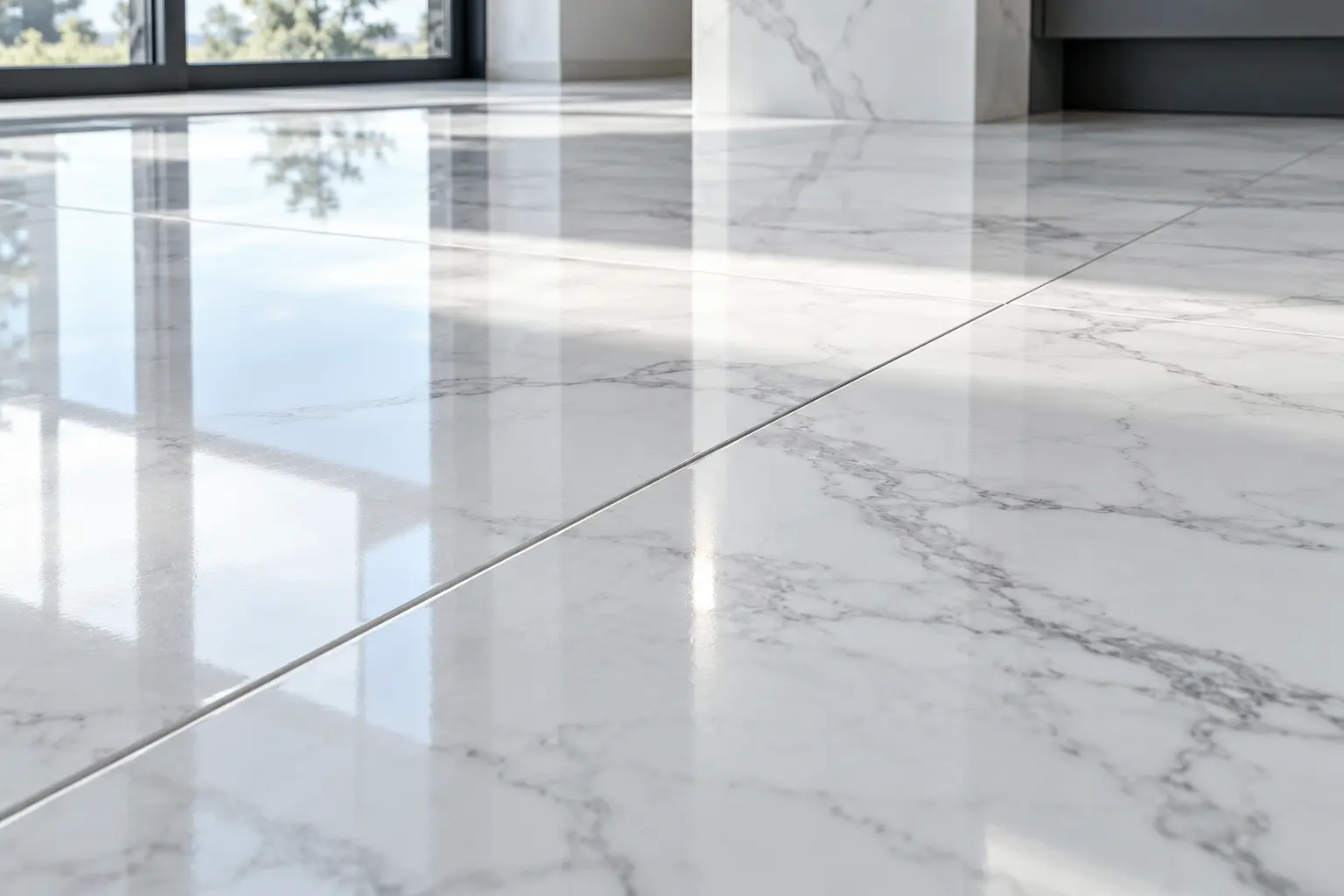
GVT and PGVT tiles give realistic marble, wood and stone looks on a vitrified body. Learn the difference, where each works and how to pick one.
Large format slabs
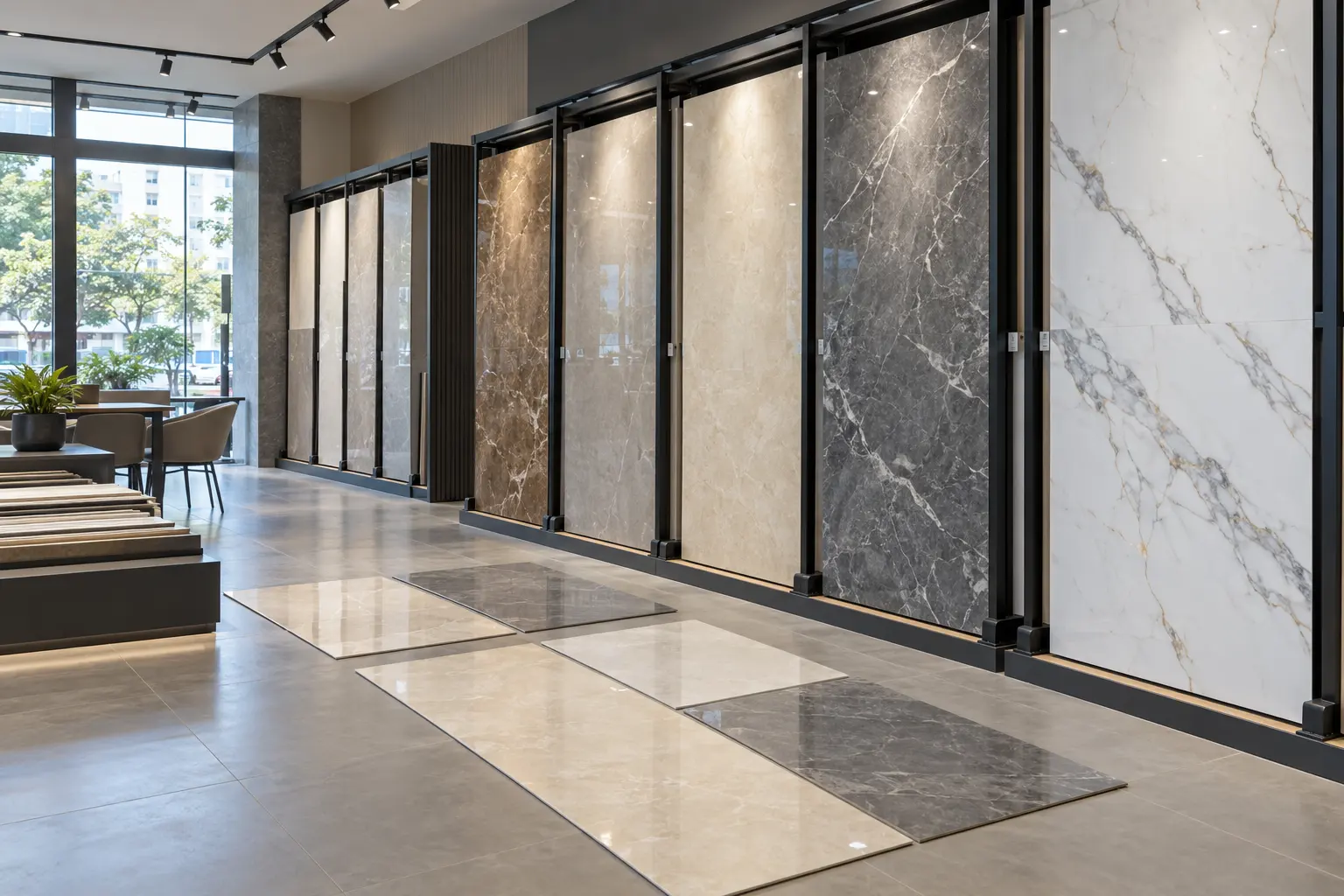
Large format slab tiles like 800x1600 and 1200x2400 mm give a clean, near jointless look. Learn where they suit, handling needs and how to choose.
Pooja room
Pooja room tile ideas for Bengaluru homes: marble-look floors and walls, backdrops for the mandir, finishes that handle oil lamps, and practical tips.
See the tiles in person before you decide
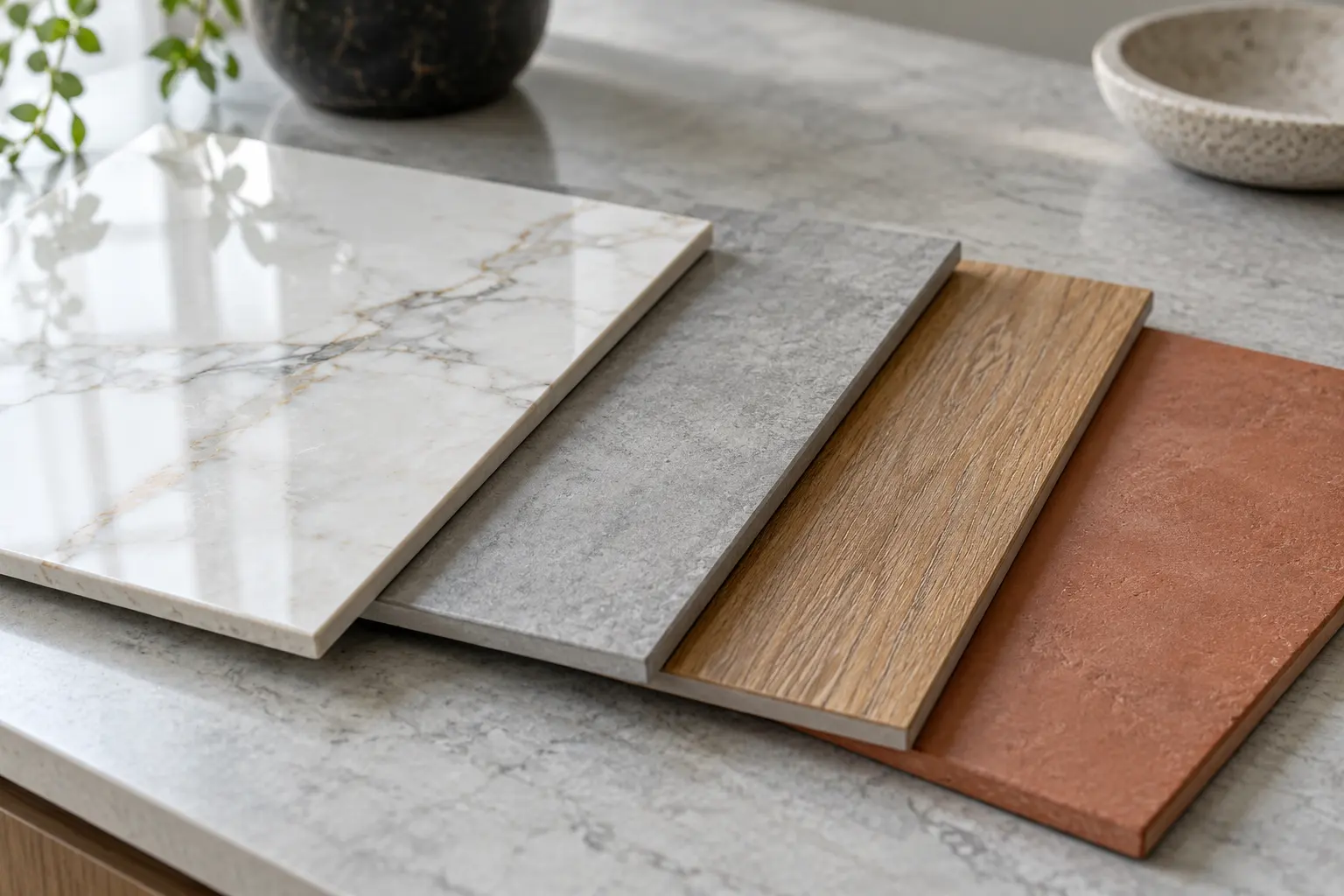
Photos never show a tile's true shade or texture. Get in touch to check what is in stock, then walk in and compare.