Room ideas · 4 min read
How to Choose Bathroom Tiles: Floor, Wall and Size Guide
A practical guide to bathroom tiles: anti-skid floors, easy-clean walls, the right sizes for small bathrooms, grout choice and mistakes to avoid.
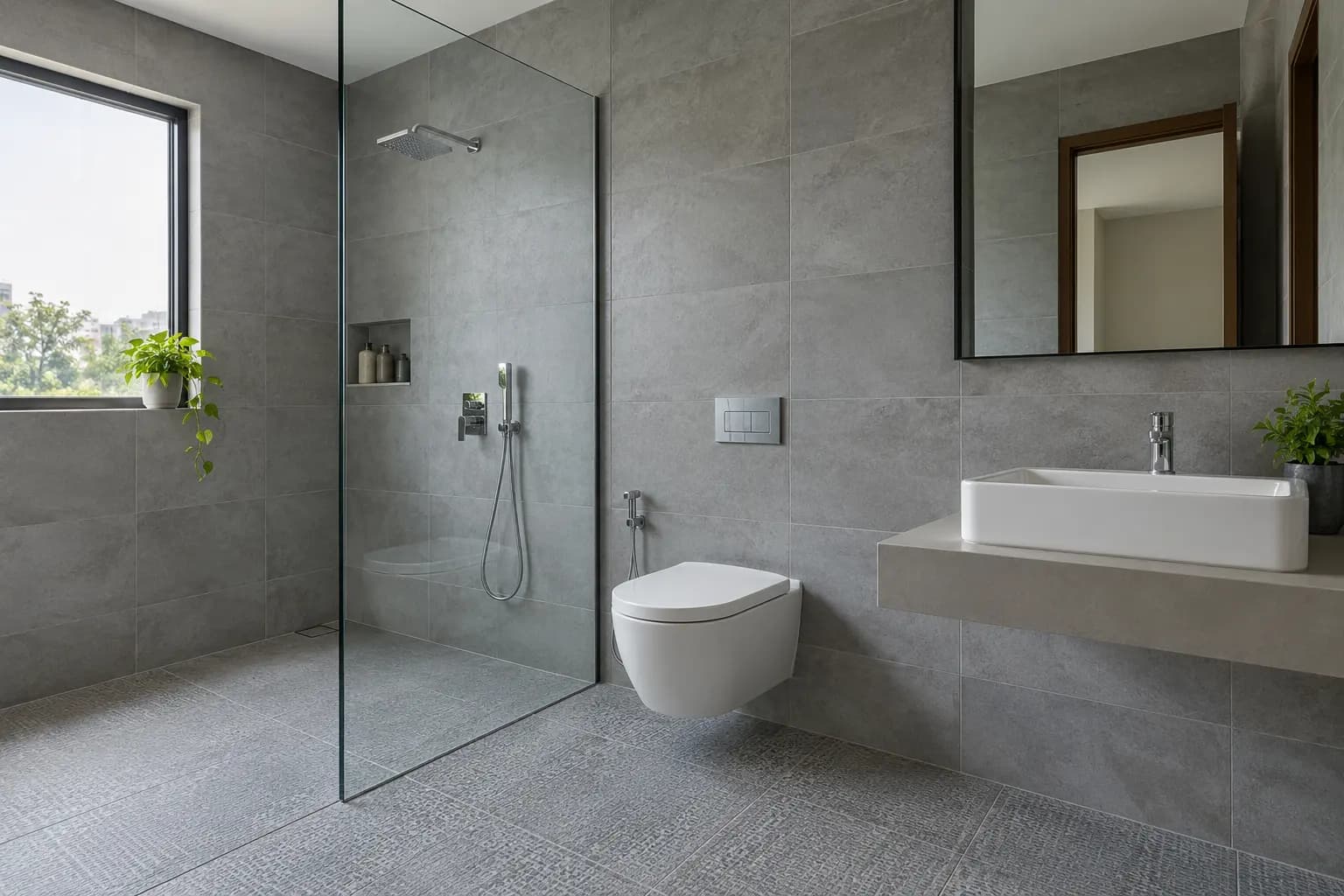
The bathroom is the hardest-working room for tiles. It is wet every day, gets cleaned with harsh chemicals, and a slippery floor is a real safety risk, especially for elders and children. Choosing well comes down to three things: safety on the floor, easy cleaning on the walls, and sizes that suit the room.
Start with the floor: safety first
Bathroom floors must grip when wet. Look for:
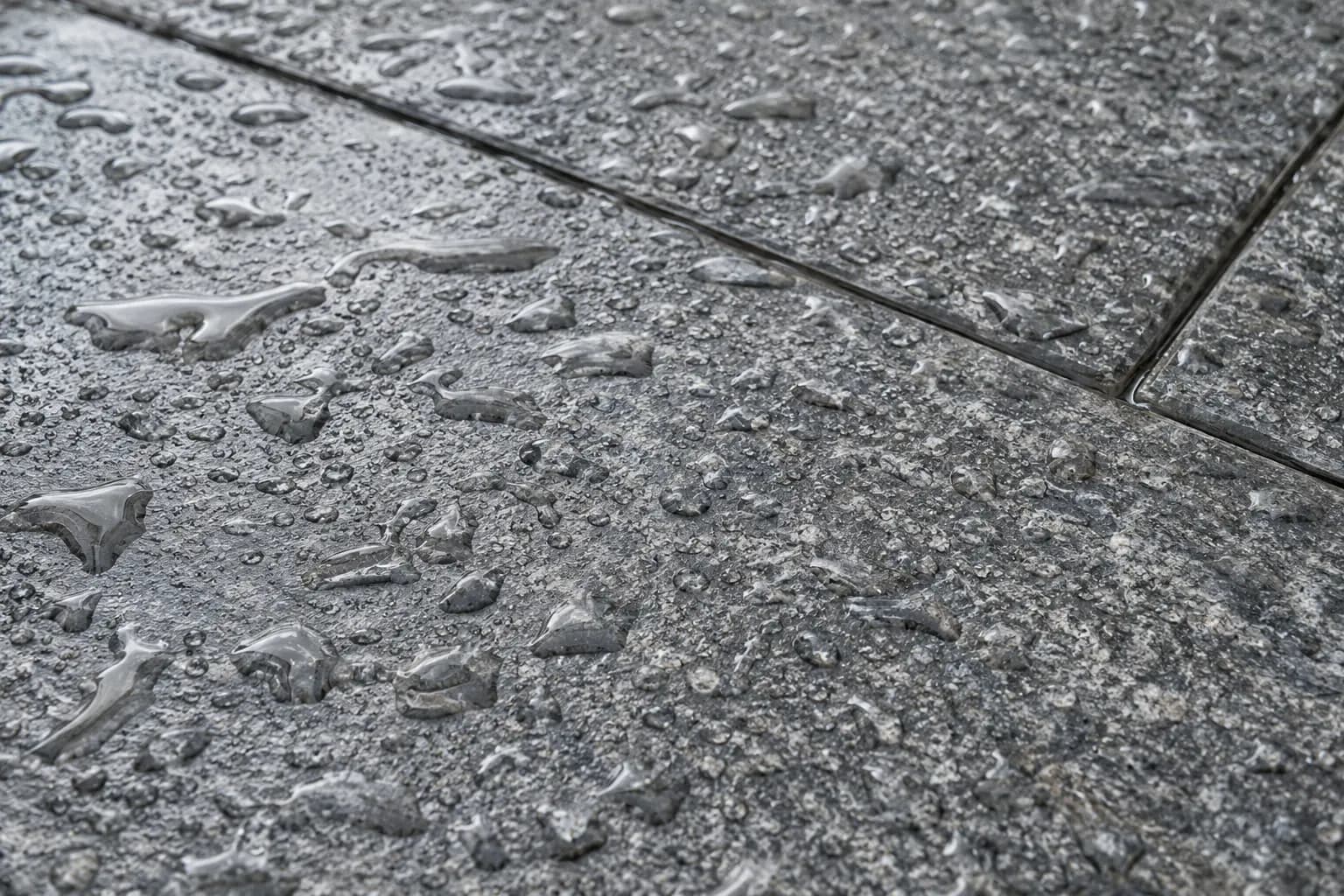
- Matt or anti-skid surface. A textured surface gives your feet something to hold on to. See our guide on anti-skid tiles for what the ratings mean.
- Low water absorption. Vitrified tiles or floor-grade ceramic tiles are the usual choice.
- Smaller sizes. A bathroom floor needs a slope towards the drain. Smaller tiles like 300x300 mm follow this slope easily without lifting at the edges. Larger tiles such as 600x600 mm can work in bigger bathrooms if the mason plans the slope carefully.
Avoid polished, high-gloss or PGVT tiles on bathroom floors. They look lovely in the showroom and are slippery the moment there is soap and water on them.
Then the walls: easy to clean
Wall tiles do not take foot traffic, so the priorities change:
- Ceramic wall tiles are the common choice. They are light, easy to cut and come in many designs.
- Glossy or satin finishes wipe clean easily and reflect light, which helps small bathrooms feel brighter.
- Larger formats like 300x600 mm mean fewer grout lines, and fewer grout lines means less scrubbing.
Bengaluru has hard water in many areas, especially homes on borewell supply. White salt marks show up more on dark, glossy tiles. Mid-tone or patterned tiles hide these marks better.
Size guide for bathrooms
| Area | Common sizes | Why |
|---|---|---|
| Floor (small bathroom) | 300x300 mm | Follows slope to drain, many grout lines add grip |
| Floor (larger bathroom) | 400x400, 600x600 mm | Fewer joints, needs careful slope planning |
| Walls | 300x450, 300x600 mm | Standard wall formats, easy to fix and cut |
| Shower niche or feature | Mosaic, highlighter tiles | Decorative, fits small areas |
See our 300x300 mm and 300x600 mm size pages for more.
Colour and design for small bathrooms
Most apartment bathrooms in Bengaluru are compact, often around 5 x 7 ft or 6 x 8 ft. A few things help them feel bigger:
- Light colours on the walls (white, cream, light grey).
- A slightly darker floor to ground the room.
- One feature wall or a band of highlighter tiles behind the washbasin or in the shower area, rather than patterns everywhere.
- Laying wall tiles in the same direction throughout, without too many changes of design.
Our guide on tile colours for small rooms has more ideas.
Grout and fixing in wet areas
The tile is only half the job. Water gets in through gaps, not through good tiles.
- Waterproofing under the floor tiles and up the walls in the shower area is important. Discuss it with your contractor before tiling.
- Tile adhesive gives better, more even coverage than spot-fixing with cement, which can leave hollow pockets where water collects. See tile adhesive vs cement mortar.
- Epoxy grout in the shower area and floor resists water, stains and fungus better than plain cement grout. Read the grout and spacers guide.
Quantities: floor and walls separately
Calculate the floor and walls separately, because they usually use different tiles. For walls, add up the width of all walls, multiply by the tiling height, and subtract the door. Our tile calculator can do the maths for you.
As an example, a 6 x 8 ft bathroom with walls tiled to 7 ft has 28 ft of wall, which is 196 sq ft. Take away a 2.5 x 7 ft door (17.5 sq ft) and you have 178.5 sq ft of wall to tile, before wastage.
Common mistakes to avoid
- Using wall tiles on the floor. Wall tiles are not made to take foot traffic.
- Choosing very dark glossy floor tiles that show every water spot.
- Using different batches for the same wall, which gives a visible shade difference.
- Not keeping spare tiles. Bathroom tiles sometimes need replacing after plumbing work, and the exact design may not be available later.
Plan your bathroom with us
Bring your bathroom measurements and a photo if you can. At Patidar Ceramic we will show you matching floor and wall options from current stock and help you check your quantities. Call ahead if you want to know what is available before you visit.
Common questions
Which tile is best for a bathroom floor?
A matt or anti-skid tile with low water absorption, usually vitrified or floor-grade ceramic. Avoid polished or high-gloss tiles on bathroom floors because they become slippery when wet.
What size tiles are good for a small bathroom?
For floors, 300x300 mm is common because it follows the slope to the drain easily. For walls, 300x450 or 300x600 mm tiles work well, and larger wall tiles mean fewer grout lines to clean.
How high should bathroom wall tiles go?
Many homes tile up to 7 ft or full ceiling height. Full height is easier to keep clean and protects the wall from damp, especially in the shower area.
Should I use epoxy grout in the bathroom?
Epoxy grout resists water and stains much better than plain cement grout, so it is a good choice for the shower area and floor. It costs more and needs a skilled hand to apply neatly.
Keep reading
Bathroom
Choosing bathroom tiles in Bengaluru: anti-skid floors, wall tiles that wipe clean, sizes, slopes for drainage, and common mistakes to avoid.
Anti-skid tiles
Anti-skid tiles give better grip on bathroom, balcony and outdoor floors. Learn how slip ratings work, common sizes and how to pick the right one.
Wall tiles
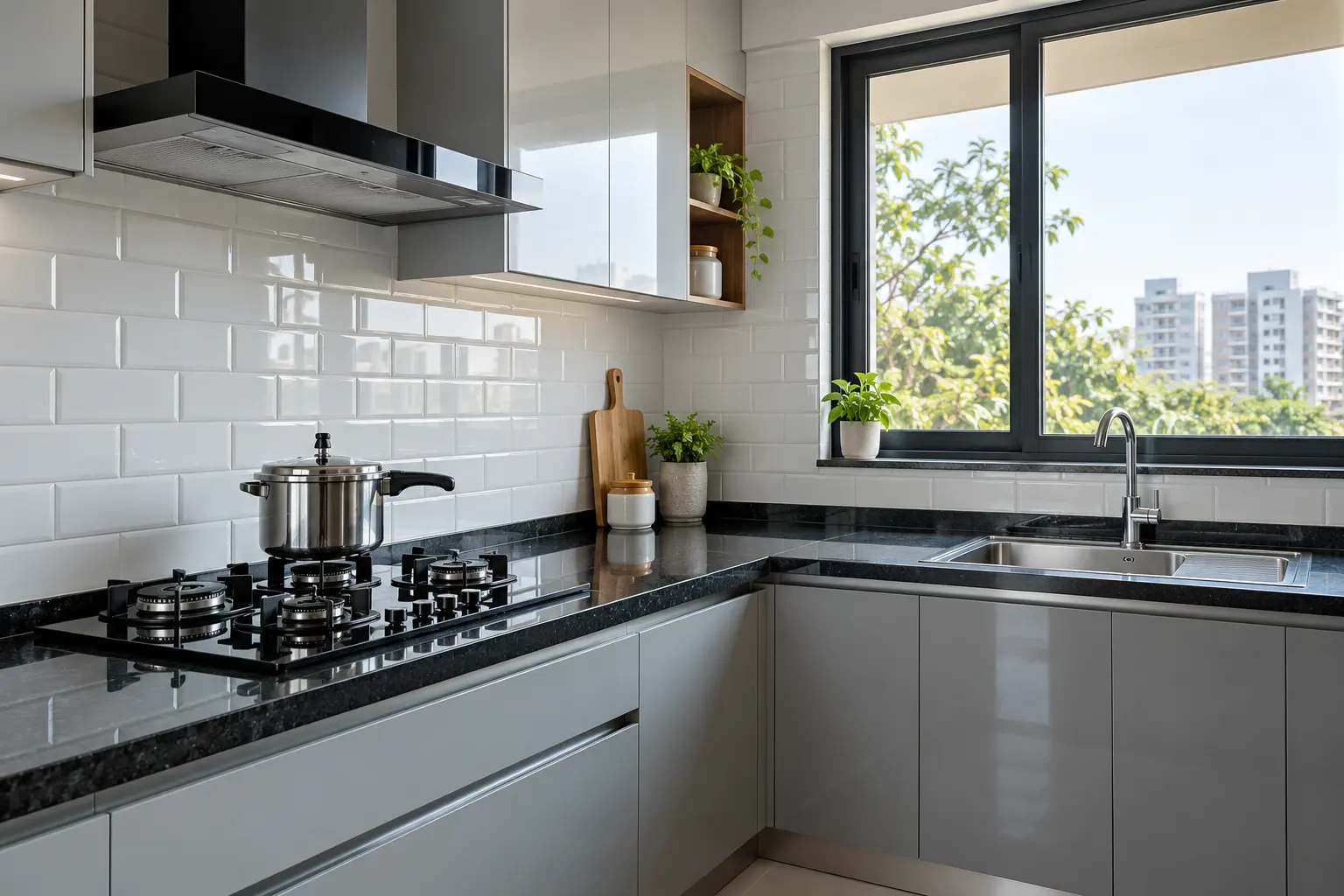
Wall tiles for bathrooms, kitchens and feature walls: ceramic vs vitrified, common sizes like 300x450 and 300x600 mm, and tips for choosing a set.
See the tiles in person before you decide
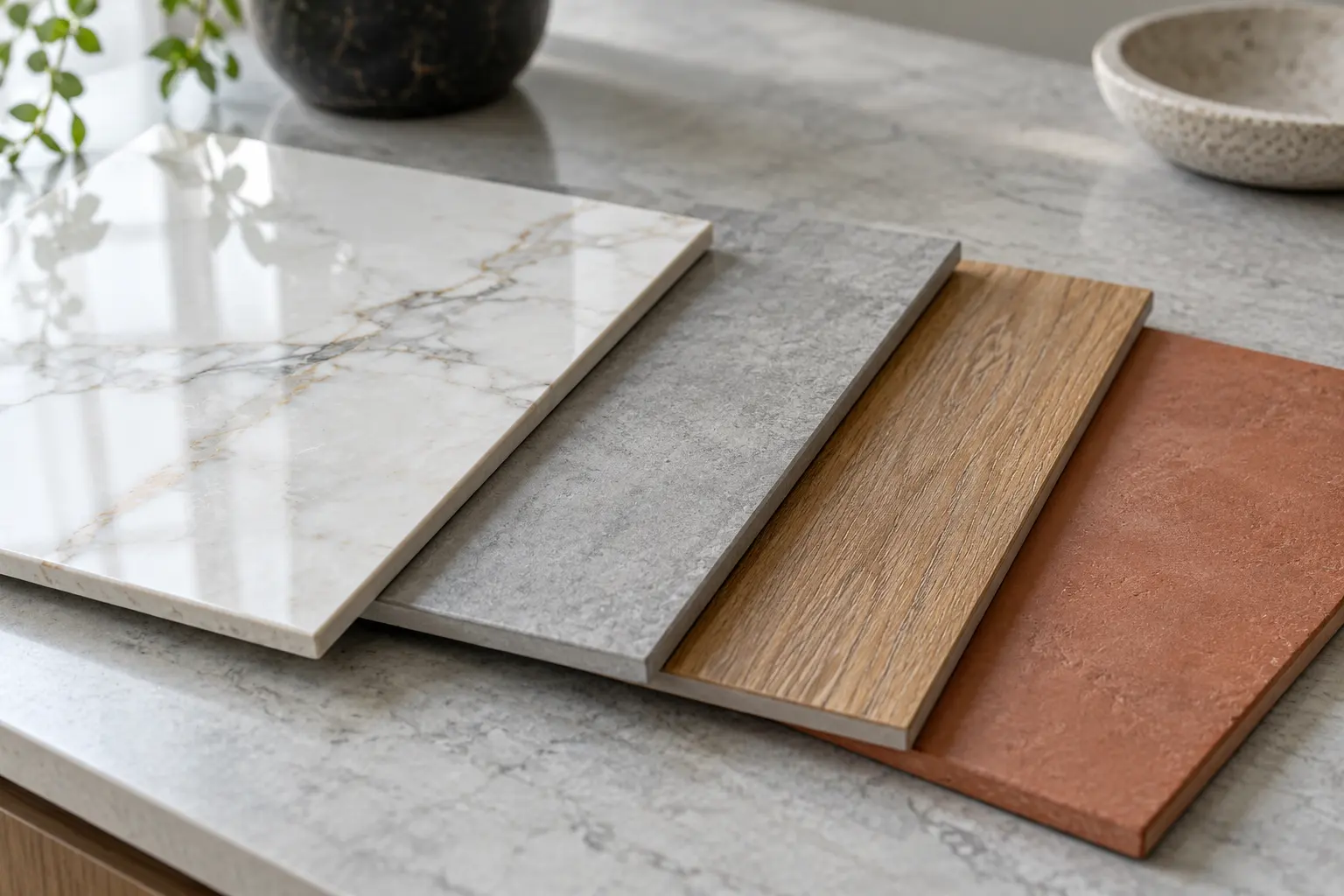
Photos never show a tile's true shade or texture. Get in touch to check what is in stock, then walk in and compare.