Basics · 5 min read
Anti-Skid Tiles Explained: Ratings, Finishes and Where to Use
What makes a tile anti-skid, what R ratings mean, and where you need grip at home: bathrooms, balconies, ramps, stairs, parking and pool sides.
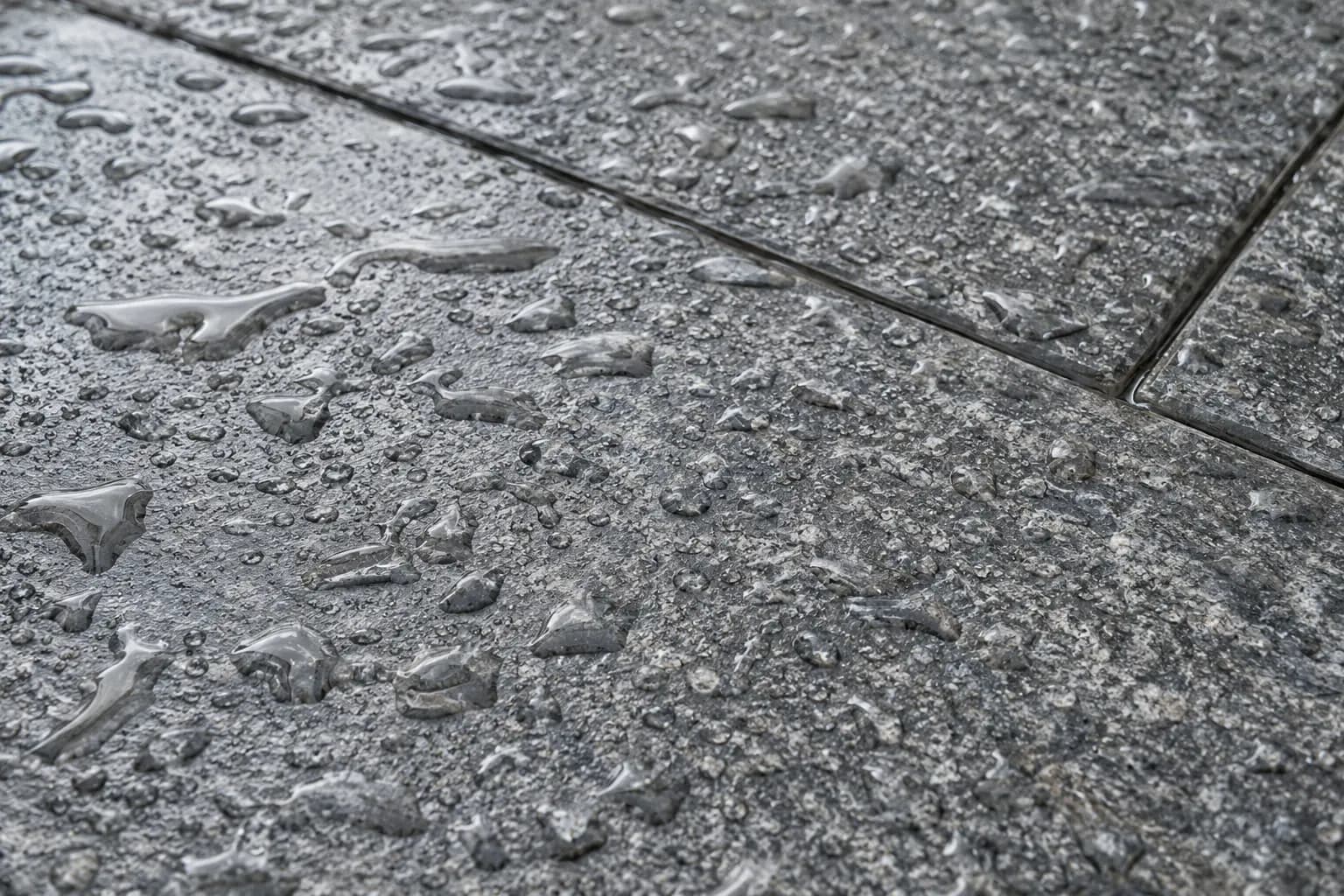
A slip on a wet floor is one of the most common accidents at home, and in many cases it is avoidable with the right tile. Anti-skid tiles have a textured surface that gives better grip when the floor is wet. Here is what makes a tile anti-skid, how ratings work, and where you really need one.
What makes a tile anti-skid
Grip comes from friction between your foot and the surface. Water and soap reduce that friction, which is why a polished tile turns slippery the moment it gets wet. Anti-skid tiles add friction through:
- Surface texture: fine grains, ridges or a rough, stone-like finish.
- Matt or rustic glaze: no polished shine.
- Raised patterns: small dots or lines on outdoor and parking tiles.
Smaller tiles also help indirectly. More grout lines per sq ft add a little extra grip, which is one reason 300x300 mm tiles are popular for bathroom floors.
Understanding slip ratings
Some manufacturers print a slip rating on the box. The most common one you will see is the R rating from the German DIN 51130 ramp test. A person walks on an oiled tile on a ramp, and the angle at which they start slipping decides the rating.
| R rating | Grip level | Typical use |
|---|---|---|
| R9 | Low | Dry indoor areas |
| R10 | Moderate | Bathrooms, kitchens, indoor wet areas |
| R11 | Good | Balconies, outdoor paths, utility areas, ramps |
| R12 | High | Parking, pool surrounds, sloped areas |
| R13 | Very high | Industrial and heavy commercial areas |
Other tests exist too, such as the pendulum test, and not every Indian tile box carries a rating. If there is no rating, use your hands: run your palm over the surface and feel the texture, and ask the shop which tiles are sold for wet or outdoor use.
Where you need anti-skid tiles
| Area | Why | Suggestion |
|---|---|---|
| Bathroom floor | Soap and water every day | Matt or anti-skid, R10 or R11 |
| Balcony | Rain during the monsoon | Anti-skid, R11 |
| Utility area | Water from washing machine and buckets | Anti-skid |
| Kitchen floor | Oil and water spills | Matt or light texture |
| Staircase (outdoor) | Rain and sloped approach | Textured, grooved step edge |
| Ramp or slope | Gravity plus water | R11 to R12 |
| Parking | Rain, oil, vehicle tyres | Heavy-duty textured tiles |
| Terrace | Rain and moss in shaded corners | Textured or cool roof tiles |
| Pool side | Constantly wet, barefoot | High grip, R12 or above |
In Bengaluru, balconies and open staircases are the places people most often underestimate. Rain comes in sideways during heavy showers, and a glossy balcony floor can catch you off guard.
Anti-skid vs matt vs glossy
| Finish | Grip when wet | Ease of cleaning | Best for |
|---|---|---|---|
| Glossy or polished | Low | Easiest | Dry indoor floors, walls |
| Matt | Medium | Easy | Kitchens, bedrooms, low-wet areas |
| Anti-skid | High | Needs a brush | Bathrooms, balconies, outdoor |
Our guide on matt vs glossy tiles covers finishes in more detail.
Looks have improved a lot
Anti-skid tiles used to mean plain, rough, single-colour squares. Today you can find anti-skid surfaces in stone, cement, wooden and terracotta looks, in sizes from 300x300 mm to 600x600 mm and more. You do not have to give up on design to get safety. See our anti-skid tiles page for the types.
Cleaning anti-skid tiles
Texture holds a bit more dirt than a smooth surface, so:
- Sweep or vacuum before mopping, so grit does not get pushed into the texture.
- Use a soft nylon brush with a mild, neutral cleaner once a week.
- Avoid strong acid cleaners regularly, as they can damage grout and some glazes.
- In shaded outdoor corners, clear moss or algae early, since that is what makes even textured tiles slippery.
Our cleaning and maintenance guide has more tips.
Common mistakes
- Using the same glossy tile on the balcony as in the living room just to match.
- Putting a polished tile at the main entrance where rain and slippers come in.
- Choosing anti-skid tiles but laying the floor flat, so water pools. Slope to the drain matters.
- Forgetting the staircase. Steps need grip at the front edge most of all.
Feel the difference yourself
Grip is something you understand best by touching the tiles. Visit Patidar Ceramic and run your hand over a few anti-skid samples from current stock, or call us to ask what is available for your bathroom, balcony or parking area.
Common questions
Are matt tiles the same as anti-skid tiles?
Not always. Matt tiles have less shine and usually better grip than glossy tiles, but anti-skid tiles have a textured surface designed specifically for wet areas. Check the slip rating if the box gives one.
What R rating do I need for a bathroom floor?
R10 or R11 is commonly used for home bathroom floors and balconies. Ramps, pool sides and outdoor slopes often use R11 to R12 or higher.
Are anti-skid tiles hard to clean?
The texture can hold a little more dirt than a smooth tile. A soft brush with mild cleaner once a week usually keeps them clean.
Can I use anti-skid tiles in the living room?
You can, but most people prefer smoother finishes indoors. Anti-skid tiles are best kept for wet areas, entrances and outdoors.
Keep reading
Anti-skid tiles
Anti-skid tiles give better grip on bathroom, balcony and outdoor floors. Learn how slip ratings work, common sizes and how to pick the right one.
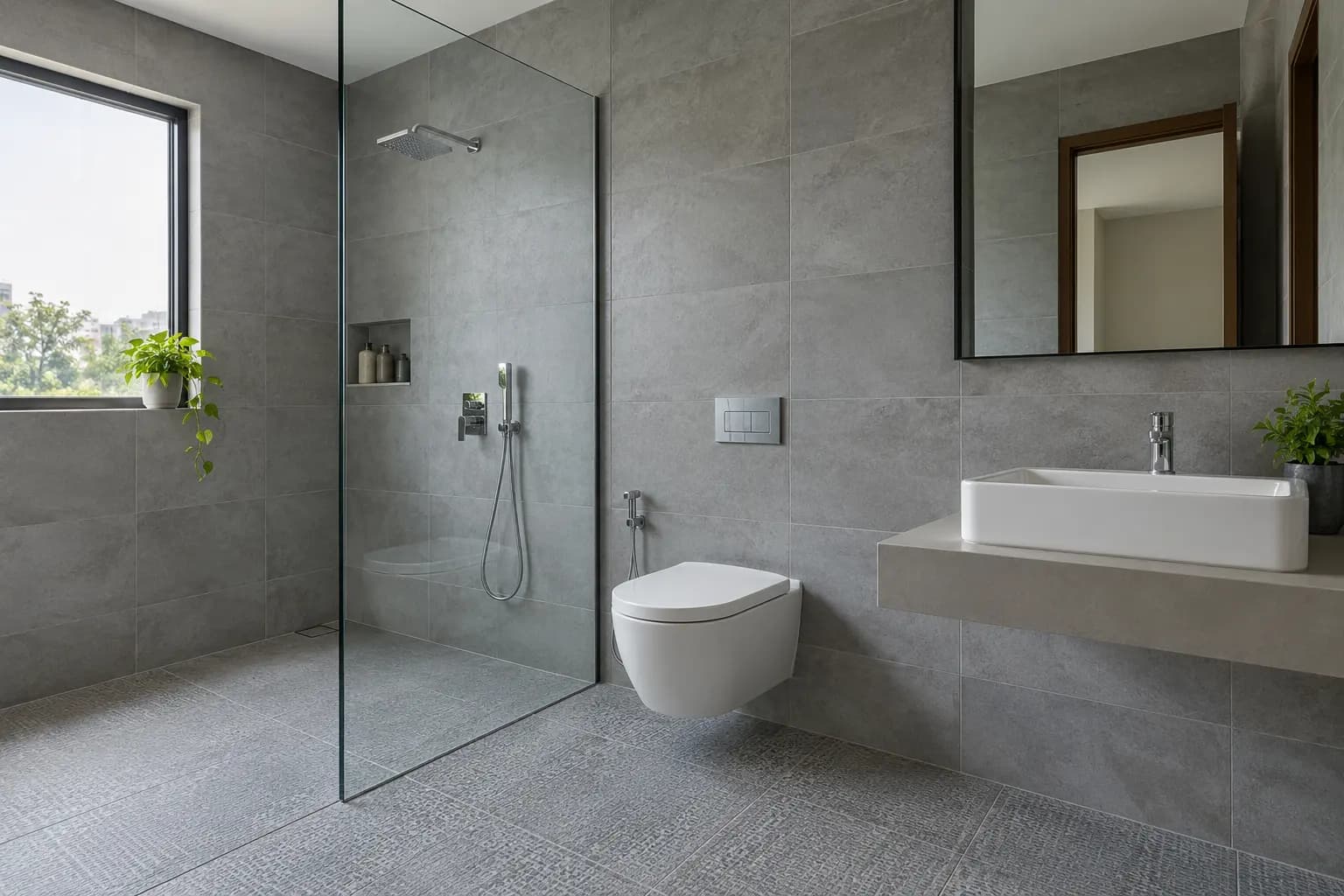
Bathroom
Choosing bathroom tiles in Bengaluru: anti-skid floors, wall tiles that wipe clean, sizes, slopes for drainage, and common mistakes to avoid.
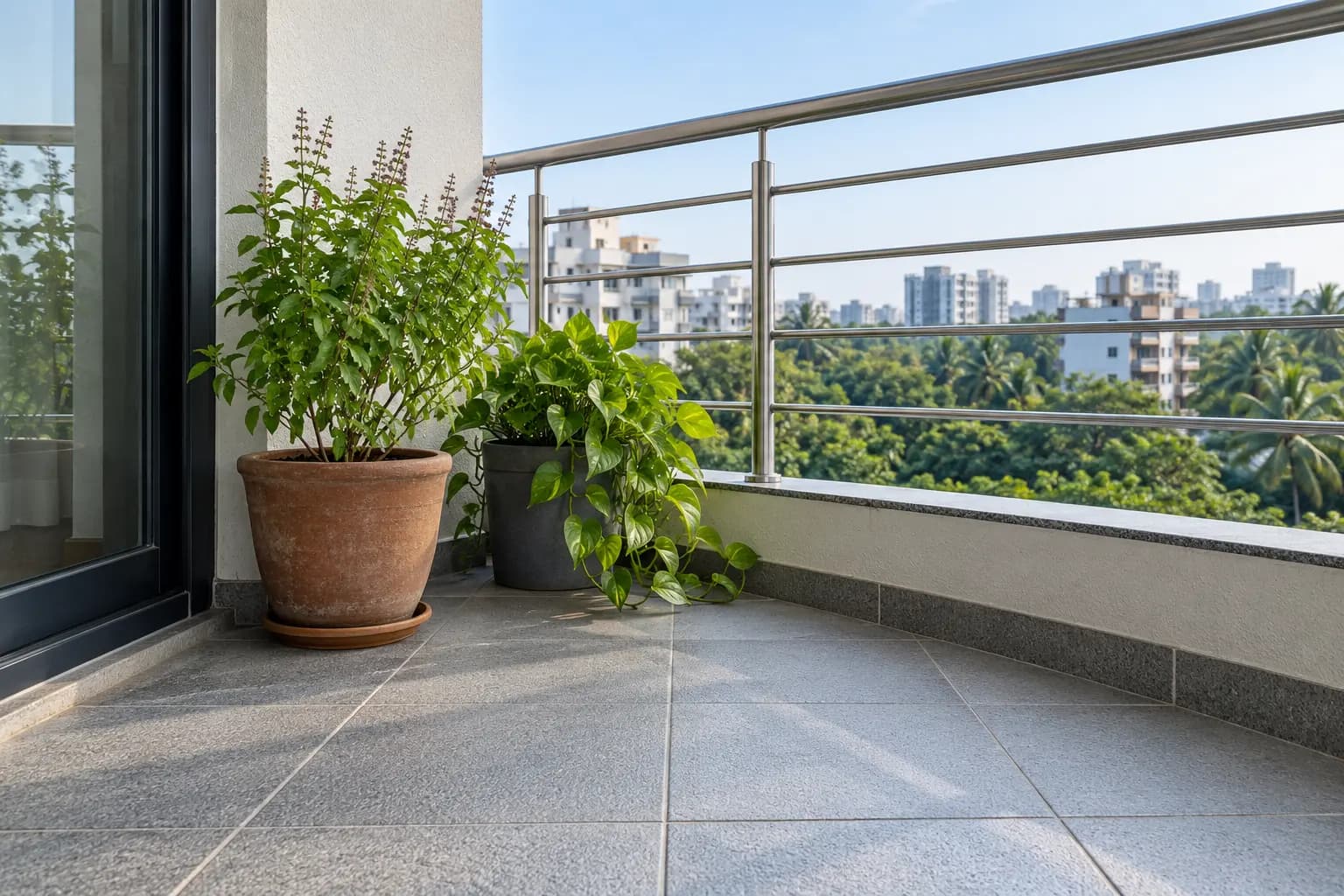
Balcony
Balcony tile guide for Bengaluru apartments: anti-skid outdoor surfaces, drainage slopes, and colours that stay cool in afternoon sun.
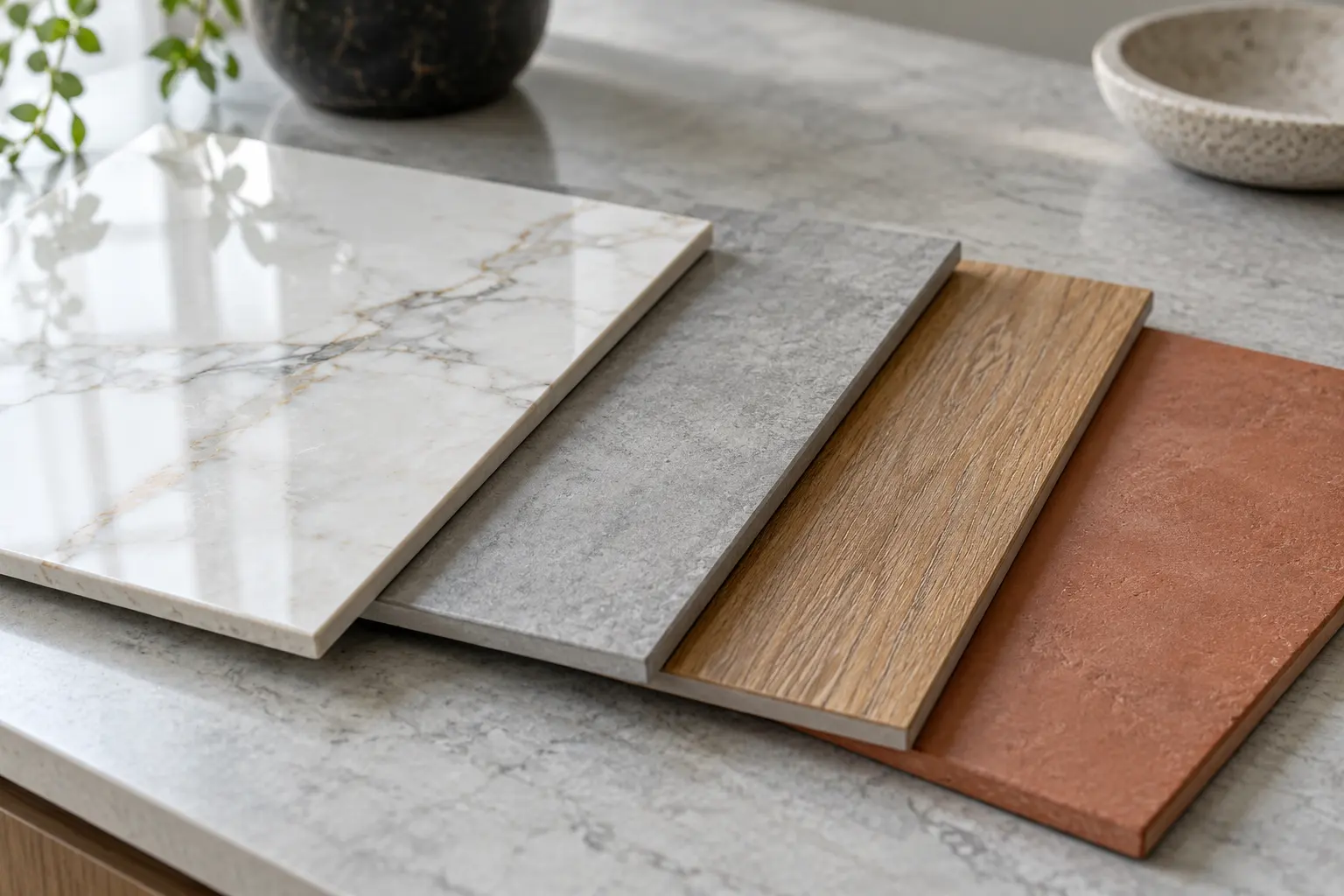
See the tiles in person before you decide
Photos never show a tile's true shade or texture. Get in touch to check what is in stock, then walk in and compare.