Parking Area Tiles: Heavy-Duty Floors for Bengaluru Houses
What to look for in parking tiles for Bengaluru houses: thickness, strength, grip, oil stain resistance, base preparation and common mistakes.
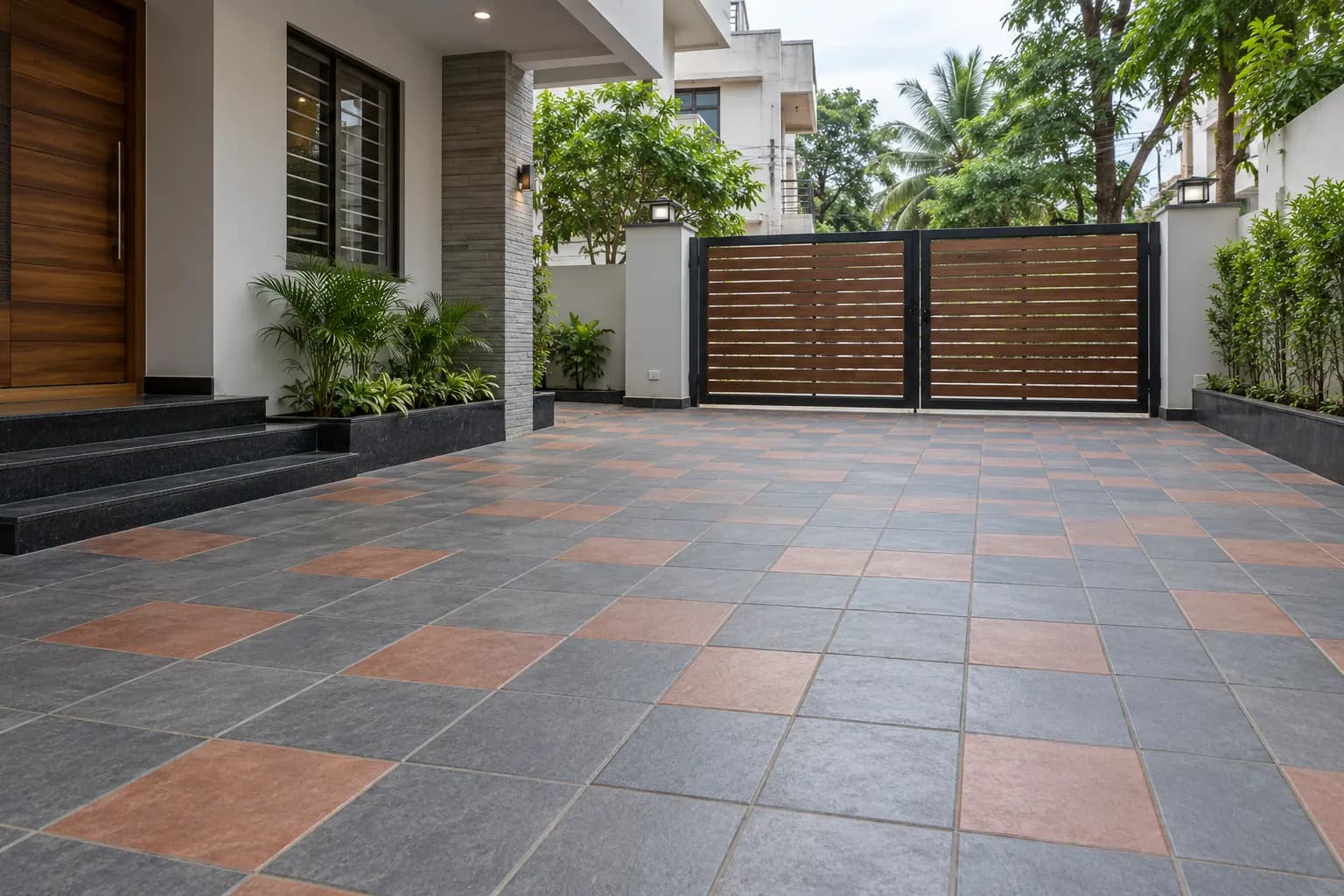
Parking in an independent house takes more punishment than any other floor. Cars and bikes roll in and out daily, oil drips, rain pours in during the monsoon and the sun bakes the surface in summer. A parking floor needs tiles made for the job and a properly prepared base.
What a parking floor has to survive
- Vehicle loads. A car puts concentrated weight on four small contact points. Turning wheels add twisting force.
- Oil, grease and fuel drips. These stain porous surfaces and make smooth tiles slippery.
- Rain and runoff. Parking areas near the gate get water from the road and the roof.
- Sun and heat. Open parking gets direct sun through the day, so surface heat and colour fading matter.
- Dirt and grit. Tyres bring in mud and small stones that scratch soft surfaces.
Recommended tiles
Use dedicated parking tiles. These are thicker, denser and have textured surfaces for grip. Common types include:
| Type | Notes |
|---|---|
| Heavy-duty vitrified parking tiles | Dense body, low water absorption, textured top |
| Full body vitrified tiles | Colour runs through the tile, so chips and wear show less |
| Concrete paver-style tiles | Very tough, more industrial look |
A rustic finish or carving finish with raised patterns gives grip and hides tyre marks. Avoid polished, glossy or smooth matt indoor tiles here.
Our parking tiles buying guide goes deeper into thickness, strength and pattern options.
Base preparation matters as much as the tile
Even the strongest tile will crack on a weak base. Before tiling:
- Lay a proper concrete base of suitable thickness for vehicles, not just a thin screed on soil.
- Give a slope toward the gate or a drain so rainwater runs off.
- Bed the tile fully. Hollow spots under a tile are the most common reason for cracks under a car wheel.
- Leave expansion joints on large open areas so the floor can handle heat movement.
Layout and colour tips
- Grey, charcoal and terracotta hide oil and tyre marks well. Two-tone layouts, such as grey with a red border, are common and practical.
- Smaller formats like 300x300 mm or 400x400 mm handle load and slope better than very large tiles outdoors.
- Match the colour mood with your front elevation and gate, since the parking is part of how the house looks from the road.
- Plan the edge where parking meets the garden or pathway so water does not collect at the joint.
Mistakes to avoid
- Using leftover indoor tiles to save money. They usually crack or become slippery.
- Very light colours in a car parking. Tyre marks and oil will show quickly.
- No drainage slope. Standing water leads to moss and slips.
- Laying tiles on a thin, uncured base. Give the base time to cure before tiling.
Talk to us about your parking
Tell us the parking size, whether it is for a car or only two-wheelers, and whether it is covered. Visit the shop to see parking tile patterns and thicknesses in person, or call to check what is in stock.
Common questions
How thick should parking tiles be?
Parking tiles are usually thicker than indoor floor tiles, often in the range of 12 mm to 20 mm depending on type. Thicker, denser tiles handle vehicle weight better, but a solid base matters just as much.
Can I use normal floor tiles in my car parking?
Regular indoor tiles are usually too thin and smooth for vehicle loads and wet outdoor conditions. They are likely to crack or become slippery. Use tiles made for parking or heavy outdoor use.
How do I clean oil stains from parking tiles?
Wipe fresh oil quickly and wash with a mild degreaser. Dense, low-absorption tiles stain less, and darker or patterned designs hide marks better.
Why do parking tiles crack?
Most cracks come from a weak or uneven base, hollow spots under the tile, or tiles too thin for the load. Proper concrete base and full bedding of the tile reduce this risk.
Keep reading
Parking tiles
Parking tiles are thicker, textured tiles made for car and bike loads. Learn what to check, common sizes and how to get a parking floor that lasts.
Parking Tiles Buying Guide: Thickness, Finish and Laying Tips
Choosing tiles for a car parking or driveway? Learn what thickness, surface grip, colour and base preparation you need so the floor lasts for years.
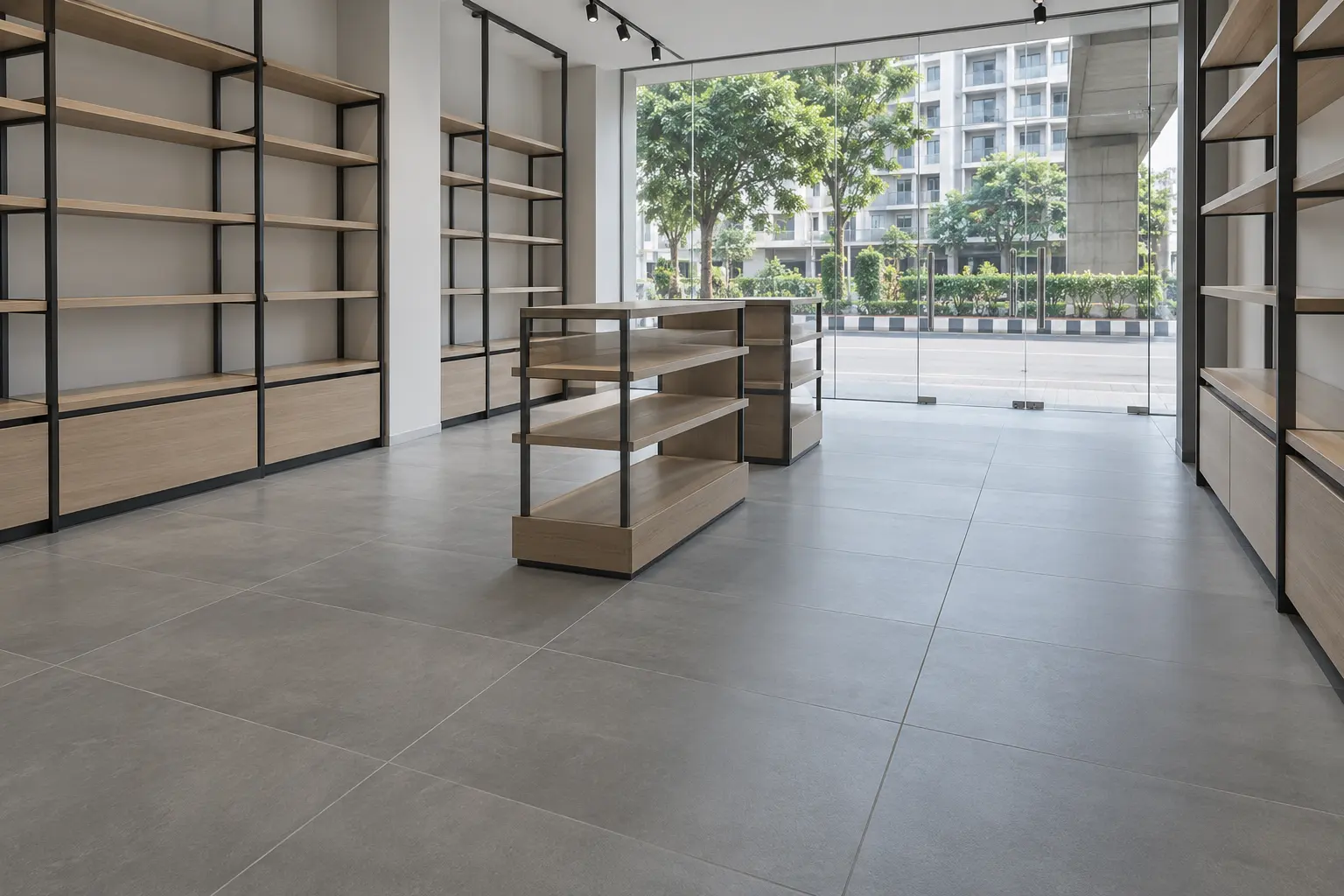
Full body tiles
Full body vitrified tiles carry colour through the whole tile, so chips and wear barely show. See where they suit, common sizes and how to choose.
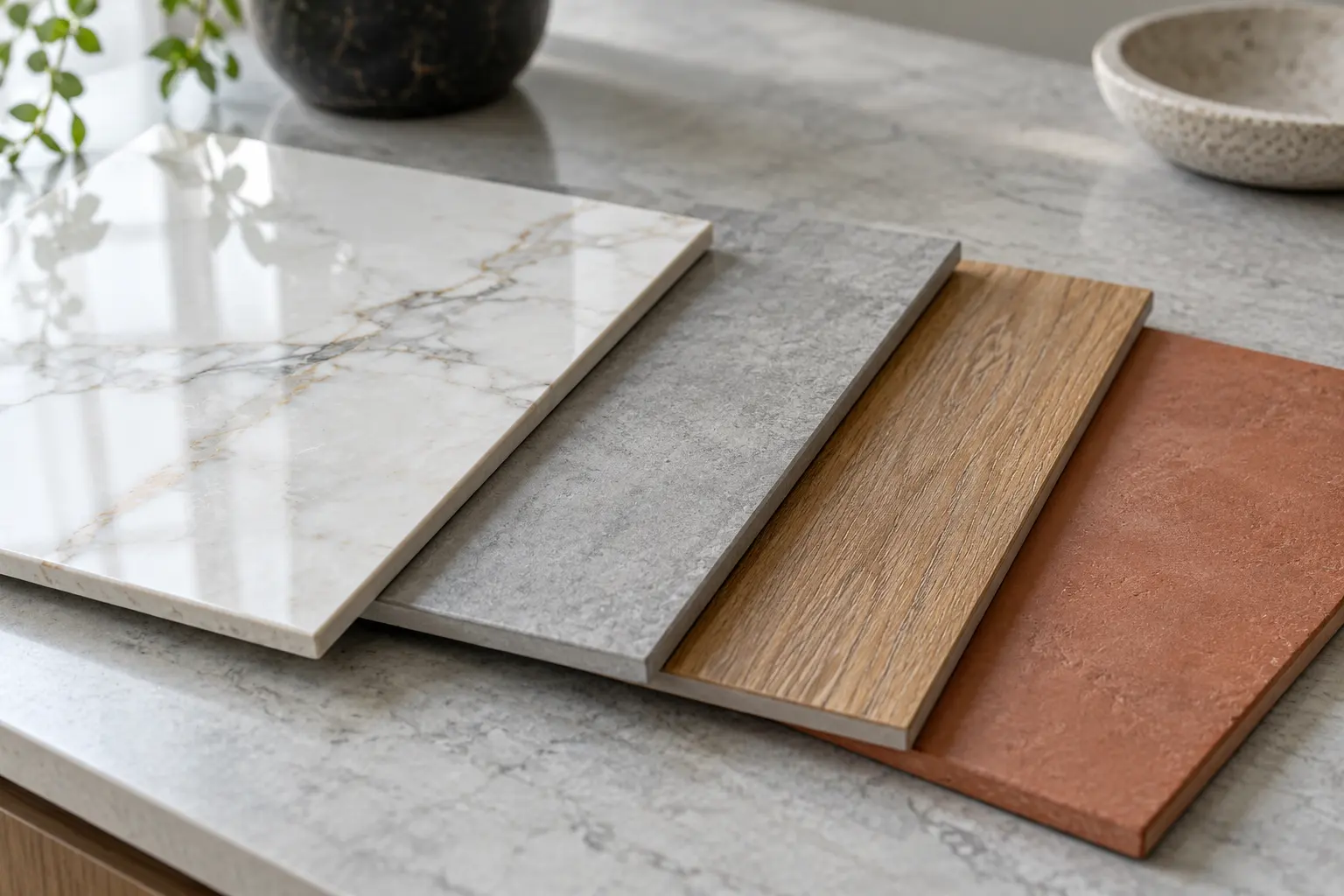
See the tiles in person before you decide
Photos never show a tile's true shade or texture. Get in touch to check what is in stock, then walk in and compare.