Buying guide · 4 min read
Parking Tiles Buying Guide: Thickness, Finish and Laying Tips
Choosing tiles for a car parking or driveway? Learn what thickness, surface grip, colour and base preparation you need so the floor lasts for years.
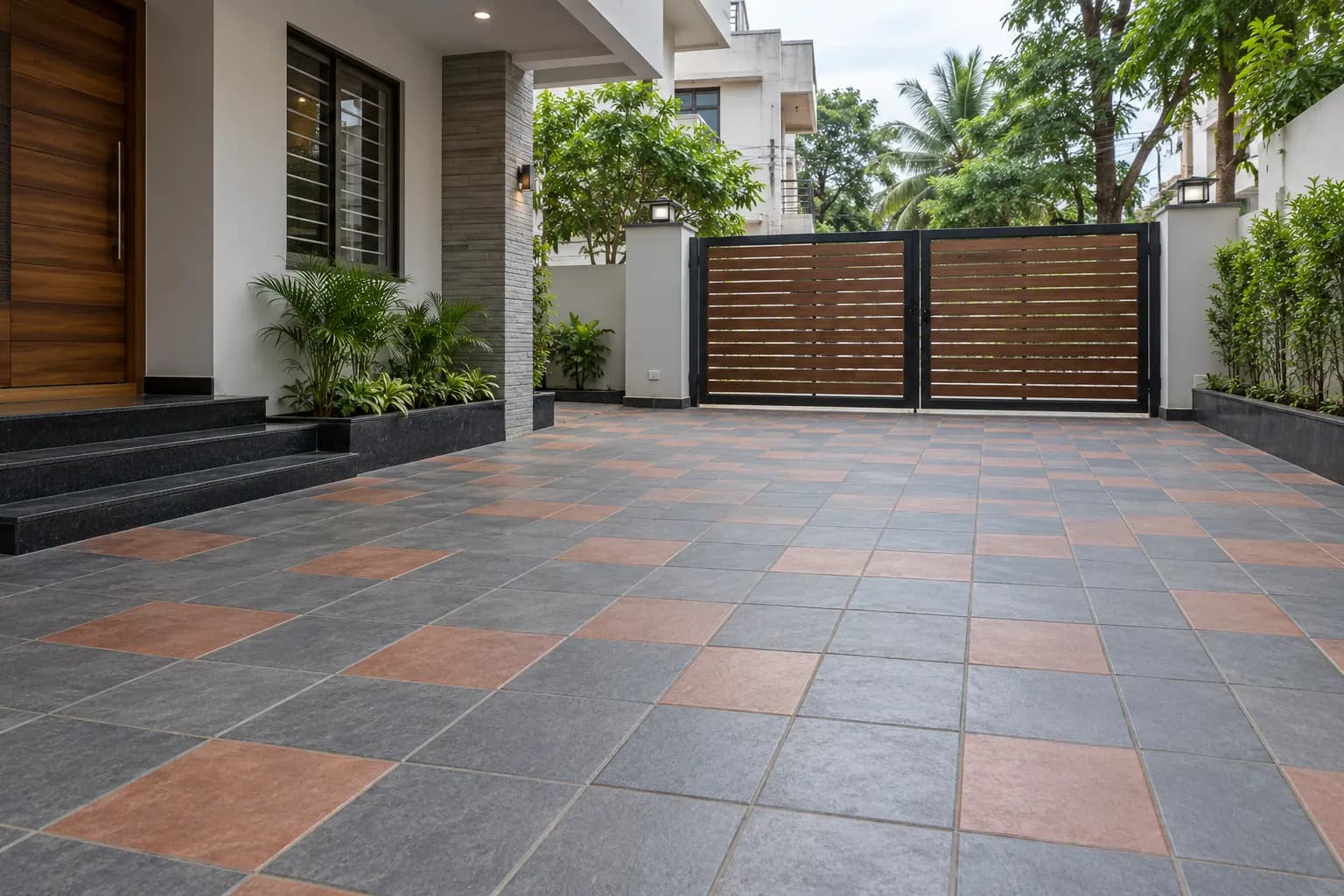
Parking areas in independent houses take a beating. Car weight, turning tyres, oil drips, monsoon rain and harsh sun all hit the same floor. The wrong tile can crack, stain or turn slippery within a year or two. This guide covers what to look for when buying tiles for your car parking, porch or driveway.
What makes a parking tile different
Parking tiles are built for load and weather, not just looks. Compared to indoor floor tiles, they usually have:
- More thickness. Typically in the 12 mm to 20 mm range depending on type, to handle point loads from tyres.
- A textured surface. For grip in rain and to hide wear.
- Higher strength. Many are vitrified or heavy-duty concrete or ceramic bodies designed to resist cracking.
- Patterns and mixed tones. To hide tyre marks, dust and oil.
You can read more about types on our parking tiles page.
Common types you will see
| Type | Typical traits | Good for |
|---|---|---|
| Heavy-duty vitrified parking tiles | Strong, low water absorption, textured | Car parking, porches |
| Full body vitrified tiles | Colour runs through the body, wear does not show easily | High traffic driveways, commercial entrances |
| Matt anti-skid outdoor tiles | Rough surface, good grip | Porches, ramps, walkways |
| Cement / concrete pavers and chequered tiles | Very thick, rugged, often interlocking or chequered | Driveways, open yards |
Full body vitrified tiles are a good option where scratches and chips are likely, since the colour is the same all the way through.
Key things to check before buying
- Load rating. Ask whether the tile is meant for vehicle traffic. Indoor tiles, even thick looking ones, may not be.
- Thickness. Thicker is generally better for car parking. Check the actual thickness, not just the look.
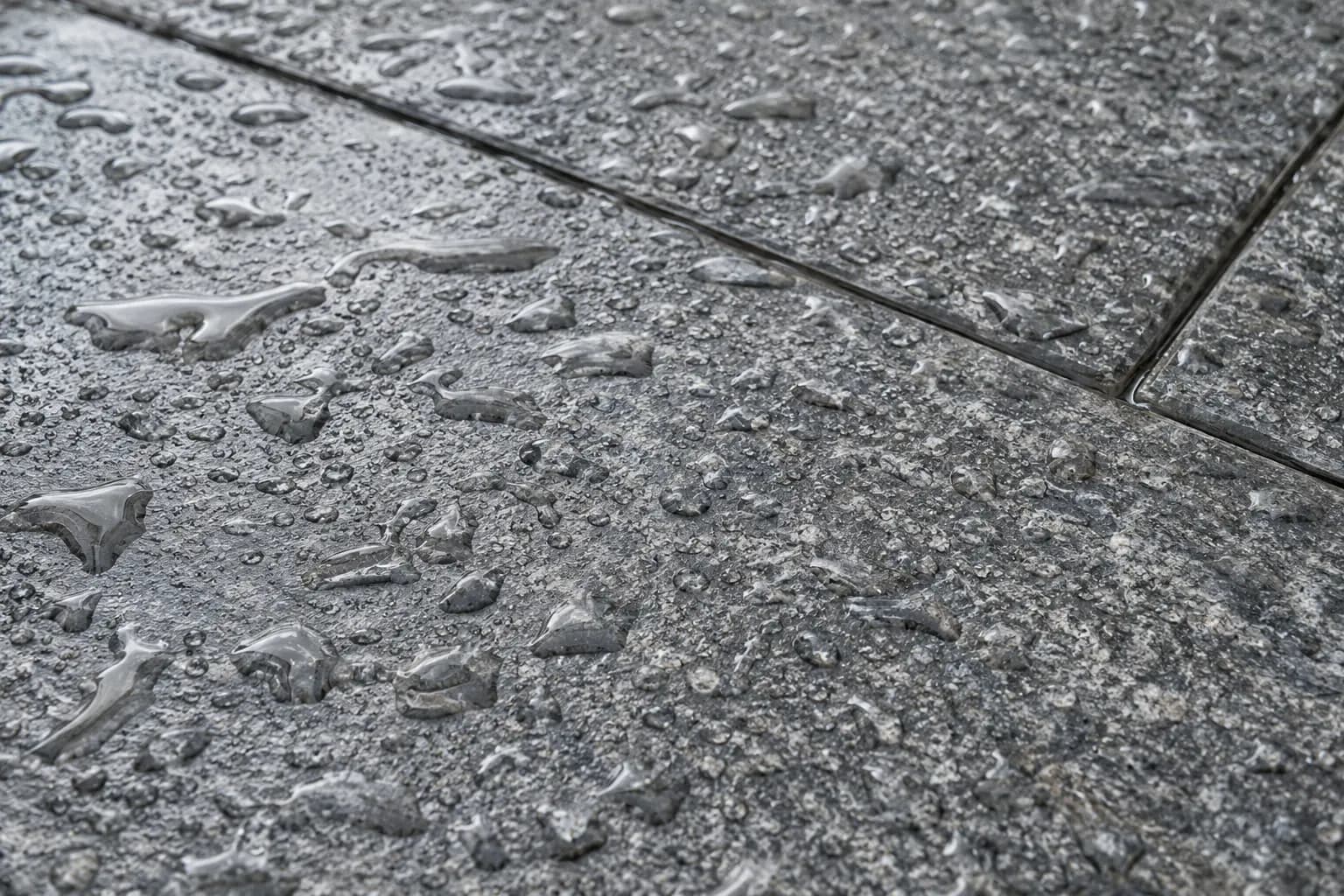
- Surface grip. A textured or anti-skid surface matters on slopes and ramps, especially during Bengaluru's monsoon. Our anti-skid guide explains how grip is rated.
- Water absorption. Lower absorption means better resistance to staining, moss and damage from water.
- Colour and pattern. Mixed greys, terracotta and stone-like patterns hide dirt and tyre marks.
- Size. Parking tiles often come in 300x300 mm, 400x400 mm or similar modest sizes. Smaller tiles handle slight ground movement and slopes better than large ones.
Colour choices that work
- Grey and charcoal mixes. Hide oil and tyre marks well.
- Terracotta and red. Traditional look, hides dust and soil.
- Two-tone patterns. Grey with terracotta or beige can define car tracks or borders.
- Avoid plain white or plain black. White shows tyre marks; black heats up in the sun and shows dust.
Base preparation matters most
Most parking tile failures come from the base, not the tile. A good layer should:
- Compact the soil properly and lay a solid concrete base (PCC) of suitable thickness for vehicle loads.
- Give the base a slight slope away from the house and towards a drain, so rainwater does not pool.
- Let the concrete cure before tiling.
- Use a suitable bedding mortar or exterior-grade adhesive with full coverage, so there are no hollow spots under the tiles. Hollow tiles crack under tyres.
- Leave expansion joints where needed, especially in large open areas exposed to sun.
Our guide on tile adhesive vs cement mortar explains bedding options.
Slopes and ramps
Many Bengaluru houses have a ramp from the road to the parking. Ramps need the most grip. Choose a strongly textured tile, or a pattern with raised grooves, and avoid smooth or glossy surfaces completely. Water runs down ramps during rain, so drainage at the bottom is important.
Maintenance tips
- Sweep regularly so grit does not grind into the surface.
- Wipe oil drips quickly and clean with a degreaser.
- Scrub off moss after the monsoon in shaded corners.
- Keep a few spare tiles from the same batch for future repairs.
Before you buy
Measure the full parking area, including ramps, steps and the porch, and note the slope. Use our tile calculator for a rough count and add extra for cuts and spares. See our parking room page for design ideas.
Talk to us
Parking tile designs and thicknesses in stock change from time to time. Visit the shop with your measurements and a photo of the area, and we will show you what is available for vehicle use.
Common questions
What thickness should parking tiles be?
Parking tiles are usually thicker than indoor floor tiles, commonly around 12 mm to 20 mm depending on the product. For areas where cars park, choose a tile the manufacturer rates for vehicle traffic.
Can I use normal vitrified floor tiles in my parking?
Standard thin indoor tiles are not recommended. They can crack under car weight and are often too slippery when wet. Use tiles made for parking or heavy outdoor use.
Which colour is best for a parking area?
Mid greys, terracotta, brown and mixed tones hide tyre marks, oil spots and dust best. Very light or very dark plain colours show dirt quickly.
Why do parking tiles crack?
The most common reasons are a weak or uneven base, hollow spots under the tile, or using tiles too thin for the load. Good base preparation matters as much as the tile.
Keep reading
Parking tiles
Parking tiles are thicker, textured tiles made for car and bike loads. Learn what to check, common sizes and how to get a parking floor that lasts.
Parking
What to look for in parking tiles for Bengaluru houses: thickness, strength, grip, oil stain resistance, base preparation and common mistakes.
Anti-skid tiles
Anti-skid tiles give better grip on bathroom, balcony and outdoor floors. Learn how slip ratings work, common sizes and how to pick the right one.
See the tiles in person before you decide
Photos never show a tile's true shade or texture. Get in touch to check what is in stock, then walk in and compare.