Porcelain Tiles in Bengaluru: Is It the Same as Vitrified?
Porcelain vs vitrified tiles in plain words: what the label means, how dense they are, where they work best and what to check before you buy.
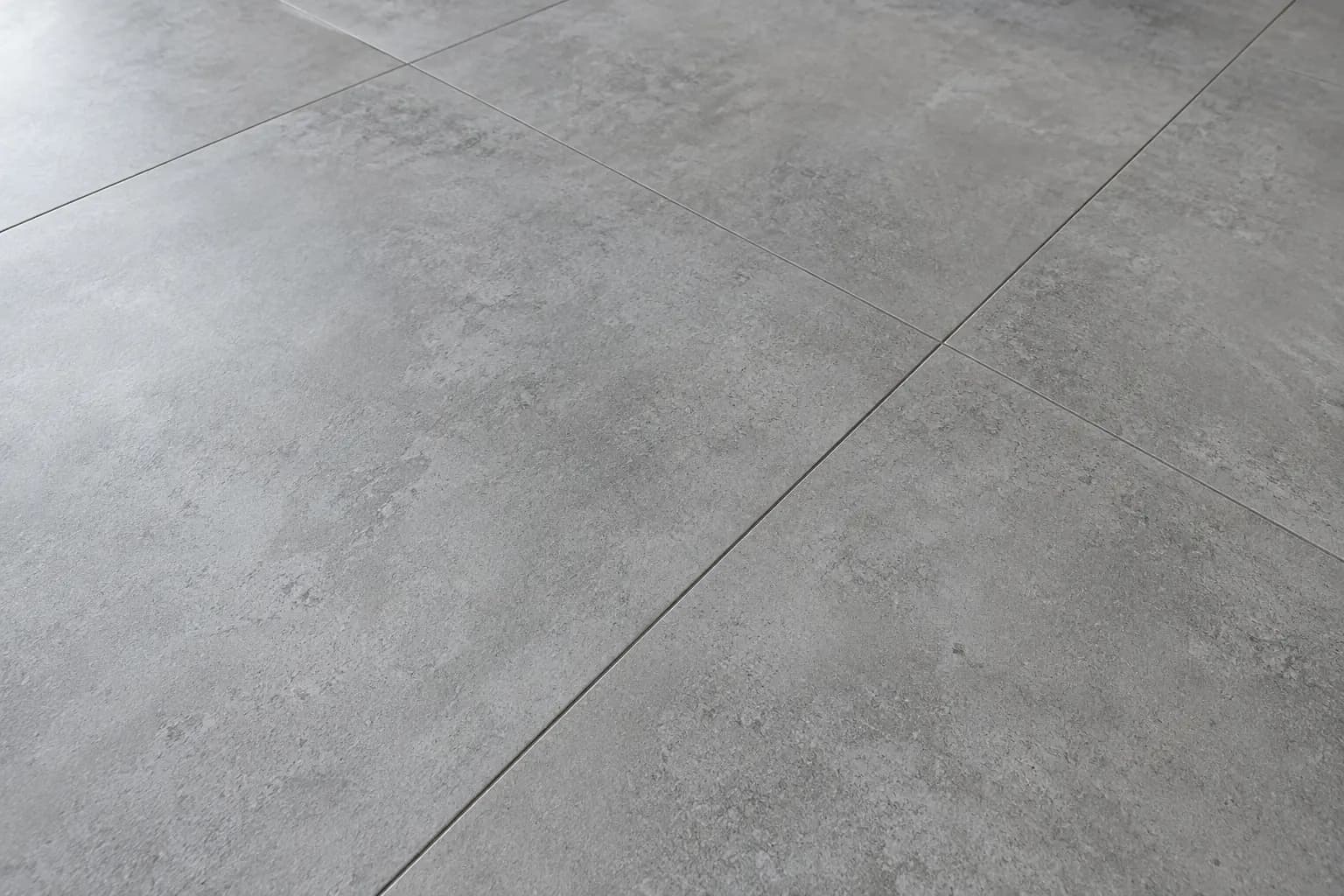
People often ask us whether porcelain tiles are better than vitrified tiles. The honest answer is that they are, for practical purposes, the same family of tile. The difference is mostly in the name and how a particular range is marketed. This page explains what "porcelain" means and when it matters.
What porcelain tiles are
Porcelain tiles are made from refined clay with a high proportion of feldspar and silica, pressed hard and fired at very high temperatures. The body becomes dense and glass-like, so it absorbs very little water. International standards usually class a tile as porcelain when water absorption is 0.5% or less.
In India, the same kind of tile is usually sold as "vitrified". You will see the word porcelain on some boxes, especially on imported-style ranges, large slabs and some glazed vitrified collections. So when you compare, look at the specification on the box (water absorption, thickness, size tolerance) instead of the name alone.
Glazed porcelain vs full body porcelain
- Glazed porcelain has a printed glaze on a porcelain body. This is the same idea as GVT and PGVT. It gives the most design choice, from marble to concrete to wood.
- Full body porcelain has colour and pattern through the body. A chip or scratch is less visible. See our full body vitrified tiles page.
Where porcelain works, and where it doesn't
Porcelain is a strong choice for:
- Living rooms, kitchens and dining areas with heavy daily use
- Shops, clinics and offices
- Covered balconies and sit-outs, in matt or textured finish
- Kitchen countertops and wall cladding when sold as thin or large slabs
It is not the right choice for every spot. A polished porcelain tile is slippery when wet, so it is not ideal on a bathroom floor or open terrace. Porcelain is also harder to cut and drill than ceramic, which means more effort on walls with many fittings. For a regular bathroom wall, a good ceramic wall tile is often simpler.
Sizes and finishes commonly available
Porcelain and vitrified tiles typically come in 600x600 mm, 600x1200 mm and 800x1600 mm. Large porcelain slabs of 1200x2400 mm and beyond are also made, sometimes in thinner 6 mm versions for walls and furniture. Common finishes are matt, satin, glossy, lappato and textured.
How to choose
- Read the box, not the name. Water absorption under 0.5% and a clear size and thickness are what matter.
- Match the finish to the room. Matt for kitchens and wet areas, gloss for bedrooms and halls.
- Check flatness. Lay two tiles face to face. They should sit flat without rocking. Our guide on how to check tile quality has more simple tests.
- Ask about edges. Rectified edges allow thin joints and a cleaner finish on large tiles.
- Plan for cutting. Dense tiles need a good cutter and a careful tiler, especially for large formats.
Ask us what fits your project
If a brochure or architect has suggested porcelain, bring the details to the shop. We will show you comparable tiles that are currently in stock and explain the differences in plain words.
Common questions
Are porcelain and vitrified tiles the same?
Very nearly. Both are dense, high-fired tiles with water absorption usually under 0.5%. In India 'vitrified' is the common trade term and 'porcelain' is used more internationally or for certain premium ranges.
Is porcelain tile good for outdoor use?
A matt or textured porcelain tile is a good choice for covered sit-outs and balconies because it absorbs very little water. For open, wet areas, pick an anti-skid surface.
Do porcelain tiles chip easily?
They are hard but can chip at the edges if something heavy is dropped. Glazed porcelain shows a different colour underneath a chip, while full body porcelain hides chips better.
Keep reading
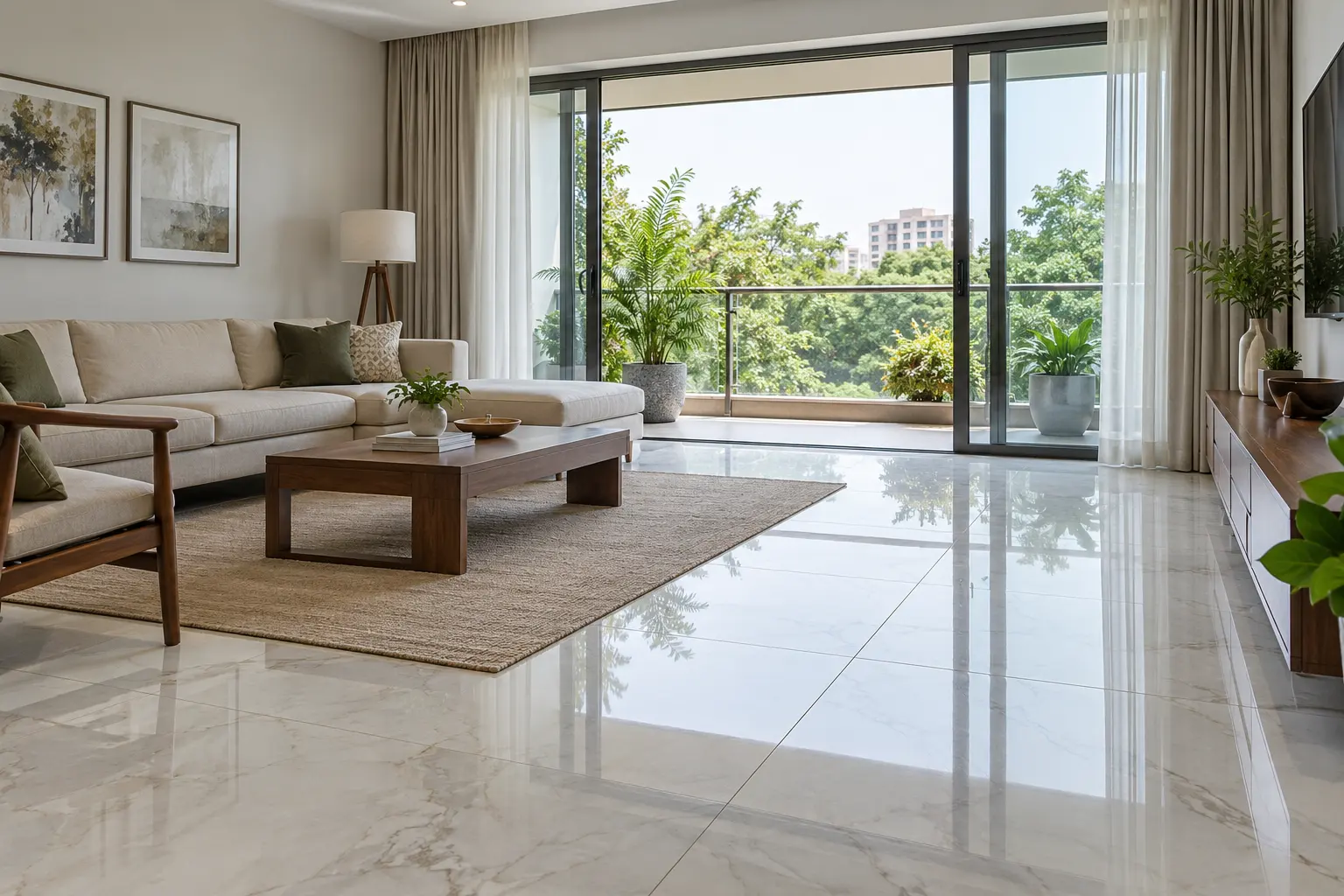
Vitrified tiles
What vitrified tiles are, the four main types, common sizes like 600x600 and 600x1200 mm, and how to pick the right one for your Bengaluru home.
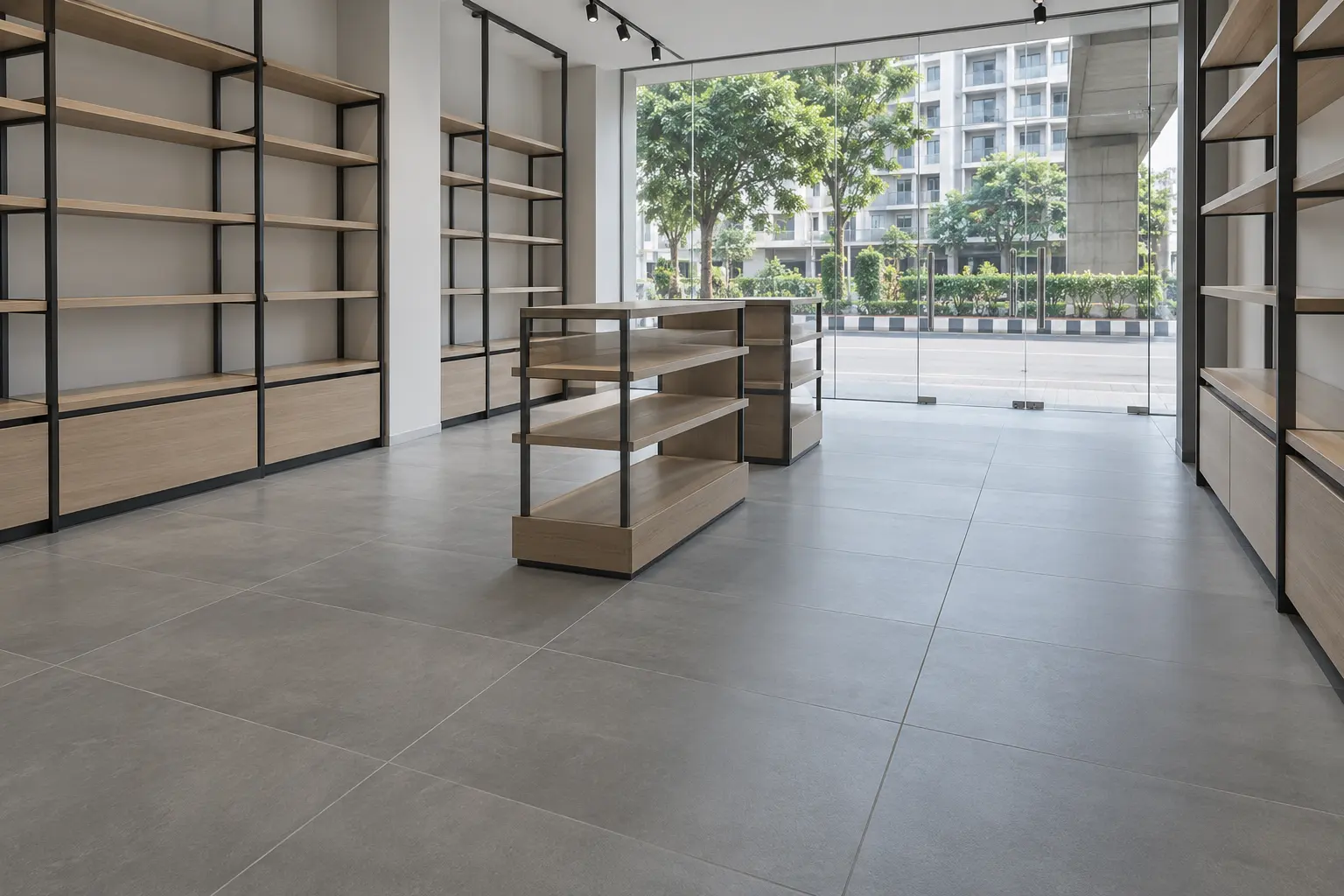
Full body tiles
Full body vitrified tiles carry colour through the whole tile, so chips and wear barely show. See where they suit, common sizes and how to choose.
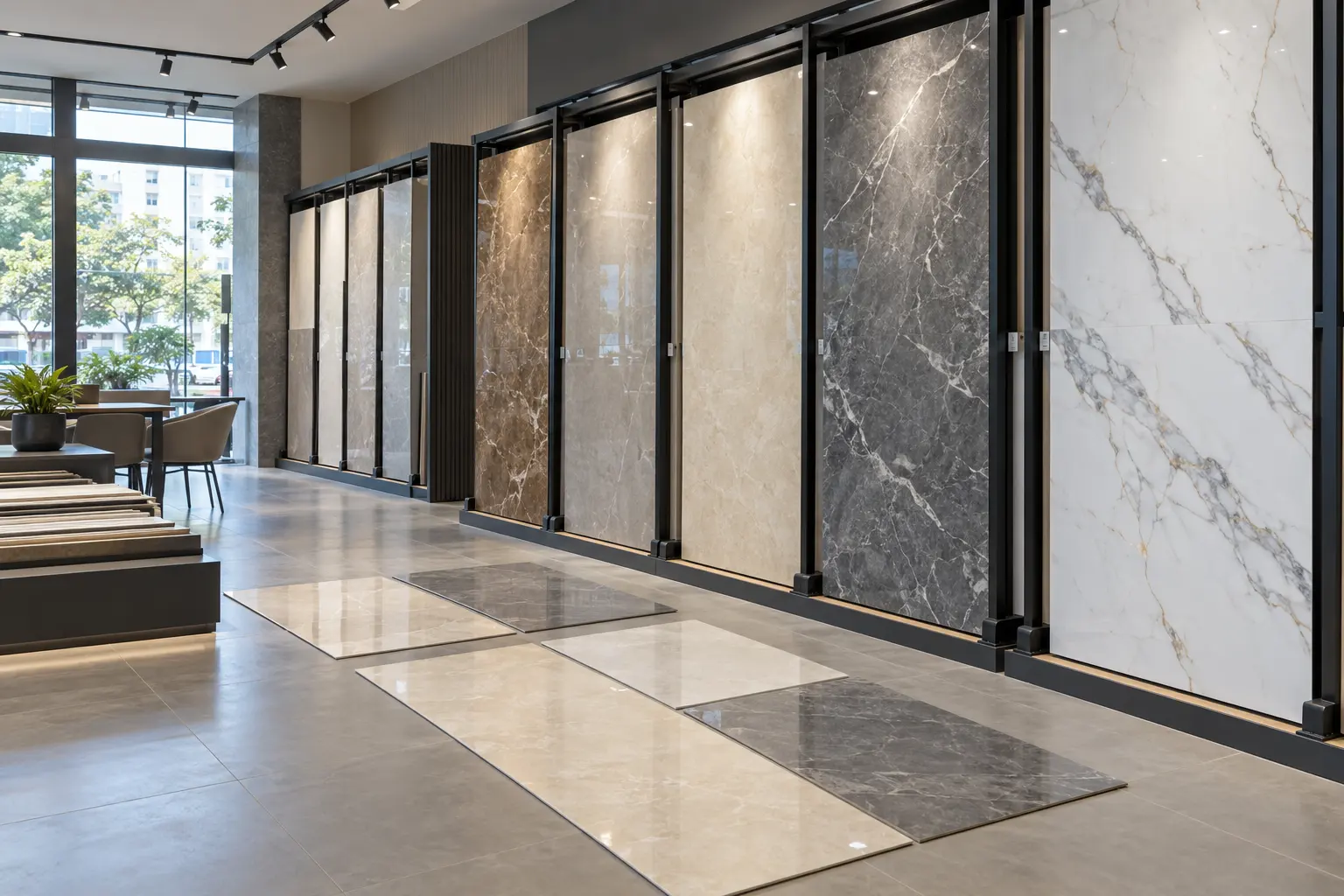
Large format slabs
Large format slab tiles like 800x1600 and 1200x2400 mm give a clean, near jointless look. Learn where they suit, handling needs and how to choose.
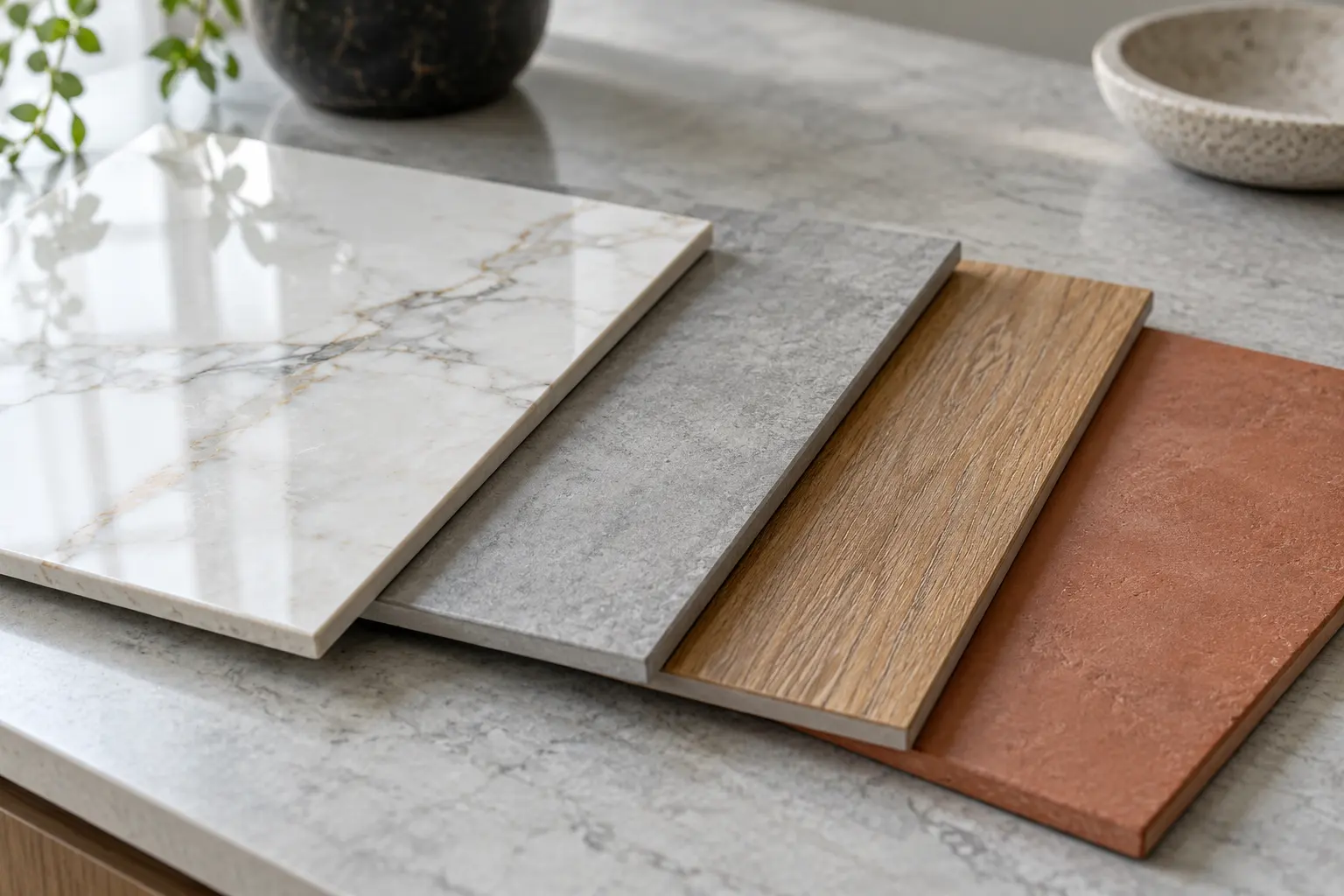
See the tiles in person before you decide
Photos never show a tile's true shade or texture. Get in touch to check what is in stock, then walk in and compare.