Ceramic Tiles in Bengaluru: Where They Work and How to Choose
Ceramic tiles explained: how they differ from vitrified, why they suit bathroom and kitchen walls, common sizes and what to check before you buy.
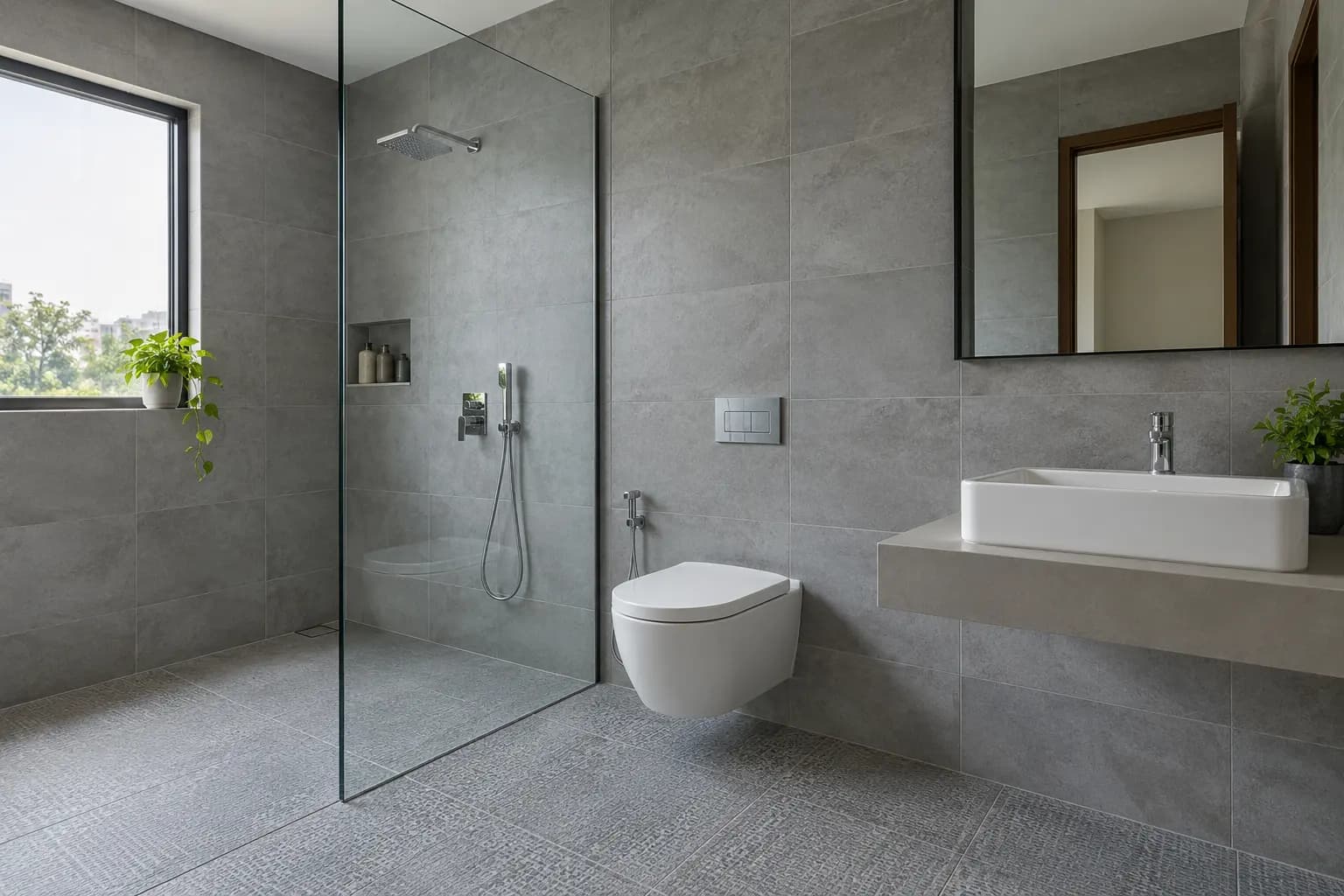
Ceramic tiles are the older, simpler cousin of vitrified tiles. They are made from clay that is shaped, glazed and fired at a lower temperature, which gives a lighter and more porous tile. In most Bengaluru homes today you will find ceramic on the bathroom and kitchen walls and vitrified on the floors.
What ceramic tiles are
A ceramic tile has a clay body (often red or off-white, visible on the back) covered with a glaze that carries the colour and design. Because the body is not fully vitrified, it absorbs more water. Ceramic wall tiles typically absorb around 10% or more by weight, while ceramic floor tiles are usually denser, somewhere in the 3% to 6% range. Vitrified tiles, for comparison, are usually under 0.5%.
That higher porosity is not a flaw on a wall. The glaze on the face keeps water out, and the porous back actually grips adhesive well.
Where ceramic tiles work, and where they don't
Good places for ceramic:
- Bathroom walls, full height or up to door height
- Kitchen walls and backsplashes
- Utility and wash areas (walls)
- Light traffic indoor floors, using a tile made for floors
Places to avoid ceramic:
- Car parking and driveways, the load and grit will crack or wear them
- Open terraces and balconies exposed to rain and sun, where vitrified or full body tiles last longer
- Busy commercial floors
- Anywhere you would use a wall tile as a floor tile, which is a common mistake
On walls, ceramic is also easier for the plumber and electrician. It cuts and drills more easily than vitrified, which helps when you have a lot of fittings, niches and switch boards.
Sizes and finishes commonly available
Ceramic wall tiles usually come in 300x450 mm and 300x600 mm, with smaller formats like 250x375 mm and the narrow subway tiles also available. Ceramic floor tiles are commonly 300x300 mm or 400x400 mm, often in matt or textured finishes for bathrooms.
Wall tiles are often sold as a set: a light base tile, a dark tile and a highlighter tile designed to go together. Finishes range from glossy and satin to matt and 3D textured.
How to choose
- Check whether it is a wall or floor tile. The box usually says. Wall tiles are thinner and softer.
- Glossy or matt for walls? Glossy is easier to wipe in a kitchen. Matt hides water spots and soap marks better in a bathroom.
- Look at the back and edges. Edges should be straight and the glaze should not have pinholes or crazing (fine cracks).
- Match floor and wall. If your floor is vitrified, carry a floor sample when choosing ceramic wall tiles so the colours sit well together.
- Buy a little extra. Wall tiling has many cuts around fittings. Our guide on how much extra tile to buy explains the usual allowance.
For a deeper comparison, read vitrified vs ceramic tiles.
Come and compare
Ceramic designs change often and availability depends on the batch. Call the shop to check current wall tile sets, or visit us with your bathroom or kitchen wall measurements and we will show you what fits.
Common questions
Can ceramic tiles be used on the floor?
Some can. Ceramic floor tiles are made thicker and harder than wall tiles and work in light traffic areas. Never use a ceramic wall tile on a floor, it can crack or wear quickly.
Do ceramic tiles absorb water?
More than vitrified tiles. Ceramic wall tiles can absorb around 10% or more by weight, which is fine on a wall behind a glazed surface but not ideal for wet floors or outdoors.
Why are most bathroom wall tiles ceramic?
They are lighter, easier to cut and drill for fittings, and the porous back bonds well with adhesive or mortar on a vertical wall.
Are ceramic tiles cheaper than vitrified tiles?
Usually, size for size, because they are fired at lower temperatures and use a simpler body. But design, size and finish change cost a lot, so compare the actual tiles.
Keep reading
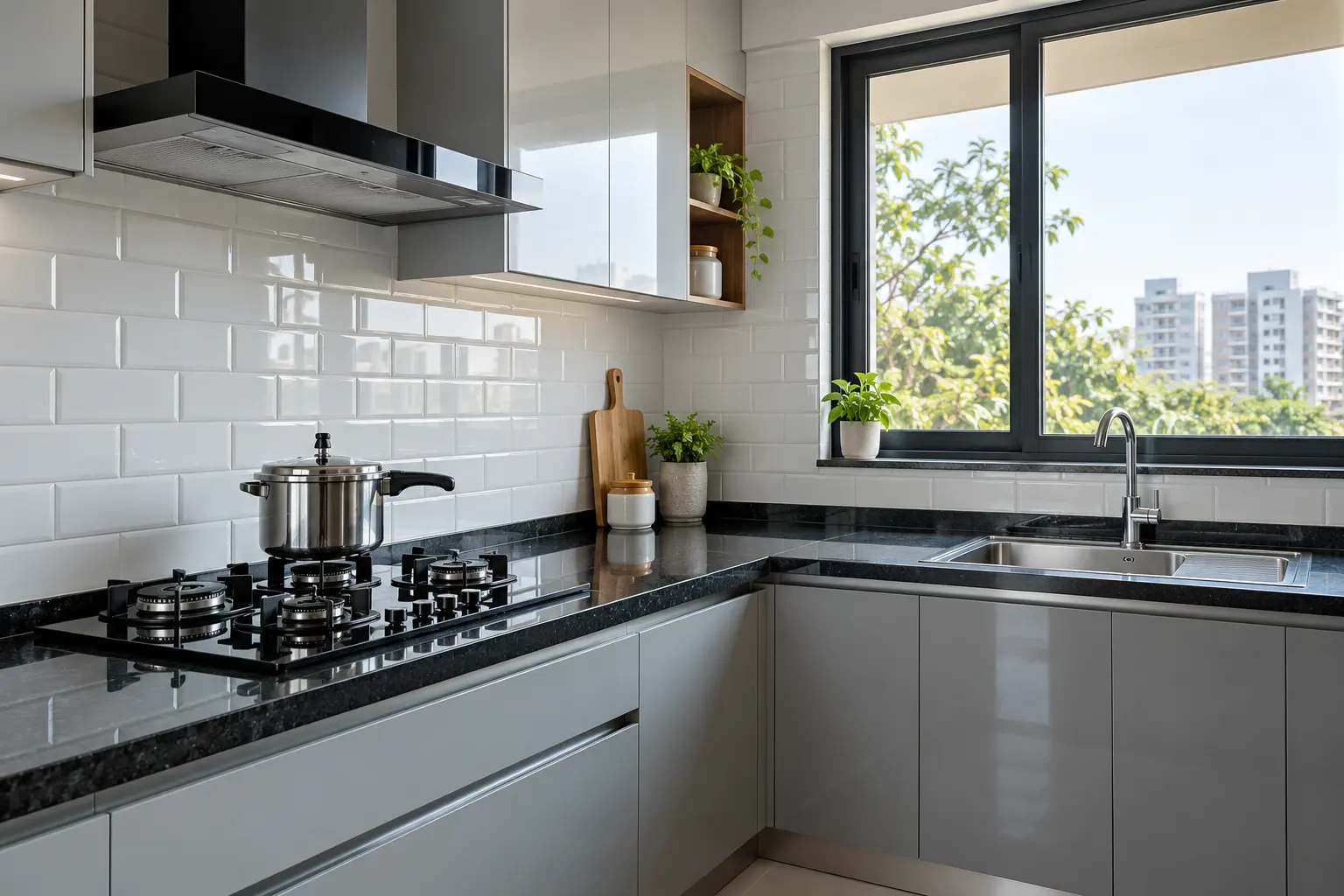
Wall tiles
Wall tiles for bathrooms, kitchens and feature walls: ceramic vs vitrified, common sizes like 300x450 and 300x600 mm, and tips for choosing a set.
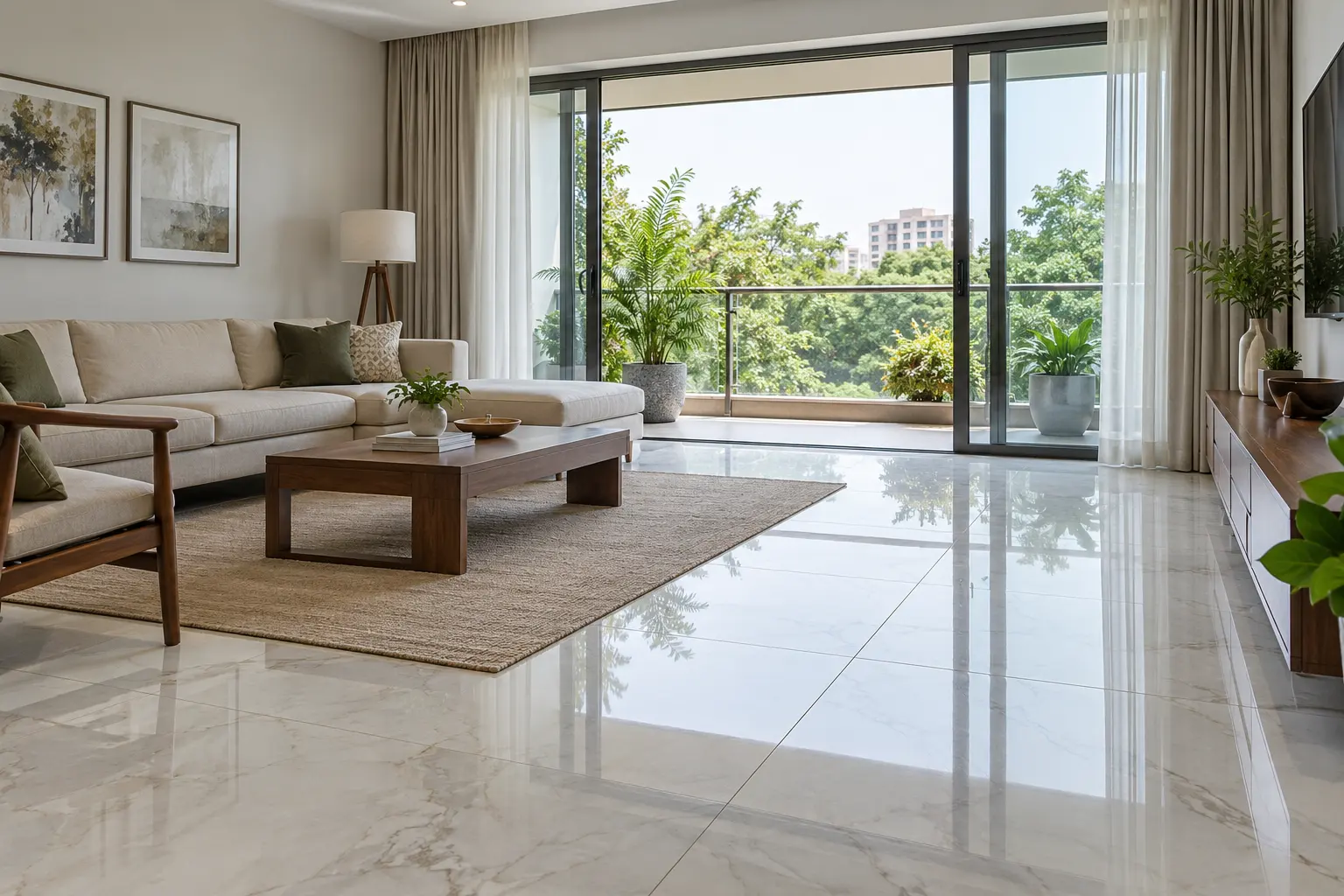
Vitrified tiles
What vitrified tiles are, the four main types, common sizes like 600x600 and 600x1200 mm, and how to pick the right one for your Bengaluru home.
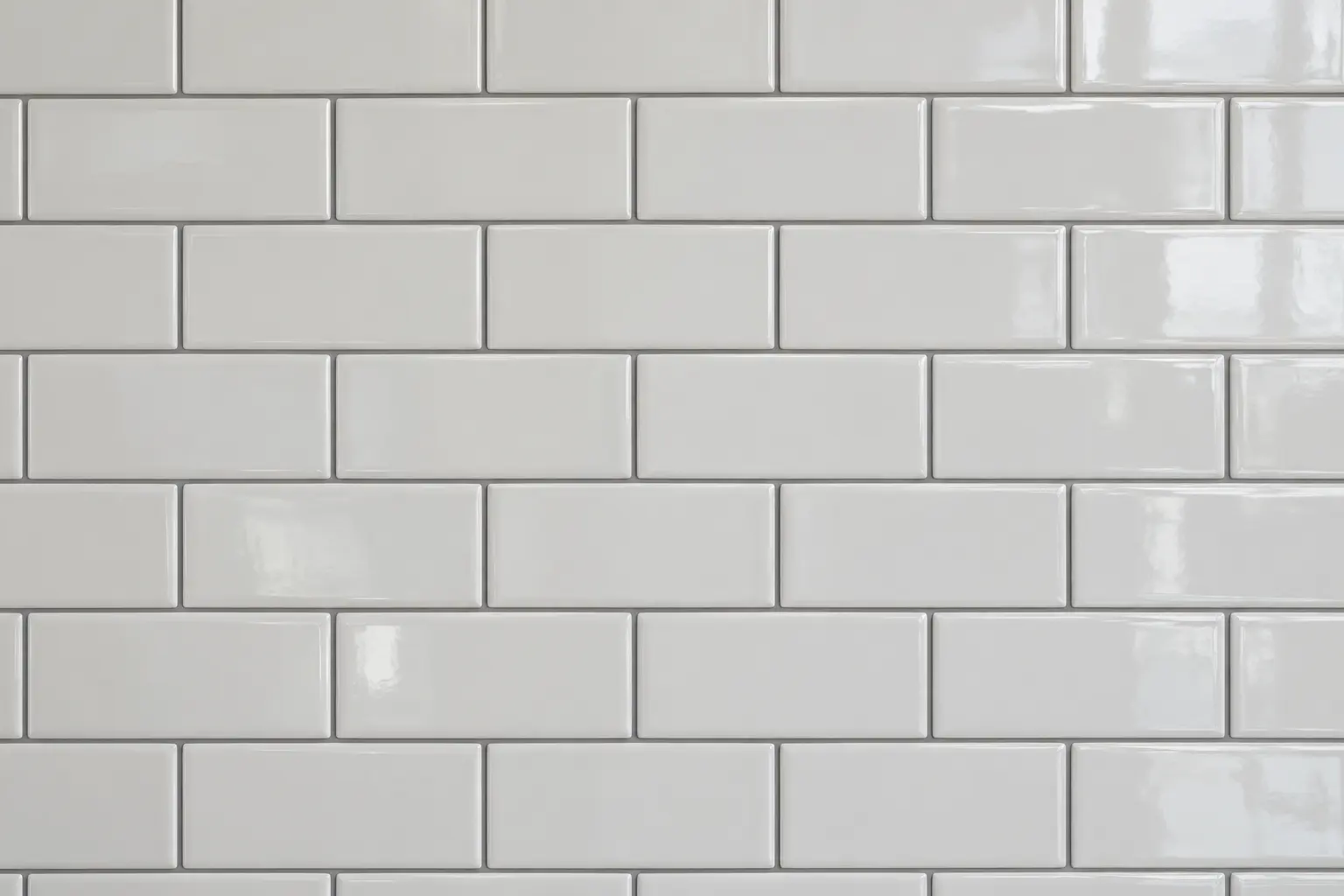
Subway tiles
Subway tiles are small rectangular wall tiles, a classic for kitchen backsplashes and bathrooms. Learn sizes, laying patterns and grout tips.
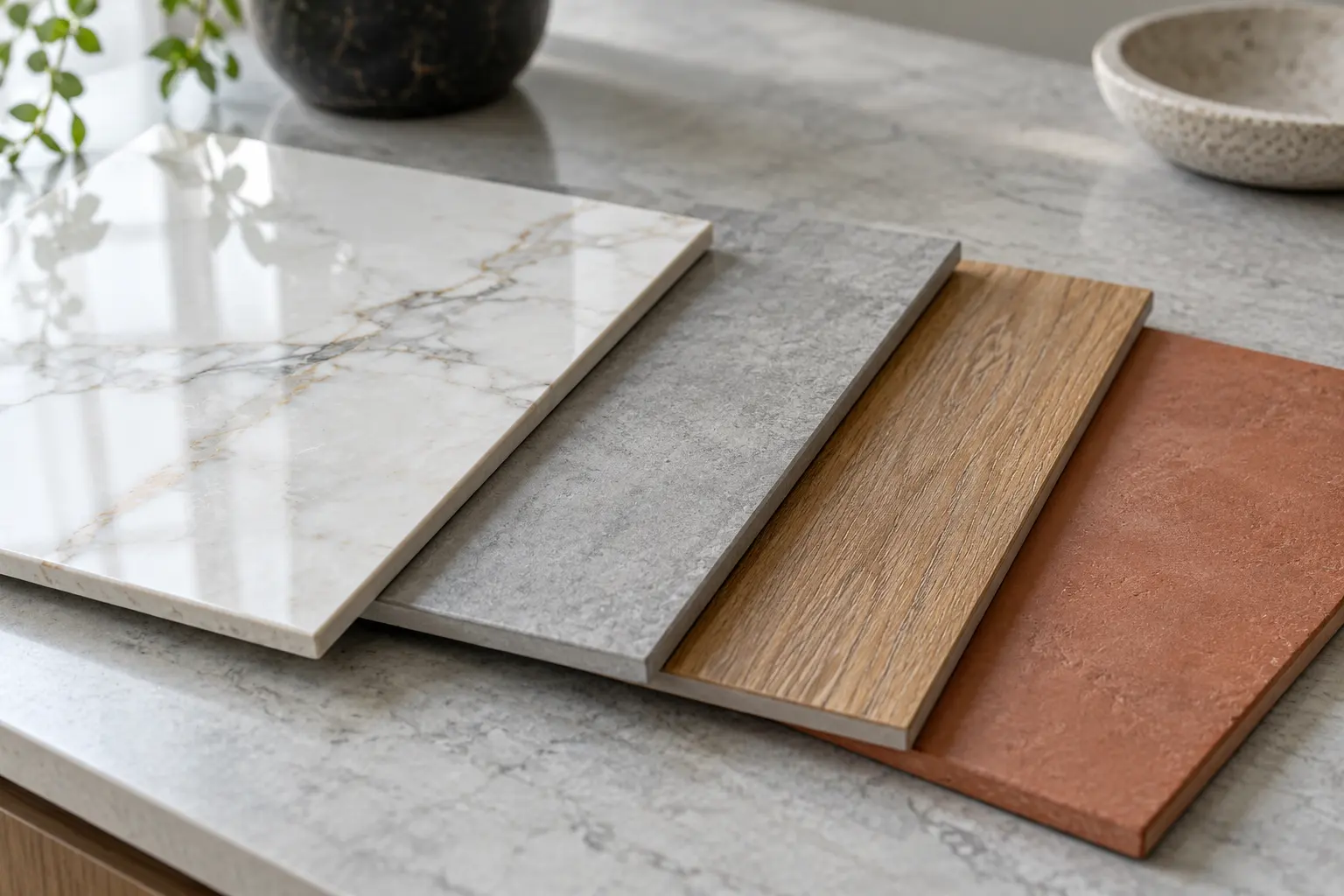
See the tiles in person before you decide
Photos never show a tile's true shade or texture. Get in touch to check what is in stock, then walk in and compare.