Hexagon Tiles in Bengaluru: Sizes, Finishes and Fitting Tips
Hexagon wall tiles add shape and texture to bathrooms, TV walls and backsplashes. Learn how they are measured, finishes to mix and how much extra to buy.
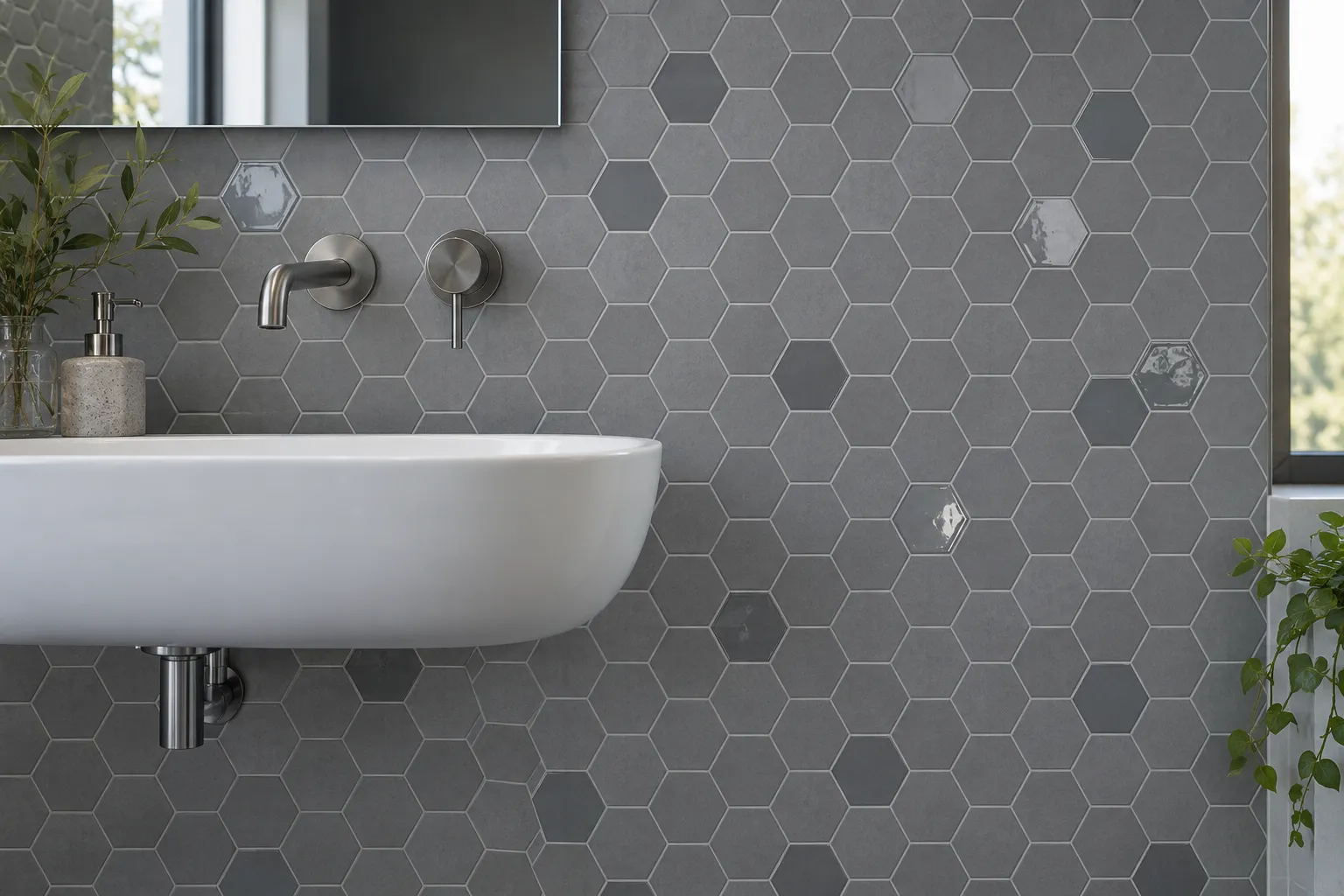
Hexagon tiles break away from the usual grid of squares and rectangles. The six-sided shape creates a honeycomb pattern that feels lively even in a single colour, which is why they have become a favourite for bathroom walls, TV walls and kitchen backsplashes.
Sizes and how hexagons are measured
A hexagon has two different widths. Measured from one corner point to the opposite corner, it is wider. Measured from one flat side to the opposite flat side, it is narrower. Tile makers usually list both numbers.
A common ceramic hexagon wall tile is about 173.2 x 150 mm, which is this point-to-flat style of measurement. There is also a "lantern" shape of around 128.5 x 154.5 mm, a stretched hexagon with curved or angled ends that interlocks in a different rhythm.
Because the shape does not tile into neat rows of squares, do not try to calculate quantity by counting tiles along a wall. Work with the wall area in sq ft, then ask how many tiles of that size cover one square foot or one box.
Finishes and mixing them
Hexagon wall tiles come in several finishes:
| Finish | Look | Good for |
|---|---|---|
| Glossy | Bright, reflects light, easy to wipe | Bathrooms, backsplashes |
| Matt | Soft, calm, hides water marks | Bedroom and living walls |
| Matt with lustre effect | Matt base with a gentle sheen at angles | TV walls, feature panels |
| Matt with glossy granules | Matt surface with small shiny specks | Accent areas that catch light |
Mixing finishes in one colour is a quiet way to add depth. For example, a white wall with mostly matt tiles and a scattered few glossy ones looks textured without being loud. You can also run a gradient, dense with one finish at the bottom and fading out towards the top. Lay the pattern out on the floor first and photograph it, because a random mix is harder to get right than it looks.
Cutting, edges and wastage
The angled sides mean every edge of the wall, every corner and every switch box needs cut tiles. This is the main practical difference from square tiles.
- Expect more wastage. Plan noticeably more extra than with square tiles. Our guide on how much extra tile to buy explains the reasoning.
- Decide the edge treatment early. You can cut the hexagons straight along the edge, or let them end in a zig-zag line where the hexagon wall meets plain paint or another tile. The zig-zag looks deliberate but must be planned before fixing starts.
- Keep the first row level. A small error at the bottom grows into a visible wave by the top of the wall.
Grout colour
Grout plays a bigger part with hexagons because there are more joints per sq ft. A matching grout lets the shape read softly. A contrast grout, like grey on white, makes the honeycomb outline the main feature. Use spacers suited to the shape and keep joints even. See our grout and spacers guide for more.
Where they work, and where they don't
Hexagons work well on TV unit walls, bathroom walls, kitchen backsplashes, balcony walls and bedroom feature walls.
Works well:
- One feature wall in a bathroom, such as behind the basin or in the shower
- A TV wall or bed-back wall in a bedroom
- A backsplash strip between counter and cabinets
- A covered balcony wall
Think twice:
- Floors, unless the tile is rated for them
- Small walls broken up by many switches, windows and pipes, where cuts multiply
- Every wall in a small room, which can feel busy. Pair with plain wall tiles
Visit with your wall size
Measure the wall height and width, note any windows or niches, and contact the shop to ask which hexagon sizes and finishes are available now.
Common questions
How are hexagon tiles measured?
Usually two numbers are given: the distance from one corner point to the opposite point, and the distance between two opposite flat sides. A tile listed around 173.2 x 150 mm is measured this way.
Do hexagon tiles waste more than square tiles?
Yes. Every edge of a wall cuts through the angled sides, so you get more off-cuts. Plan for more extra than with square tiles, often around 10 to 15 percent depending on the wall.
Can I use hexagon wall tiles on the floor?
Only if the specific tile is rated for floors. Most hexagon tiles sold for walls are ceramic and not made for foot traffic, so keep them on walls unless the shop confirms they are floor grade.
Can I mix glossy and matt hexagon tiles on one wall?
Yes, it is a common way to add interest. Use tiles of the same size and thickness from a matching series so the surface stays flat and the joints line up.
Keep reading
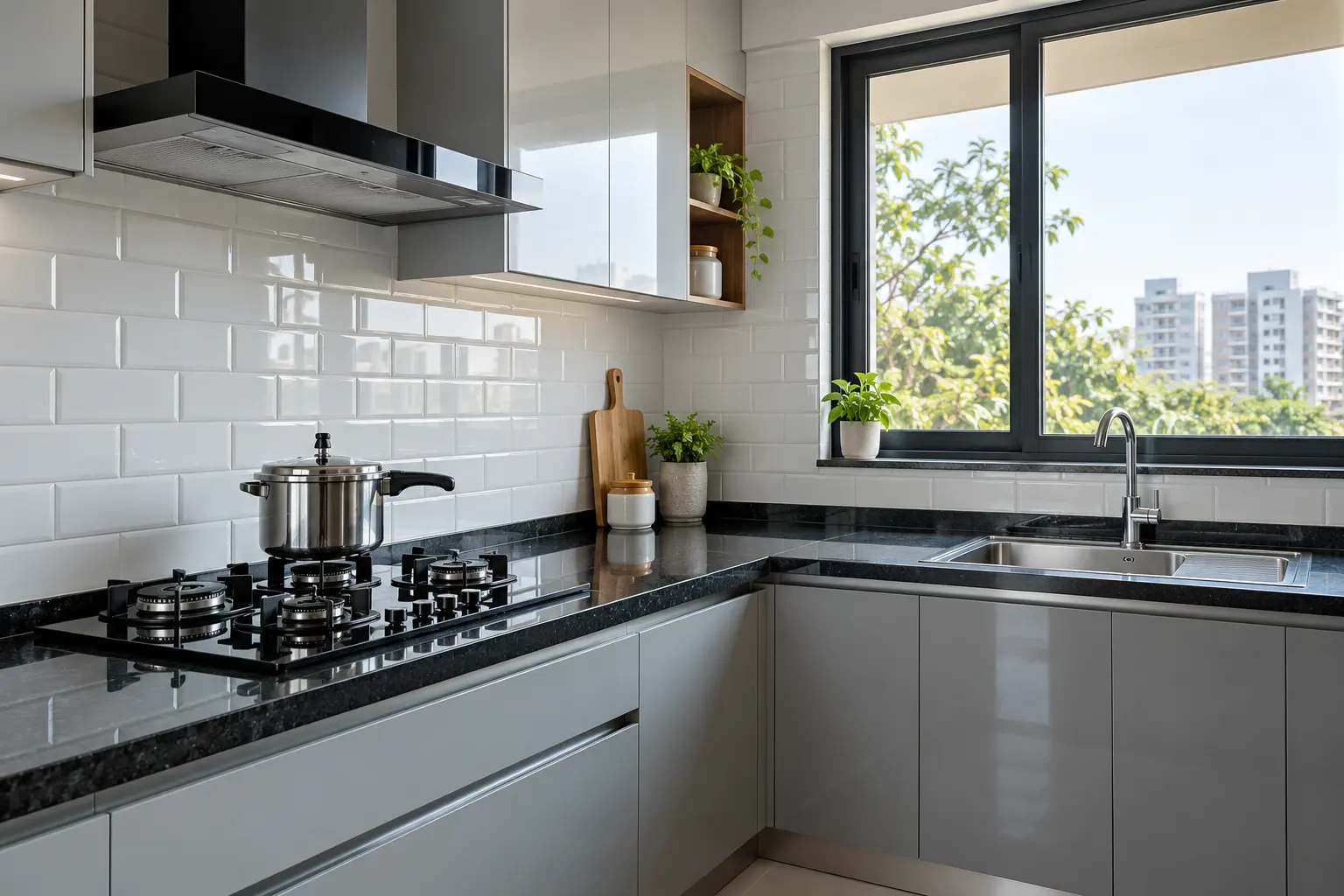
Wall tiles
Wall tiles for bathrooms, kitchens and feature walls: ceramic vs vitrified, common sizes like 300x450 and 300x600 mm, and tips for choosing a set.
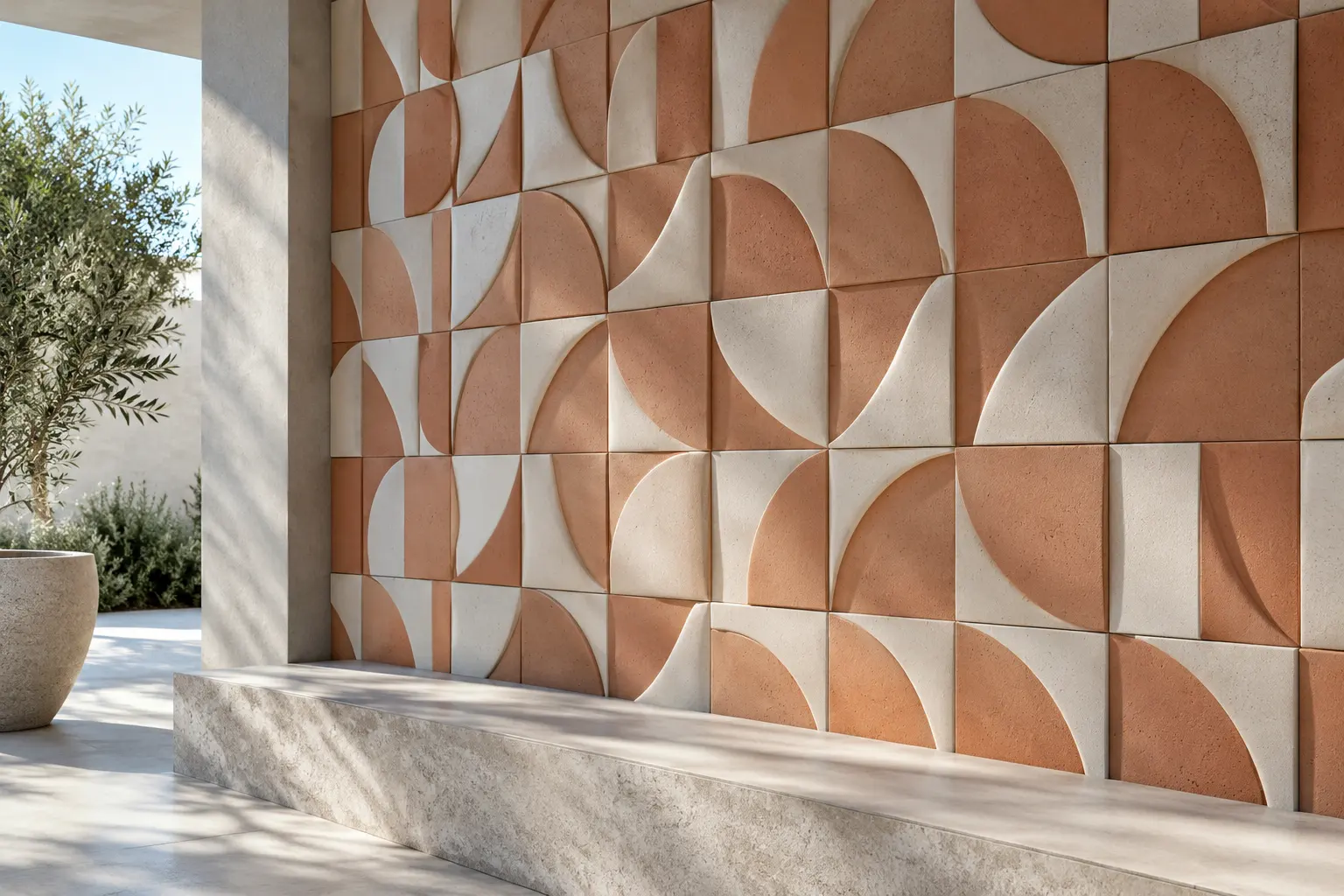
Highlighter tiles
Highlighter tiles add a focal point to bathrooms, kitchens and living room walls. Learn how to use them well, common sizes and how much to use.
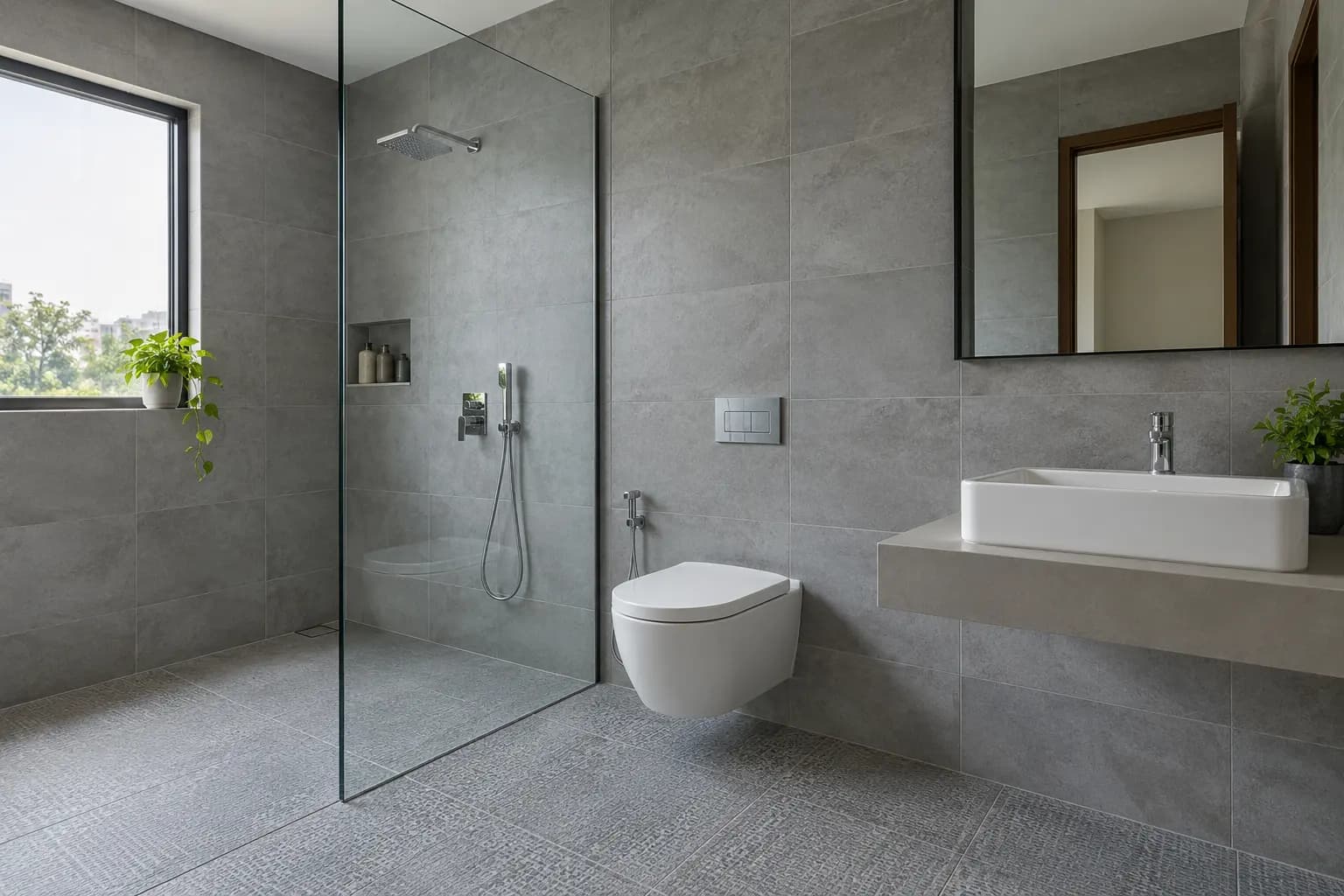
Bathroom
Choosing bathroom tiles in Bengaluru: anti-skid floors, wall tiles that wipe clean, sizes, slopes for drainage, and common mistakes to avoid.
See the tiles in person before you decide
Photos never show a tile's true shade or texture. Get in touch to check what is in stock, then walk in and compare.