Western Toilets (EWC): S Trap vs P Trap and How to Choose
A practical guide to EWC western toilets: S trap vs P trap, how to check yours, couple closets, concealed cisterns, seat height and health faucets.
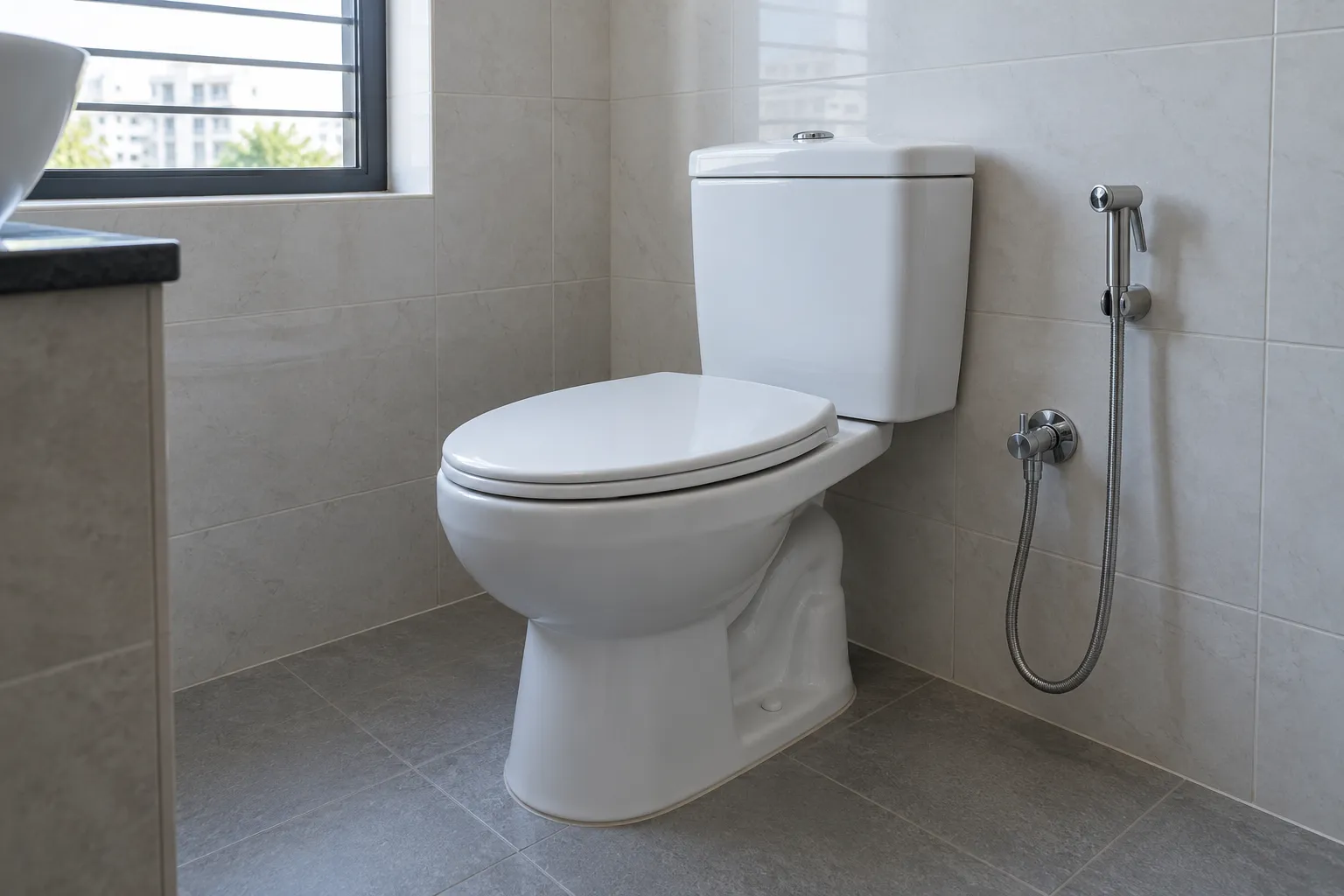
EWC means European Water Closet, the floor-mounted western toilet most Indian homes now use. You can buy the bowl on its own with a separate cistern, as a "couple closet" where the cistern bolts onto the bowl, or with a concealed cistern hidden inside the wall. Before choosing any of these, you need to know one thing about your bathroom: is the drain S trap or P trap?
S trap vs P trap
Every toilet has a trap, a bend that holds water and blocks sewer smells. What differs is where the outlet goes after that bend.
| S trap | P trap | |
|---|---|---|
| Outlet direction | Down, into the floor | Back, into the wall |
| Where it is common | Independent houses and ground floors with floor drains | Apartments and upper floors where pipes run along or inside walls |
| What you measure | Wall to centre of the floor drain (rough-in) | Floor to centre of the wall pipe |
| Floor work | Drain hole must be cut at the right spot | Floor stays clear, pipe is in the wall |
| Changing it | Needs floor and plumbing work | Needs wall and plumbing work |
S trap is very common in Indian homes because many houses were built with the drain line running under the bathroom floor. The toilet sits directly over the hole.
P trap suits buildings where the waste pipe runs in the wall or through a shaft, as in many apartments. The outlet comes out horizontally at the back and connects to a pipe in the wall.
How to check which one you have
- Look at the back of your current toilet at floor level. If you see no pipe and the bowl sits flat, it is almost certainly S trap.
- If a pipe or connector goes from the back of the bowl into the wall, it is P trap.
- In a new bathroom with no toilet yet, check where the plumber has left the open pipe: in the floor (S) or in the wall (P).
- Measure from the finished wall (after tiles) to the centre of the floor pipe, or from the finished floor to the centre of the wall pipe. Note it down and bring it to the shop.
EWC sizes and couple closets
Typical sizes vary by manufacturer, but as a rough guide:
- Floor-mounted EWC (bowl only): about 510 to 570 mm long, 350 to 445 mm wide and around 400 mm high. The cistern is bought separately, either wall-mounted above or concealed inside the wall.
- Couple closet (two-piece): the bowl with a cistern bolted on the back, usually about 685 to 710 mm long and around 800 mm high including the tank.
If you prefer a single fused unit with no tank joint, see one-piece toilets.
Concealed cisterns
A concealed cistern sits inside the wall or behind a false wall, and only the flush plate shows. It works with a floor-mounted EWC or with a wall-hung toilet that floats above the floor. The bathroom looks cleaner and you can mop under a wall-hung bowl easily. Plan it before tiling, since the frame and cistern must go in while the wall is open, and make sure the flush plate gives access for future repairs.
Health faucet and other points
- Health faucet: most families want one. Ask your plumber to leave a water point on the wall beside the toilet, at a comfortable reach, before the wall is tiled.
- Seat height: standard bowls suit most people, but elderly family members often find a slightly higher seat easier. Add a grab bar on the side wall if needed.
- Floor around the toilet: use anti-skid tiles, since water from the health faucet often lands on the floor.
- Space: leave clear room in front of the bowl and keep the wash basin from crowding it.
If someone in the family still prefers squatting, an Indian toilet in a second bathroom is a common solution. For tiles that go with the toilet, see our bathroom page.
Check what fits your bathroom
Note whether you have S trap or P trap, bring your measurements and contact the shop to ask which EWC and couple closet models are in stock.
Common questions
What does EWC stand for?
EWC stands for European Water Closet. In Indian shops it simply means the floor-mounted western-style toilet bowl you sit on.
How do I know if my toilet is S trap or P trap?
Look behind the bowl. If the outlet disappears into the floor, it is S trap. If a pipe comes out of the back of the bowl and goes into the wall, it is P trap.
Can I change from S trap to P trap?
It is possible but means changing the drain line, which involves breaking the floor or wall. In most cases it is simpler to buy a toilet that matches your existing outlet.
What seat height is better for elderly family members?
A slightly higher seat makes sitting down and standing up easier on the knees. Ask to see models with a taller bowl, and consider a grab bar fixed to the wall beside the toilet.
Keep reading
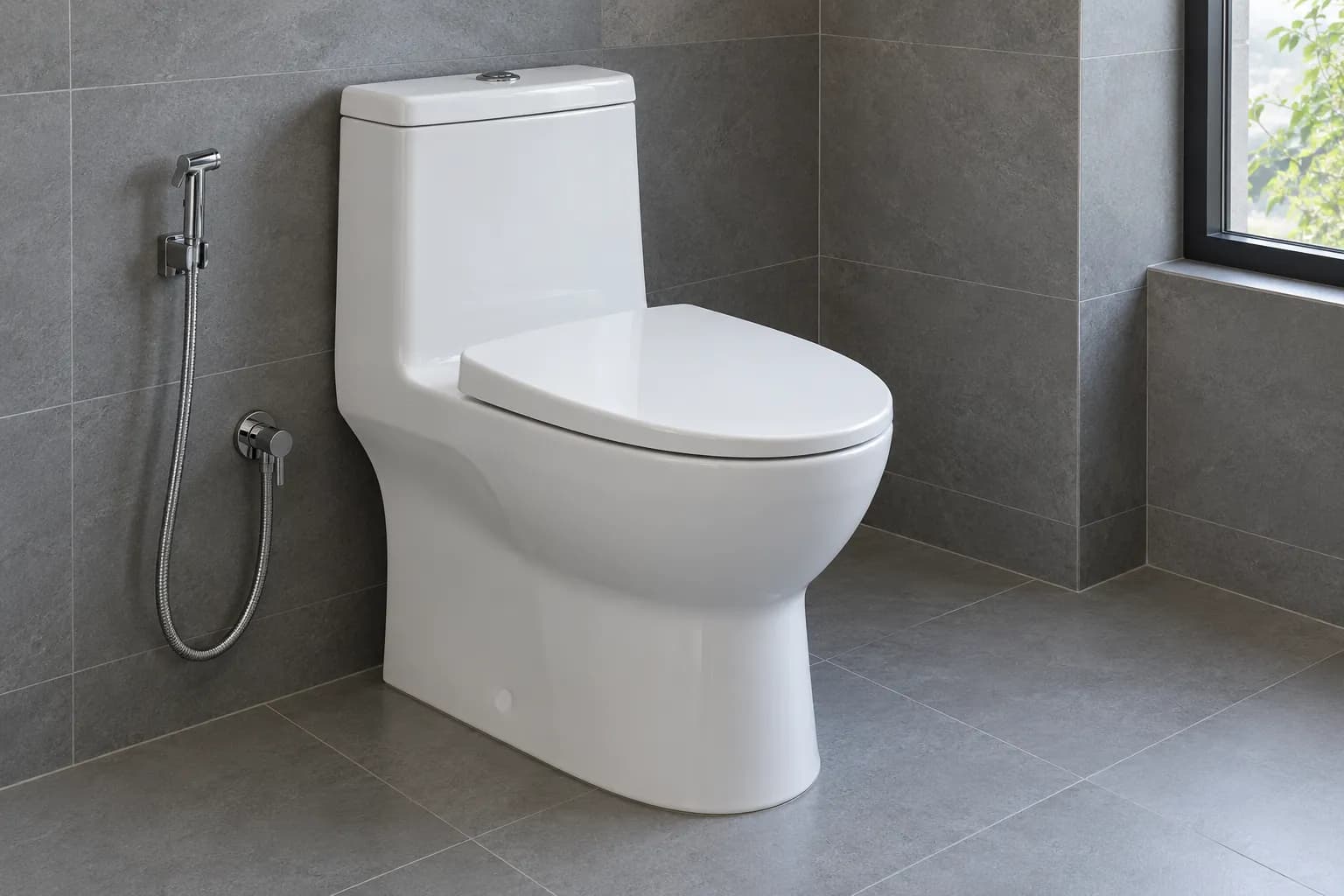
One-piece toilets
One-piece western toilets explained: what one-piece means, typical sizes, rimless bowls, soft-close seats, rough-in and the space you need.
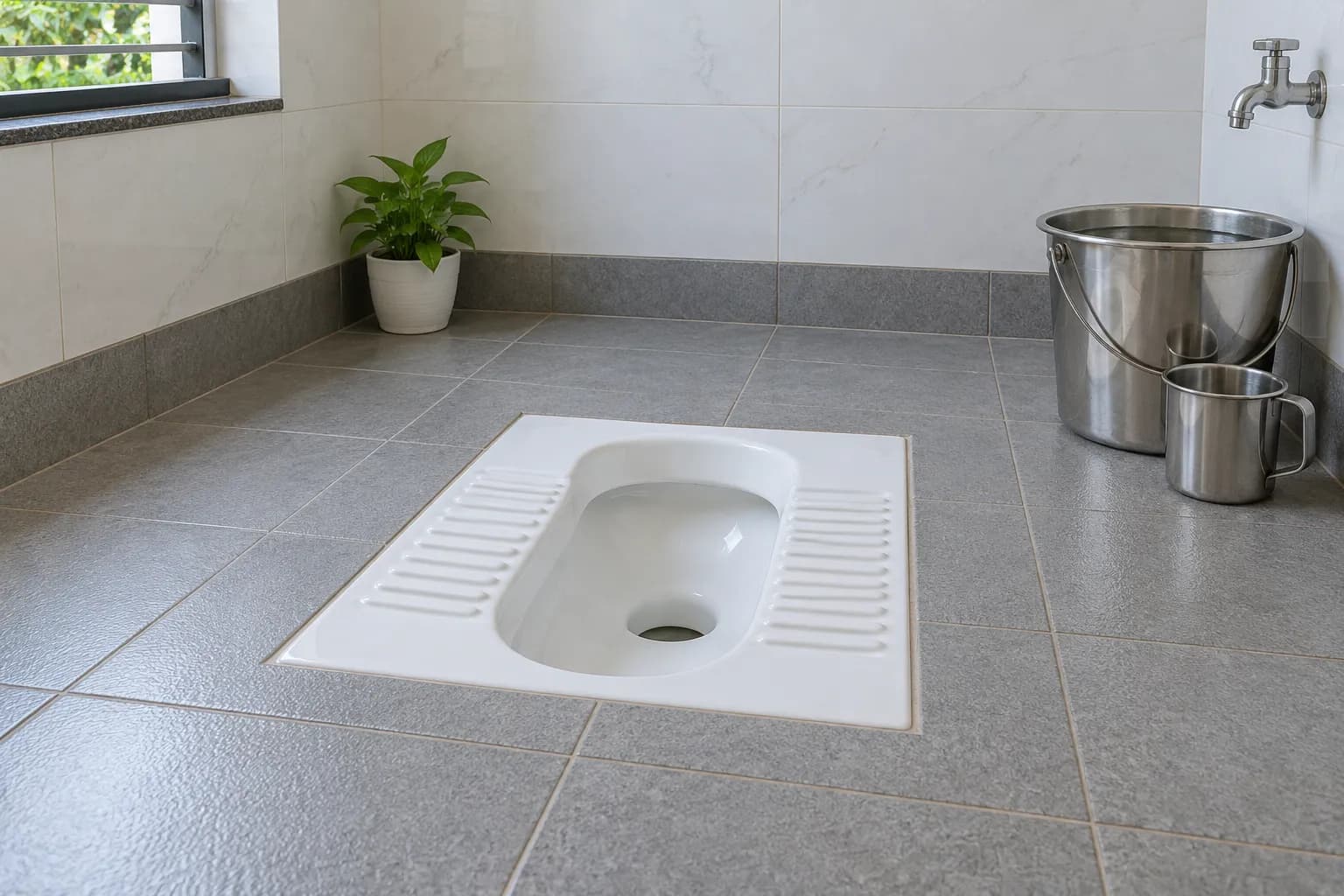
Indian toilets
Indian squat toilets (Orissa pan) explained: 20 and 23 inch sizes, sunk floor depth, the trap below, footrests, anti-skid tiles and easy cleaning.
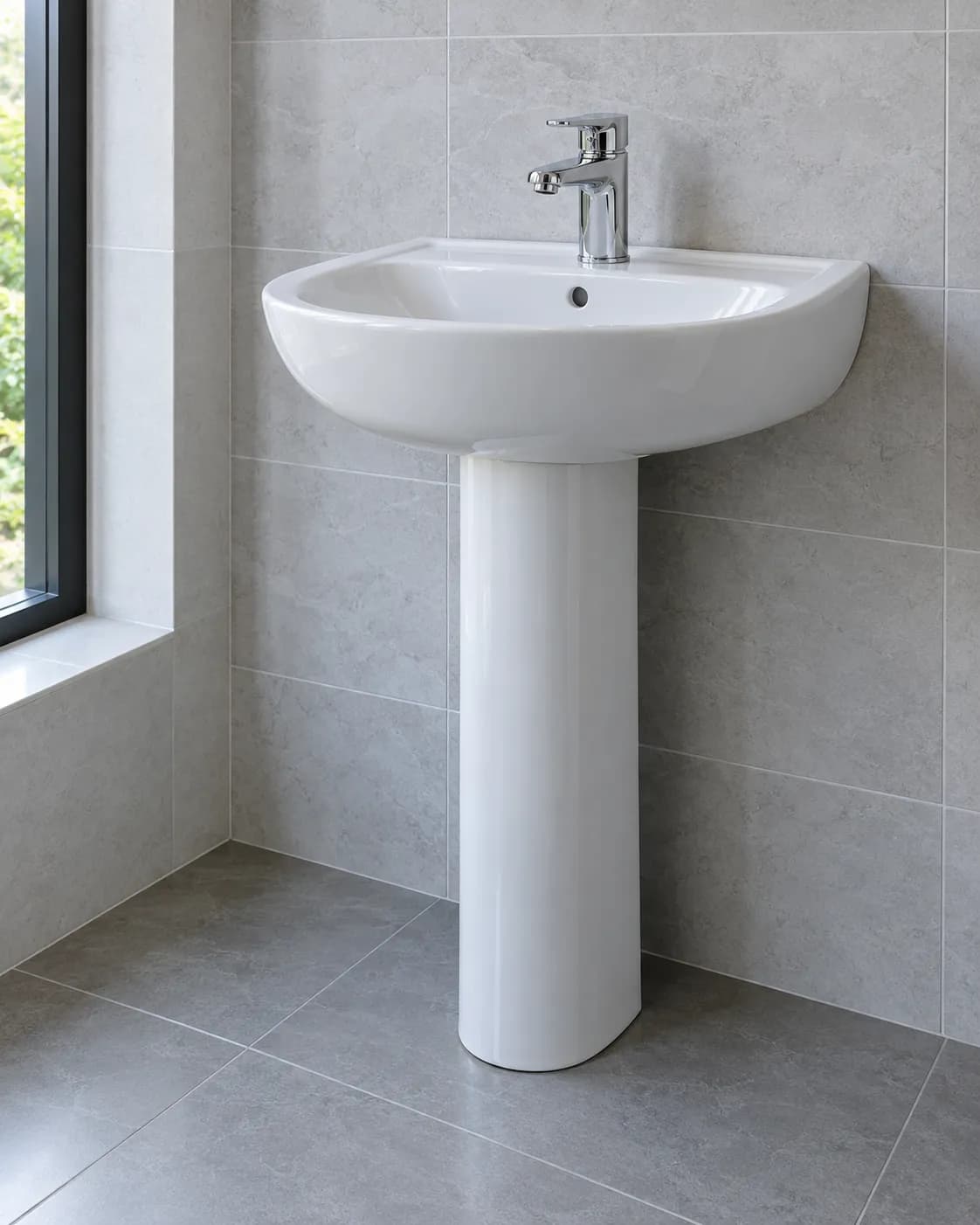
Pedestal basins
Full pedestal and half pedestal wash basins compared: sizes, height, hiding pipes, floor cleaning and matching the basin to your plumbing points.
See the tiles in person before you decide
Photos never show a tile's true shade or texture. Get in touch to check what is in stock, then walk in and compare.