One-Piece Toilets: Sizes, Rough-In and How to Choose One
One-piece western toilets explained: what one-piece means, typical sizes, rimless bowls, soft-close seats, rough-in and the space you need.
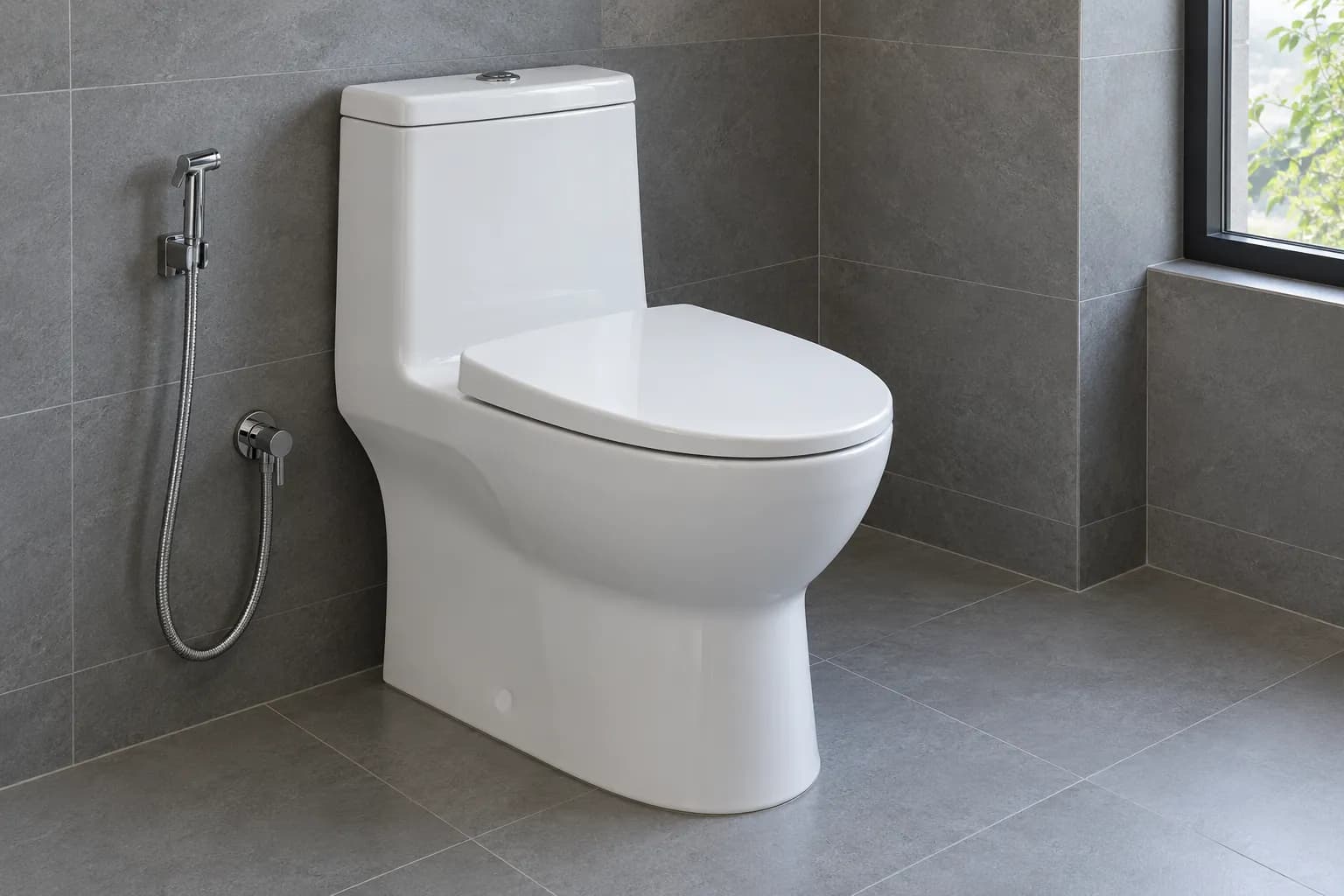
A one-piece toilet is a western toilet where the cistern (the water tank) and the bowl are made as one solid ceramic piece. There is no gap between them, which makes it neater to look at and quicker to clean. It is a common choice for master bathrooms and for anyone renovating an apartment bathroom in Bengaluru.
What "one-piece" really means
In a regular two-piece toilet, the bowl and cistern are made separately and joined with bolts and a rubber gasket. That joint is where dust, water and germs tend to collect, and over the years the bolts can rust or the gasket can start to leak.
A one-piece toilet is fired as a single body. The flush mechanism sits inside the integrated tank, and the outer surface runs smoothly from top to bottom. Benefits that follow from this:
- No joint to scrub between tank and bowl.
- Fewer leak points, since there is no tank-to-bowl gasket.
- A lower, sleeker profile that suits modern bathrooms.
Some models are described as "with jet". This means a small jet hole in the bowl pushes water toward the outlet, which helps waste clear in one flush.
Typical sizes
Sizes vary by manufacturer, but one-piece closets usually fall in this range:
| Measurement | Usual range |
|---|---|
| Length (wall to front of bowl) | about 650 to 715 mm |
| Width | about 350 to 405 mm |
| Height (floor to top of tank) | about 660 to 830 mm |
Because the tank and bowl are one unit, these toilets are heavier and longer than a bare floor-mounted bowl. In a tight apartment bathroom, check the door swing and the distance to the wash basin before you decide.
Measuring the rough-in
The rough-in is the distance from the finished wall (after tiles) to the centre of the drain pipe in the floor. This matters for S trap models, where the outlet goes straight down into the floor. If the rough-in of your bathroom does not match the toilet, the bowl will either sit too far from the wall or not reach the drain at all.
For P trap models, the outlet goes into the wall, so you measure the height of the wall pipe centre from the finished floor instead. Not sure which trap you have? Our western toilets (EWC) page explains S trap vs P trap in detail and how to check yours. Some one-piece models are available in both versions, so ask the shop which ones match your drain.
Rimless bowls and soft-close seats
Two features worth asking about:
- Rimless bowls. Older bowls have a rim channel under the top edge where water comes out. That hidden channel is hard to reach with a brush. A rimless bowl leaves the inner edge open and smooth, which makes cleaning simpler.
- Soft-close seats. The seat and lid lower slowly instead of slamming down. This protects the ceramic from chips, reduces noise at night and is helpful when children use the toilet. Quick-release hinges, where the seat lifts off for cleaning, are another useful feature.
Weight and handling
A one-piece toilet is a heavy, single item. It needs two people to carry, especially up stairs in older buildings without lifts. Handle it by the bowl, not the tank top, and keep it on a soft surface until it is fixed. Check the glaze and edges for chips when you collect it, because ceramic cannot be repaired invisibly once damaged.
One-piece vs two-piece
| Point | One-piece | Two-piece (couple closet) |
|---|---|---|
| Cleaning | Easier, no tank joint | Gap between tank and bowl |
| Look | Compact, modern | Traditional |
| Weight | Heavier single unit | Lighter, moved in two parts |
| Repairs | Internal parts replaceable, body is one piece | Tank or bowl can be replaced separately |
| Cost drivers | Usually more ceramic and design work | Usually simpler to make |
Neither is wrong. If easy cleaning is your priority, a one-piece toilet is hard to beat. If you need flexibility or want to move parts separately, a two-piece or EWC may suit you better. Pair it with anti-skid floor tiles and a matching wall-hung basin for a clean, practical bathroom.
See them before you decide
Bring your rough-in measurement and a photo of your existing toilet outlet, and contact the shop to ask which one-piece models are in stock. Seeing the size in person makes the choice much easier.
Common questions
What is the difference between a one-piece and a two-piece toilet?
In a one-piece toilet the cistern and bowl are made as a single ceramic body, so there is no joint between them. A two-piece toilet has a separate cistern bolted onto the bowl, which leaves a gap and a gasket that need cleaning.
How much space does a one-piece toilet need?
Most one-piece toilets are roughly 650 to 715 mm long from the wall. Add at least 450 to 600 mm of clear space in front for comfortable use and check that the door can open without hitting the bowl.
Can a one-piece toilet replace my old western toilet?
Usually yes, as long as the outlet type (S trap or P trap) matches your drain and the rough-in distance suits the new model. Measure before you buy and bring the numbers to the shop.
Is a rimless toilet better?
A rimless bowl has no hidden rim channel under the edge, so there is less space for dirt and stains to collect. Many families find it easier to keep clean, though the flush pattern varies by model.
Keep reading
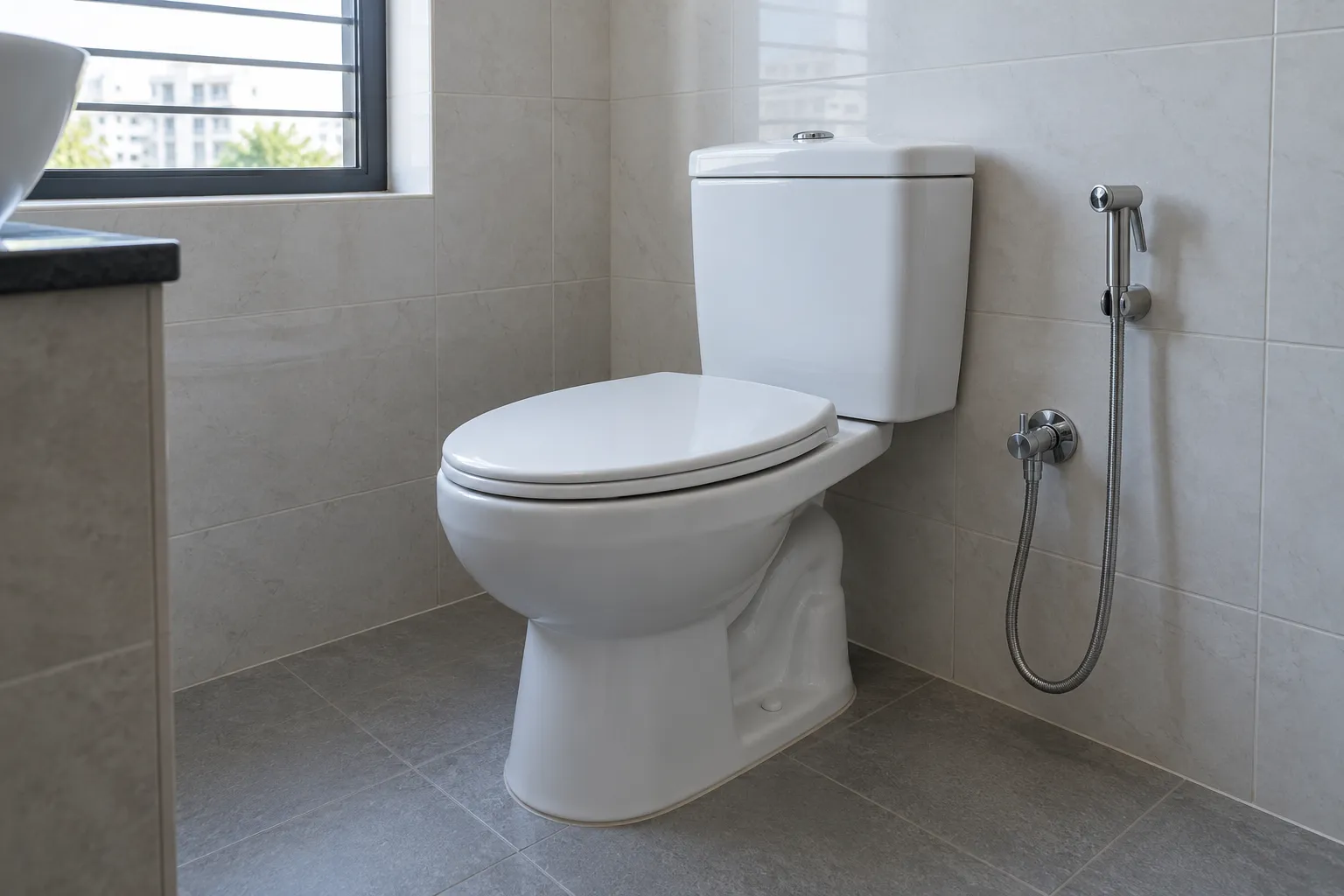
Western toilets (EWC)
A practical guide to EWC western toilets: S trap vs P trap, how to check yours, couple closets, concealed cisterns, seat height and health faucets.
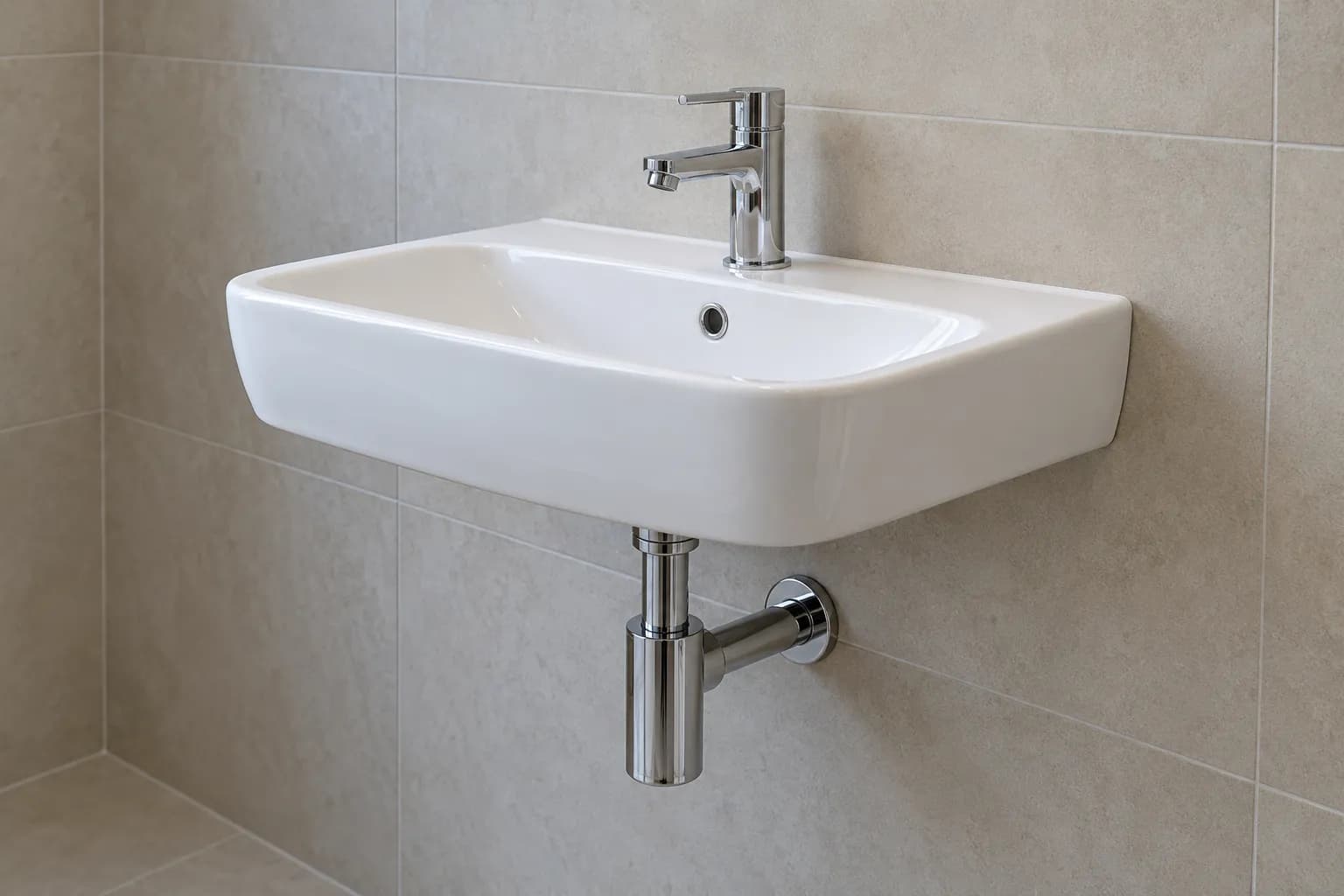
Wall-hung basins
Wall-hung wash basins explained: common inch sizes, fixing height, wall strength, bottle traps and tiling tips for small Bengaluru bathrooms.
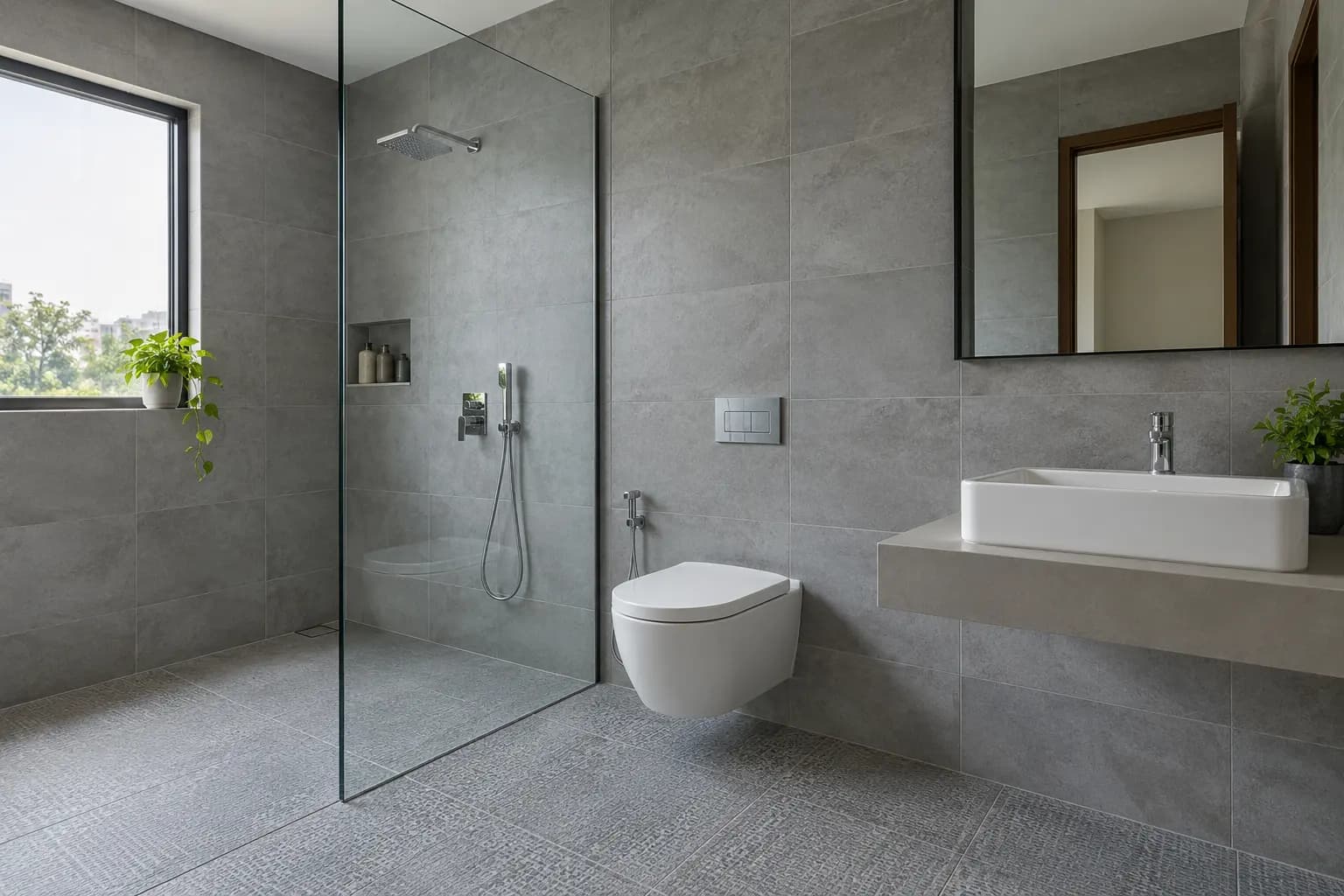
Bathroom
Choosing bathroom tiles in Bengaluru: anti-skid floors, wall tiles that wipe clean, sizes, slopes for drainage, and common mistakes to avoid.
See the tiles in person before you decide
Photos never show a tile's true shade or texture. Get in touch to check what is in stock, then walk in and compare.