Slate Stone Cladding for TV Walls and Modern Elevations
Slate wall cladding in charcoal, black, grey, green and rust tones. Why it suits TV walls and modern fronts, what rust colour means and how to light it.
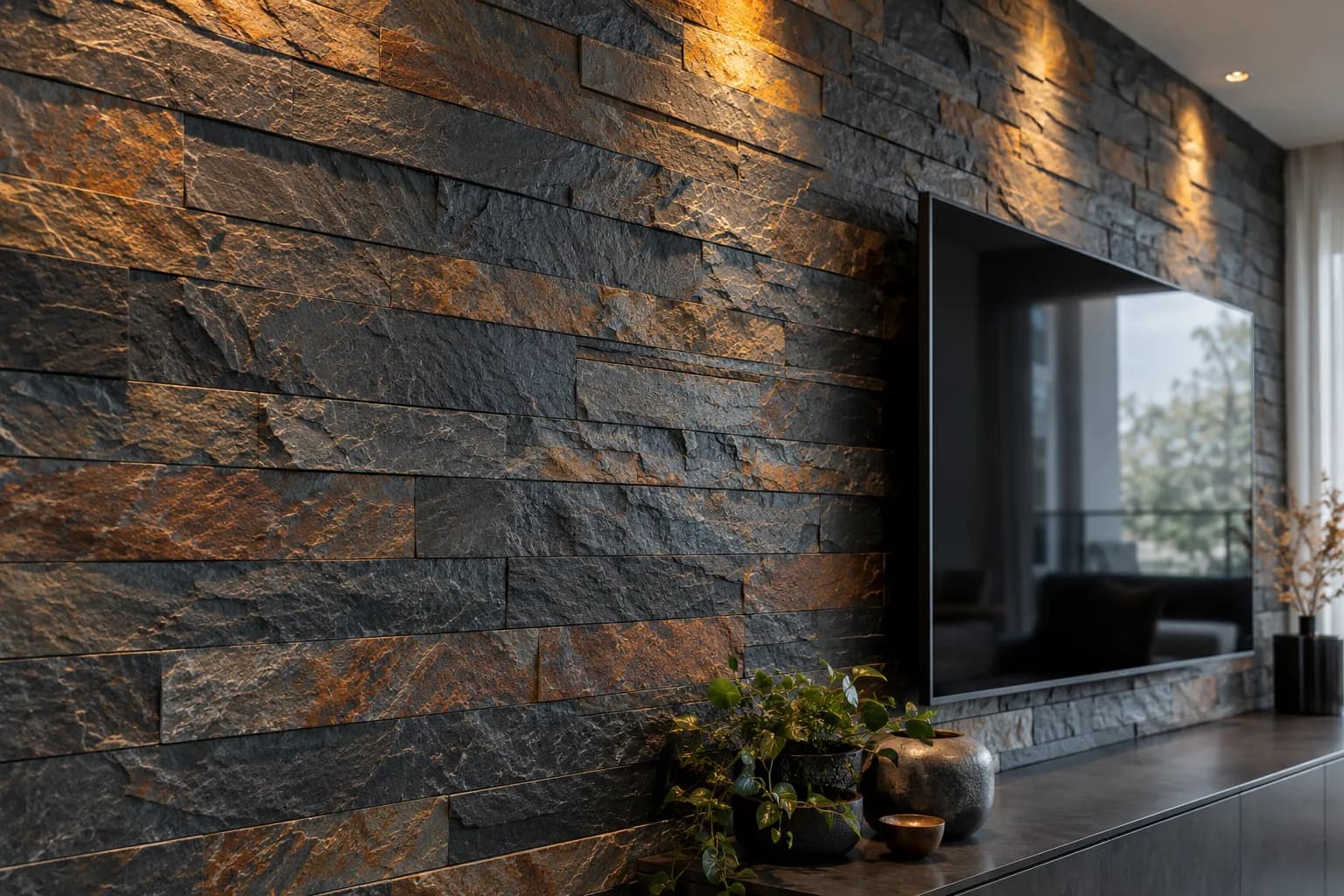
Slate is the stone people pick when they want a wall that looks dark, layered and modern. Its split face shows thin sheets of rock stacked on top of each other, which gives strong shadow lines and a lot of character even in plain grey. It is the usual choice for TV unit walls and contemporary house fronts.
Colours you will see
Slate cladding comes in a deeper palette than other stones:
- Charcoal and black for a bold, dramatic wall
- Steel grey for a cooler, quieter look that pairs well with white walls
- Green for a muted, earthy tone that sits well with plants and wood
- Rust and copper with orange, gold and brown streaks over a grey base
- Multi pieces that mix grey with rust patches
The rust and copper shades come from natural iron minerals in the stone. That is why the warm streaks vary so much: one piece may be mostly grey, the next half orange. If you want an even wall, choose a plain grey or black; if you want movement and warmth, rust slate gives it.
Why slate is popular
Slate is denser and harder than sandstone, so it absorbs less water and holds its edges better. Its split surface is made of fine, flaky layers rather than grains, which gives sharp horizontal lines. In strip formats such as 100x300 or 150x600 mm, laid in rows, these lines stack up into a strong, linear texture that suits modern architecture.
Slate on TV unit walls
A slate TV wall is one of the most common feature walls in Bengaluru apartments. It works because:
- A dark stone background makes the TV frame almost disappear when it is off
- The texture hides small scuffs, fingerprints and cable marks
- It adds weight to a living room without needing paint effects or wallpaper
Plan the TV bracket and wiring before the stone goes up. Drilling through slate later is possible but can chip the layered edges, and concealed conduits are easier behind a fresh wall. Mark the TV height and socket positions with your electrician first.
Slate on modern elevations
Outside, grey and black slate suits flat roofs, large windows and clean lines. A slate band on a staircase tower, a slate column next to the gate, or a slate panel framing the main door can carry a whole front elevation. Dark stone does get warm in direct sun, and very black slate on a west-facing wall will show pale dust in dry months, so steel grey is often the practical pick for road-facing walls.
Lighting a slate wall
Slate comes alive with the right light. Flat light from the front makes it look dull and dark. Grazing light, where the light source is close to the wall and shines along it, catches every layer and throws small shadows.
- Use a linear LED strip in a ceiling recess or a floor channel close to the wall, washing up or down.
- Warm white light brings out rust and copper tones; neutral white suits grey and black.
- Keep the light a little away from the TV so it does not reflect on the screen.
Outdoors, small up-lights at the base of a slate pillar give the same effect at night.
Care
Dust slate indoors with a dry cloth or soft brush. Outdoors, wash with water and a soft brush. Avoid acid cleaners, which can discolour the iron-rich patches. A penetrating sealer is usually advised on exterior slate and near kitchens, and some sealers deepen the colour slightly, so test on a spare piece.
Choose from real pieces
Slate varies widely, especially the rust shades. Contact the shop to ask what is in stock, and see a few pieces laid together before you decide. For other stones, see the natural stone cladding overview.
Common questions
Why does some slate have rust or copper colours?
Many slates contain natural iron minerals. These give the warm rust, copper and golden streaks you see on some pieces. The colour is part of the stone, not a coating.
Can rust-coloured slate stain the wall below?
Outdoors, iron-rich slate can sometimes release a little orange colour in heavy rain, especially when new. Sealing helps, and it is a good idea to test a piece outside or use it on sheltered walls if this worries you.
Is slate cladding good for a TV wall?
Yes, it is one of the most popular uses. The dark layered surface sits well behind a black screen and does not show fingerprints or small marks.
Does slate need sealing?
Slate is denser than sandstone and absorbs less water, but sealing is still usually advised outdoors and in places with oil or dust, such as near a kitchen.
Keep reading
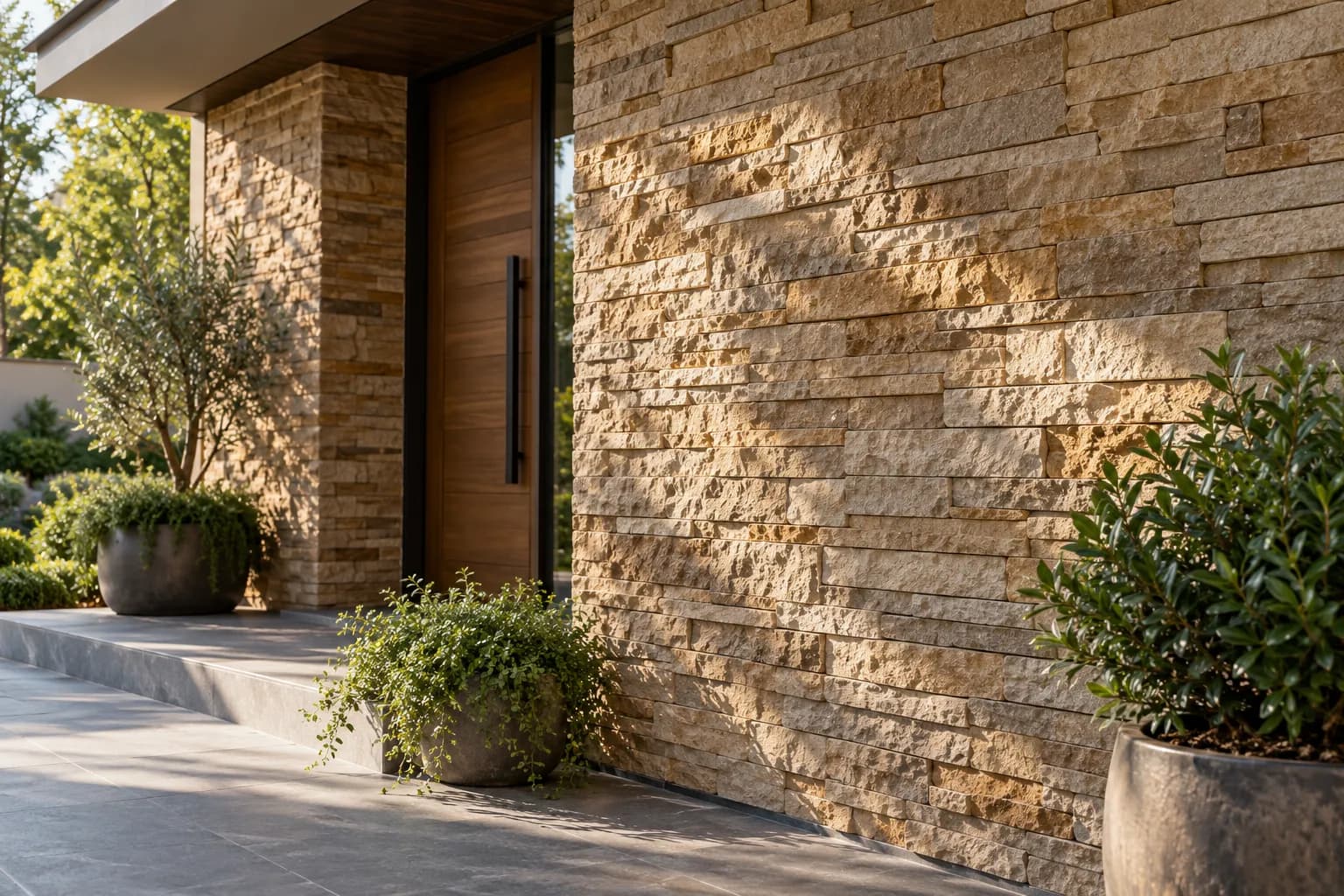
Stone cladding
Natural stone cladding in sandstone, slate and marble: how it differs from elevation tiles, strip and square sizes, where it works and how it is fixed.
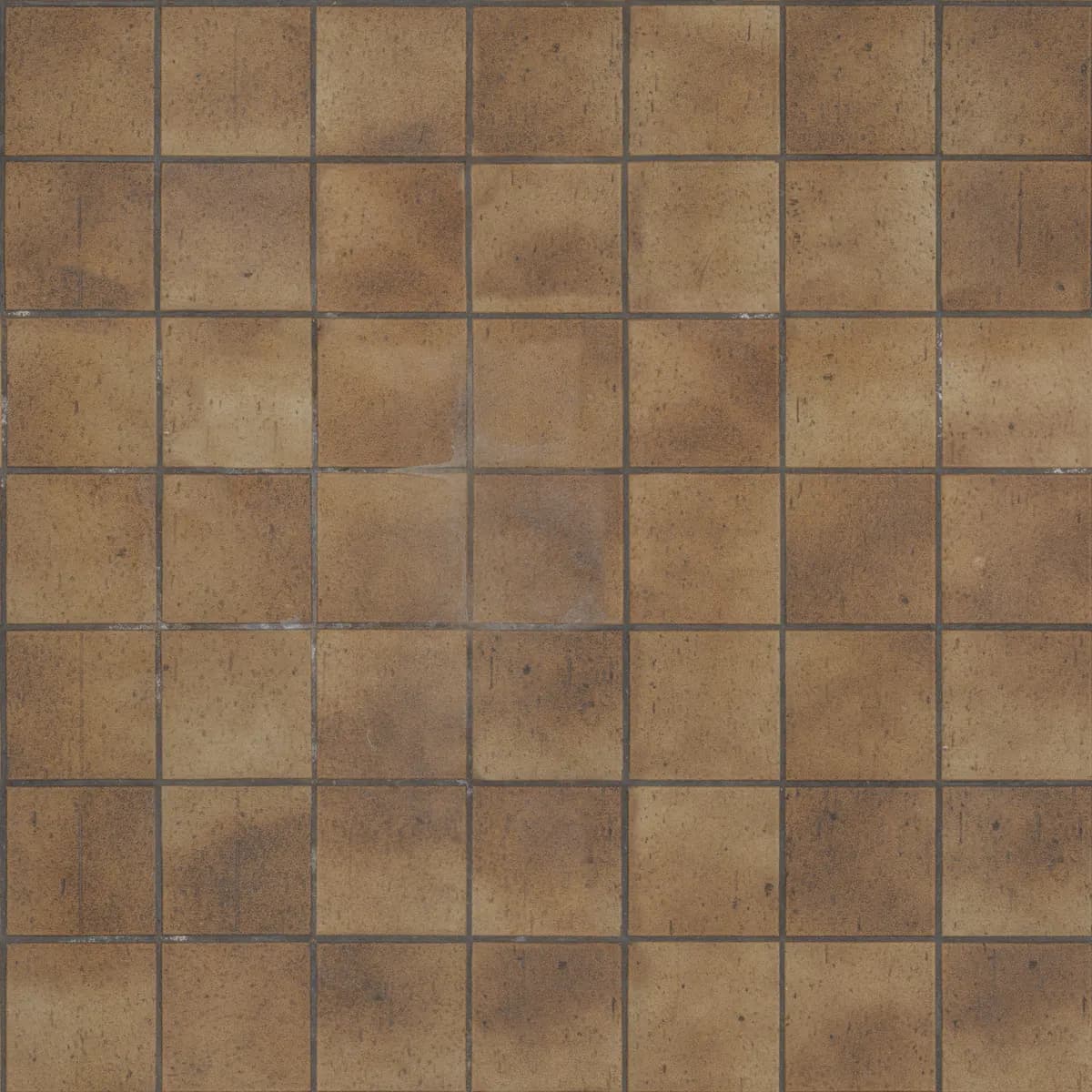
Sandstone cladding
Sandstone wall cladding in beige, golden, brown and layered tones. How it behaves in Bengaluru rain, why sealing matters and how to keep it clean.
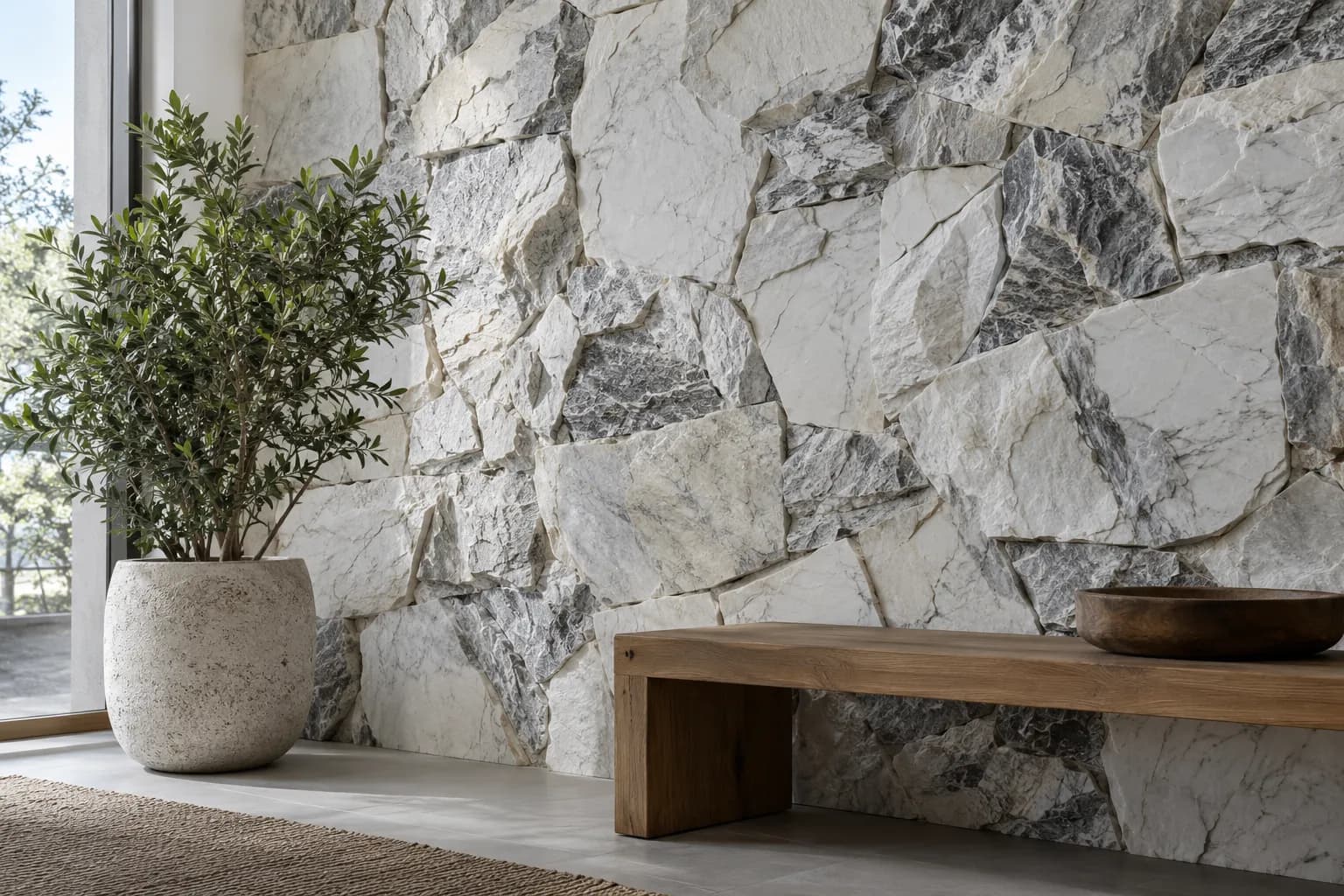
Marble cladding
Split-face marble wall cladding in white, black, brown and green. Where it suits, why lime and acids etch it, and how sealing keeps it looking clean.
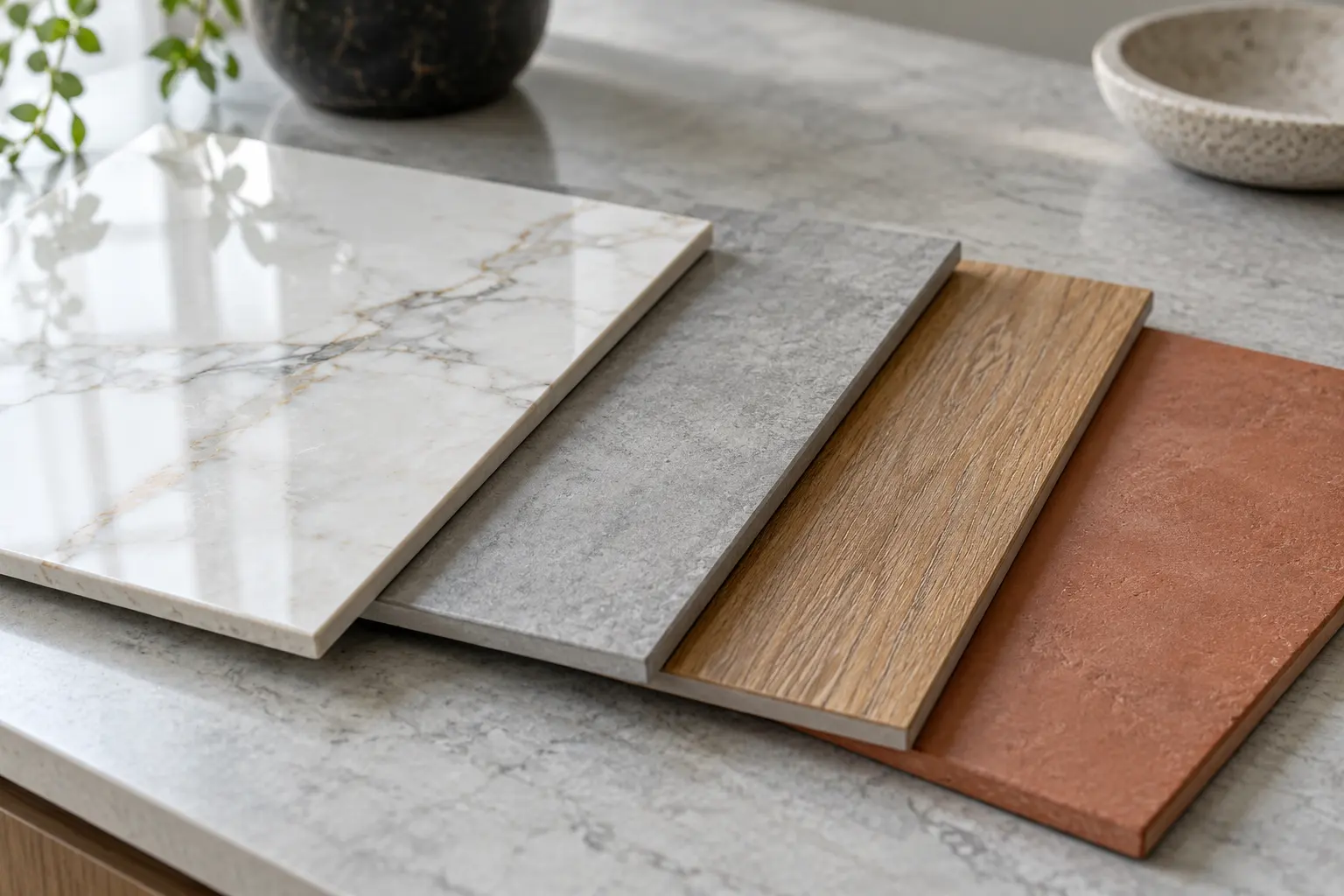
See the tiles in person before you decide
Photos never show a tile's true shade or texture. Get in touch to check what is in stock, then walk in and compare.