Sandstone Cladding: Warm Natural Stone for Walls in Bengaluru
Sandstone wall cladding in beige, golden, brown and layered tones. How it behaves in Bengaluru rain, why sealing matters and how to keep it clean.
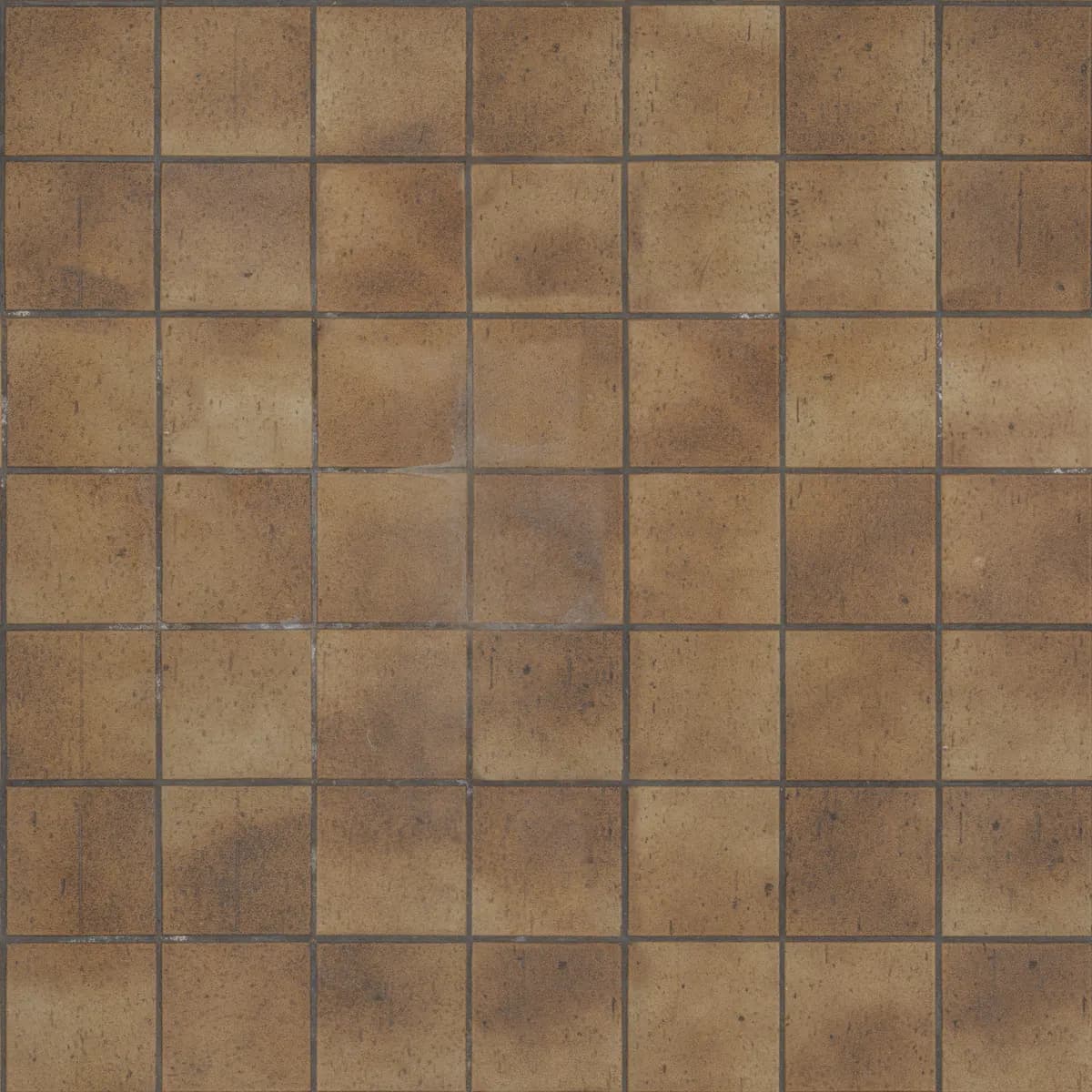
Sandstone is the warmest of the cladding stones. Its layers of beige, gold and brown give a wall a soft, sunlit look that suits traditional and modern houses alike. It is also the stone that asks for the most care, so it helps to know how it behaves before you choose it.
The look
Sandstone is made of compressed sand grains, and you can often see fine bands where layers settled over time. Common shades include:
- Beige and cream for a calm, light wall
- Golden and yellow for a sunny, Rajasthani feel
- Brown and chocolate for a richer, earthy tone
- Multi-colour pieces with pink, yellow and brown bands running through one strip
The split face is matt and slightly sandy to touch. In strip formats such as 100x300 or 150x600 mm, stacked in rows, it gives a layered wall. Squares such as 300x300 mm give a calmer, block pattern on wide exterior walls. Ask the shop what shades and sizes are in stock, as lots differ.
Softer and more porous
Compared to slate, sandstone is softer and absorbs more water. This has three practical effects:
- It darkens when wet. After rain, a sandstone wall will look a shade or two deeper until it dries. This is normal.
- It stains more easily. Oil, rust from iron grills and muddy splashback can soak in.
- Edges can wear. On a corner that people brush past, or near a gate that swings, edges may round off over years.
None of this rules sandstone out. It just means sealing is not optional on exteriors.
Sandstone in Bengaluru rain
Bengaluru gets long spells of monsoon rain with cloudy days in between, so a shaded exterior wall can stay damp for weeks. On porous stone this invites moss, algae and black patches, especially:
- At the bottom of compound walls where soil and water splash up
- Under window sills and ledges that drip
- On north-facing and tree-shaded walls that do not dry quickly
Good habits help. Keep a small drip edge or coping on top of compound walls so water does not run straight down the face. Leave a gap between stone and soil at the base. Fix gutters and downpipes so they do not wash over the cladding.
Road dust is the other issue. Dust settles into the rough surface and, mixed with rain, leaves light streaks. Warm brown and multi-colour shades hide this better than pale cream.
Sealing
Use a penetrating (impregnating) stone sealer meant for porous stone, not a glossy coating that sits on top and can peel or trap moisture. Apply it once the stone is fixed, grouted if grouted, cleaned and completely dry. Some people prefer a sealer that slightly deepens the colour; others keep the natural dry look. Test on a spare piece first.
Cleaning without damage
- Rinse with water and scrub with a soft or medium nylon brush.
- For moss, use a cleaner made for natural stone and rinse well.
- Avoid acid, toilet cleaners and strong bleach. They etch and discolour sandstone.
- Avoid very high pressure washers close up; they can loosen the sandy surface.
Where sandstone suits best
Indoors, sandstone makes a warm living room or entrance wall. Outdoors it fits the front elevation, gate pillars, and garden walls along garden and pathways. Carved sandstone is also common for stone murals, so a cladding wall and a mural can share one stone. For a wider overview of stone types, see natural stone cladding.
Check shades together
Sandstone varies a lot between pieces. Contact the shop to ask what shades are in stock, and look at several pieces side by side before you decide.
Common questions
Does sandstone turn black or green outside?
It can. Sandstone is porous, so on walls that stay damp in the monsoon it may darken or grow moss and algae. Sealing and occasional washing keep this under control.
Can I clean sandstone with acid?
No. Acid cleaners can eat into the stone, change its colour and leave a rough, patchy surface. Use water, a soft brush and a mild neutral cleaner.
Is sandstone good for indoor walls?
Yes. Indoors it gets little water, so it stays close to its original colour. It works well on living room feature walls and entrance lobbies.
How often should sandstone be sealed?
It depends on the sealer and exposure, but exterior walls typically need resealing every few years. When water stops beading and soaks in quickly, it is time.
Keep reading
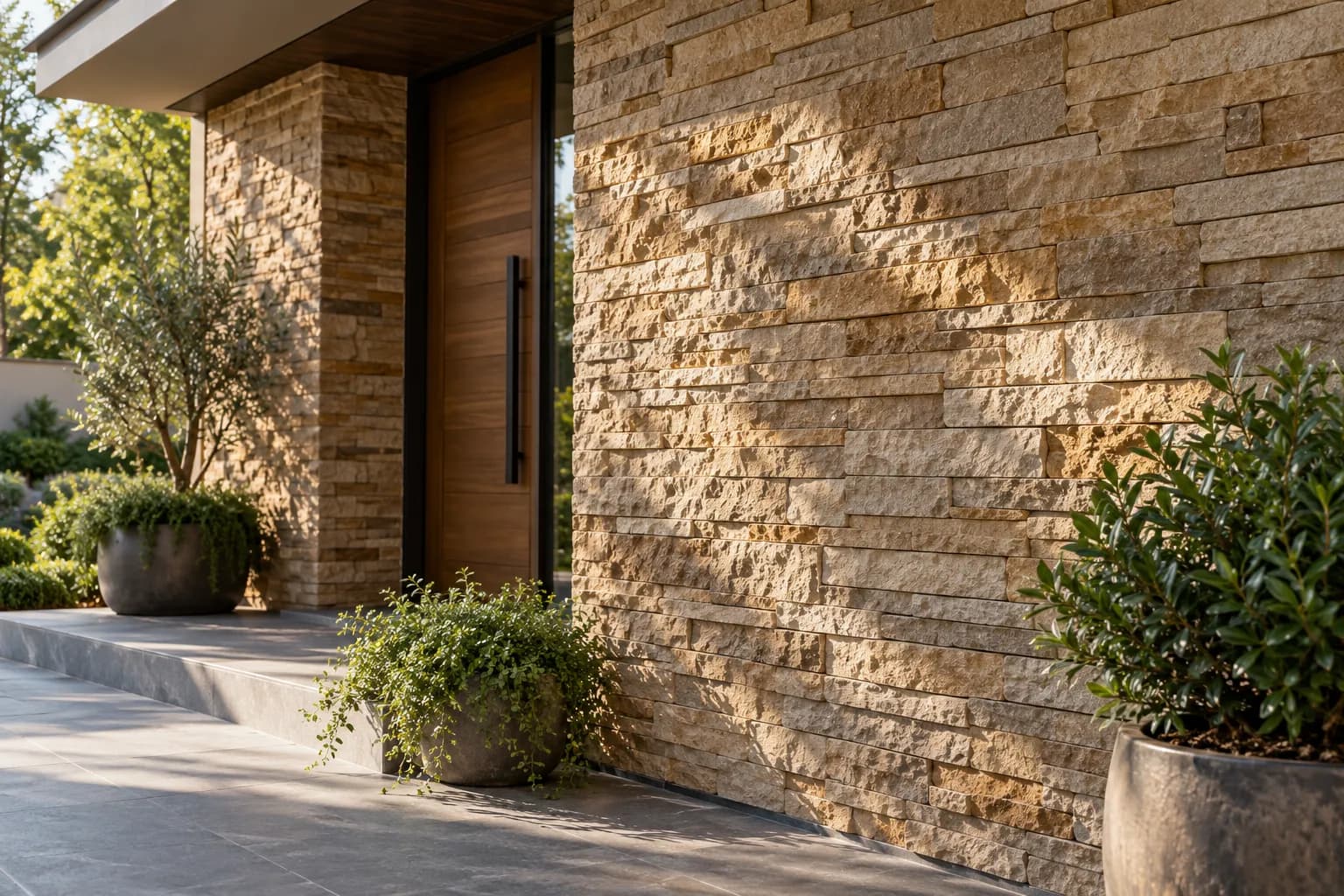
Stone cladding
Natural stone cladding in sandstone, slate and marble: how it differs from elevation tiles, strip and square sizes, where it works and how it is fixed.
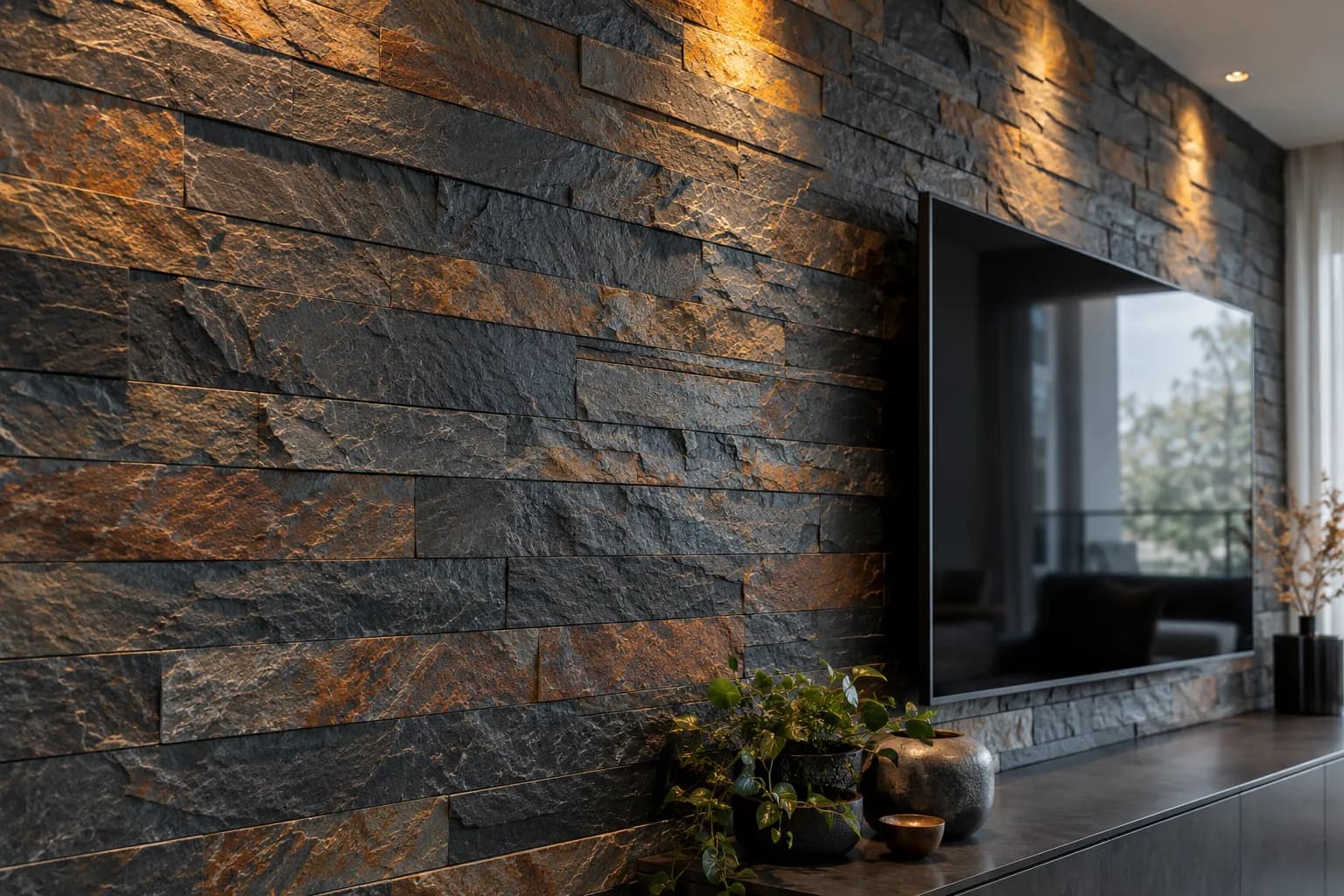
Slate cladding
Slate wall cladding in charcoal, black, grey, green and rust tones. Why it suits TV walls and modern fronts, what rust colour means and how to light it.
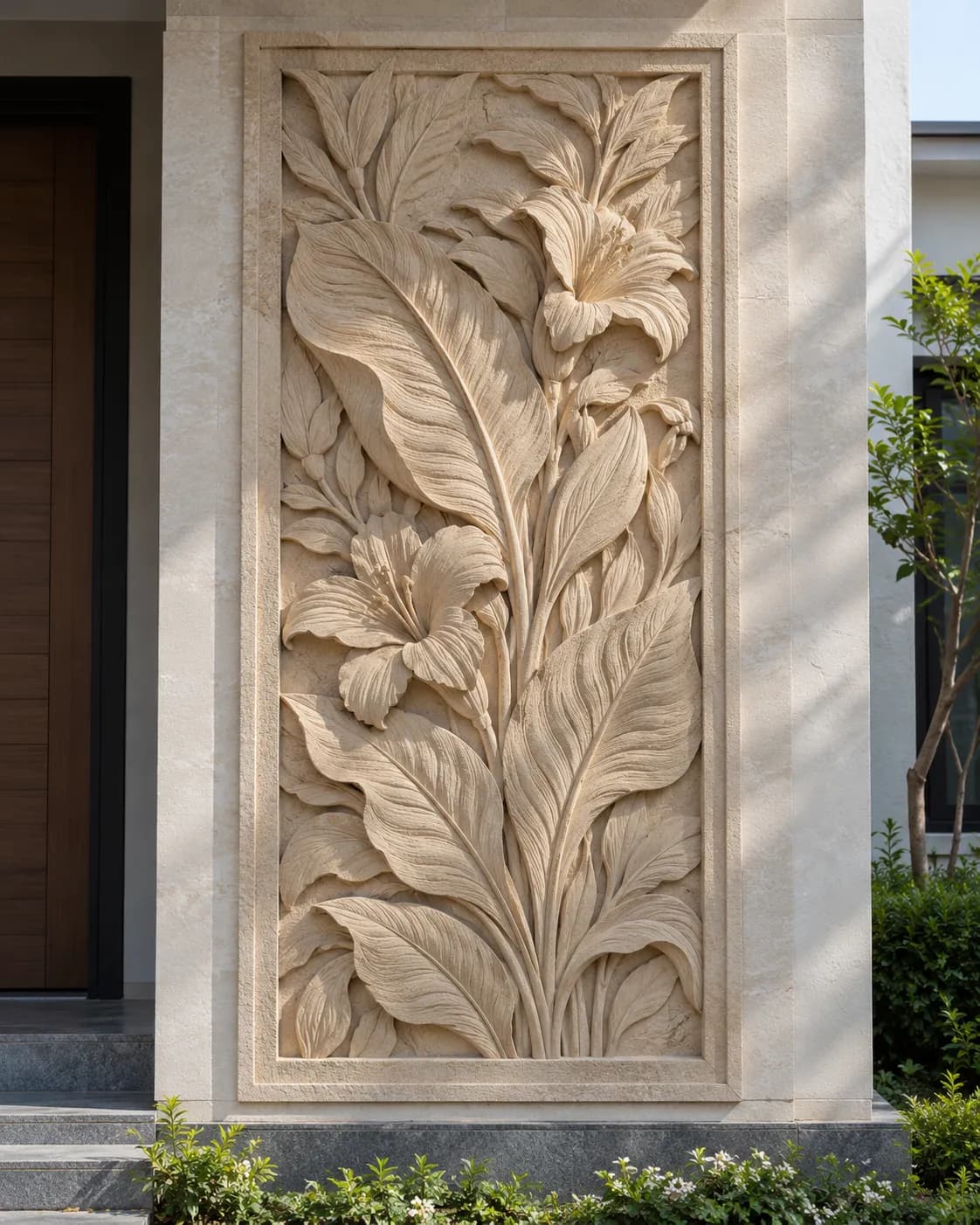
Stone murals
Carved natural stone murals with leaves, flowers, Buddha, Ganesha and heritage designs. Sizes in feet, where to place them, fixing and lighting tips.
See the tiles in person before you decide
Photos never show a tile's true shade or texture. Get in touch to check what is in stock, then walk in and compare.