Dining Area Tiles: Stain-Resistant Floors That Look Good Daily
Dining area tile advice for Bengaluru homes: stain-resistant vitrified floors, finishes that handle chair movement, and how to link dining with living.
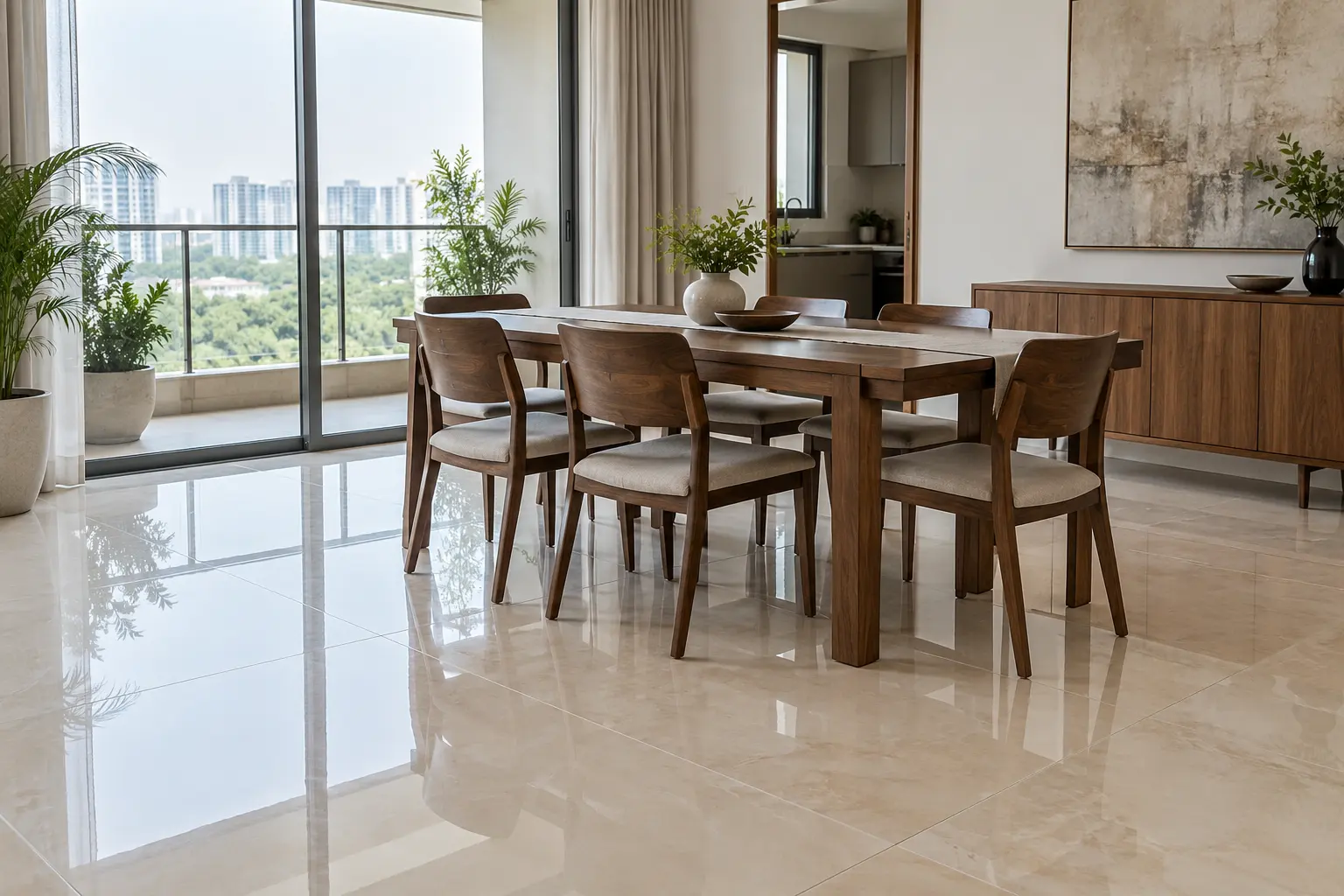
The dining area is where food falls, chairs scrape and families sit together every day. In many Bengaluru apartments it sits between the kitchen and the living room, so it also carries traffic in both directions. The floor needs to shrug off spills and look tidy without constant attention.
What a dining area floor goes through
- Food and drink spills. Sambar, curd, oil and tea end up on the floor, often under the table where they are noticed late.
- Chair movement. Chairs are pulled back and forth several times a day. Grit under the legs acts like sandpaper on soft glazes.
- Traffic from the kitchen. People carry hot vessels and water through this space, so a slippery finish is a real concern.
- Light from both sides. Dining spaces often get light from the balcony or living area, so very glossy tiles can show every smudge.
Recommended tiles
Vitrified tiles are the natural choice. Their low water absorption means spills stay on the surface and wipe off. For a dining area, consider:
- Double charge vitrified tiles, which have a thicker design layer and handle wear from chairs well.
- GVT or PGVT tiles in a marble or stone look, if you want the dining area to match a premium living room floor.
- Wooden finish tiles for a warmer, homely feel, especially with a wooden dining set.
Finish and size
| Finish | Suits | Watch out for |
|---|---|---|
| Glossy | Bright, formal look | Footprints, slipperiness when wet |
| Satin | Everyday family use | Slightly less shine |
| Matt | Homes with kids and elders | Can hold oily marks if not cleaned regularly |
| Lappato | Shine with some texture | Check the specific tile for grip |
For size, 800x800 mm and 600x1200 mm are popular in open-plan homes. In a smaller dining space, 600x600 mm gives a balanced grid that fits well around the table.
Layout and colour tips
- Centre the tile grid on the table, not just the walls. A dining table sitting neatly on a grid line looks deliberate.
- Carry the living room tile through if the spaces are open. See our living room tiles page for matching ideas.
- Use a rug sparingly. A rug under the dining table catches food. Most families prefer a clean tile floor that can be mopped.
- Mid tones in warm beige, greige or light wood hide crumbs and small spills between mopping.
- Separate visually without changing tile. A pendant light or a feature wall can define the dining zone better than a change in floor tile.
Mistakes to avoid
- A very dark glossy floor next to the kitchen. Oil marks and dust become obvious.
- Choosing a different tile from the living room with a joint running mid-space. It looks like a mistake.
- Ignoring the kitchen threshold. Check that the dining floor level meets the kitchen floor without a trip edge.
- Forgetting felt pads for chairs. A small fix that protects any tile finish.
For cleaning routines, our guide on how to clean and maintain tiles covers daily and deep cleaning.
See it before you buy
Bring the size of your dining space and, if possible, a photo of your living room floor, and visit the shop. We can show you tiles that match or complement what you already have.
Common questions
Should the dining area have the same tiles as the living room?
In most apartments the dining and living areas are one open space, so using the same tile makes it look larger and avoids awkward joints. If the dining is a separate room, you can choose something different.
Do chairs scratch floor tiles?
Vitrified tiles are hard and resist scratching well, but grit trapped under chair legs can mark glossy surfaces over time. Felt pads on chair legs help a lot.
Which finish hides food spills best?
Satin and matt finishes in mid tones like beige or light grey hide small marks better than very glossy or very dark tiles.
Keep reading
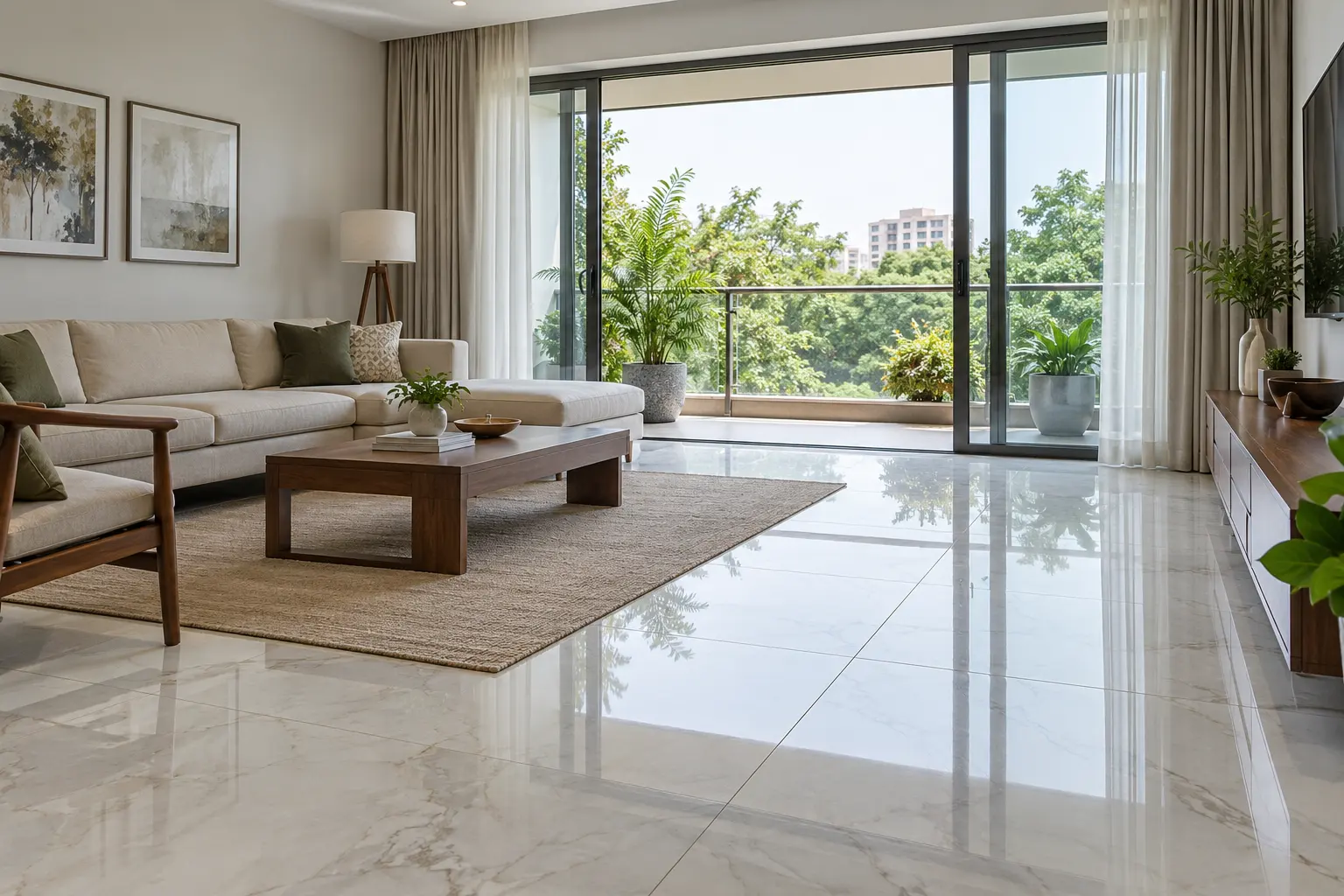
Living room
How to pick living room floor tiles that handle daily traffic, dust and sunlight, with advice on tile type, size, finish and colour for Bengaluru homes.
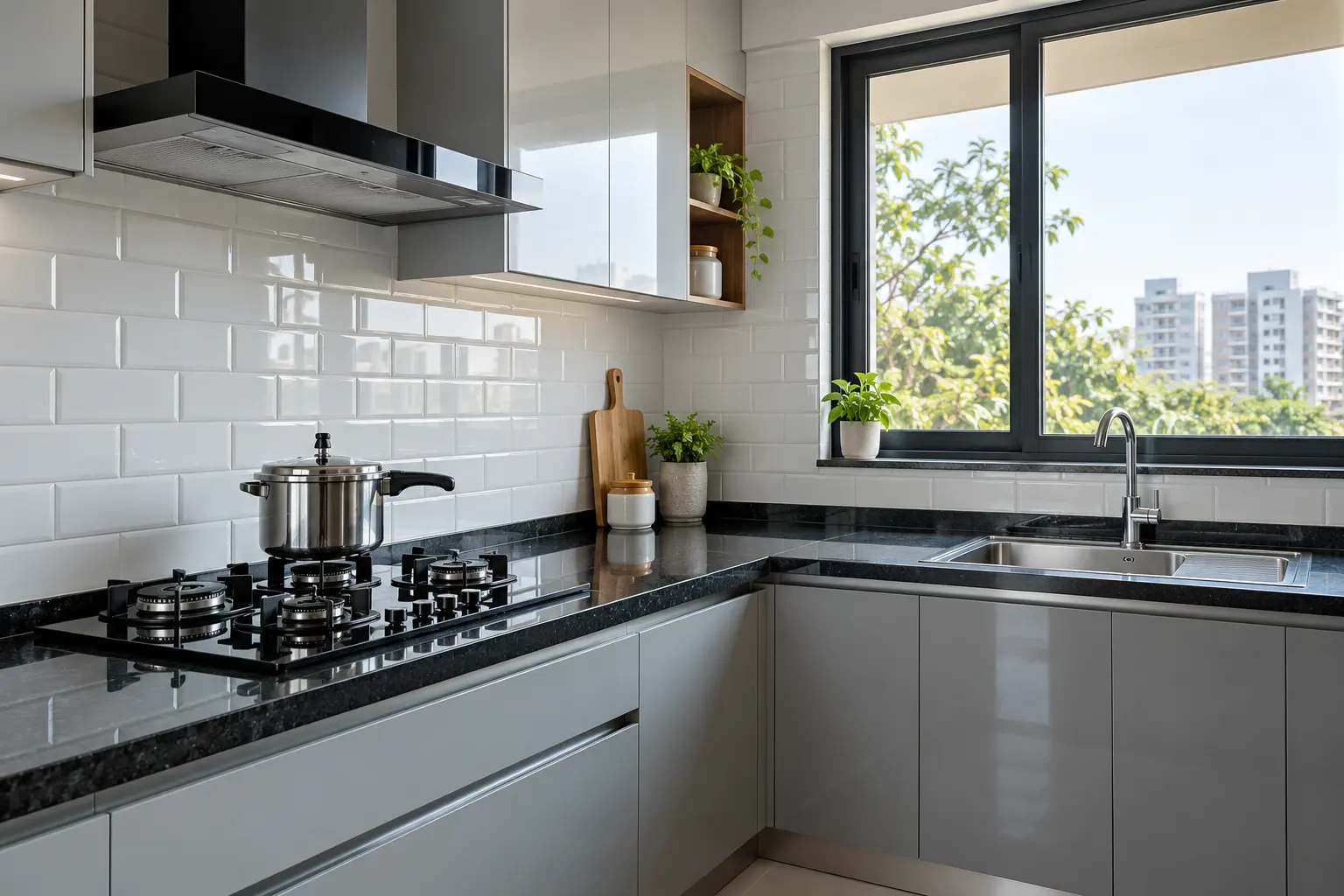
Kitchen
Kitchen tiles that cope with oil, masala stains and daily mopping: what to use on the floor and backsplash, sizes, finishes and mistakes to avoid.
Double charge tiles
Double charge vitrified tiles have a thick coloured top layer that lasts under heavy foot traffic. Learn where they fit, sizes and how to choose.
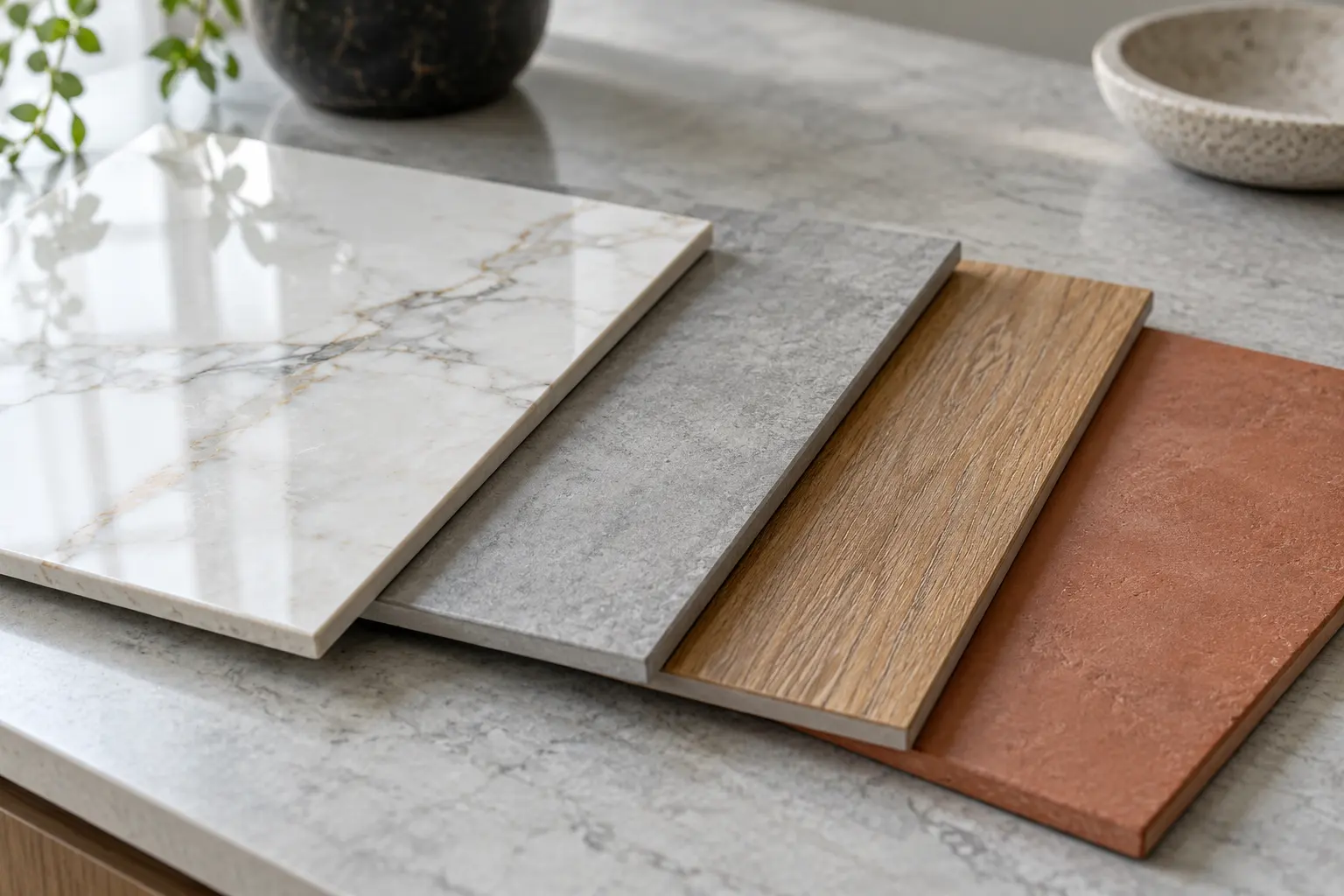
See the tiles in person before you decide
Photos never show a tile's true shade or texture. Get in touch to check what is in stock, then walk in and compare.